

On this page
When a teenager is preparing for highly competitive exams like JEE or NEET, the sheer volume of paper they receive is staggering. Between daily handouts, thick coaching modules, mock test papers, and handwritten notes, their study desk can quickly turn into a chaotic mountain of paper.
This mess does more than just look untidy. It limits the brain's processing capacity. A 2011 study published in The Journal of Neuroscience showed that visual clutter mutually suppresses evoked activity in the visual cortex, restricting a student's ability to focus and increasing their cognitive load. Building a structured organizational framework is not a distraction from studying; it is a prerequisite for it.
Why does my teen have messy coaching notes?
The adolescent brain is still developing its prefrontal cortex, which is the area responsible for executive function, planning, and maintaining focus. Because of this developmental gap, teenagers often struggle to create and maintain complex systems on their own. They might have the intelligence to solve complex physics problems, but they lack the biological maturity to keep a semester's worth of paperwork in order.
When coaching institutes flood them with materials across Physics, Chemistry, and Mathematics or Biology, students often shove everything into one single bag or pile. When they need to revise a specific chapter, they face "task paralysis"—the overwhelm of not knowing where to start. Instead of digging through the mess, they may procrastinate or abandon the revision entirely. This creates a vicious cycle of stress, missed assignments, and falling grades.
How to organise coaching notes into a subject-wise system?
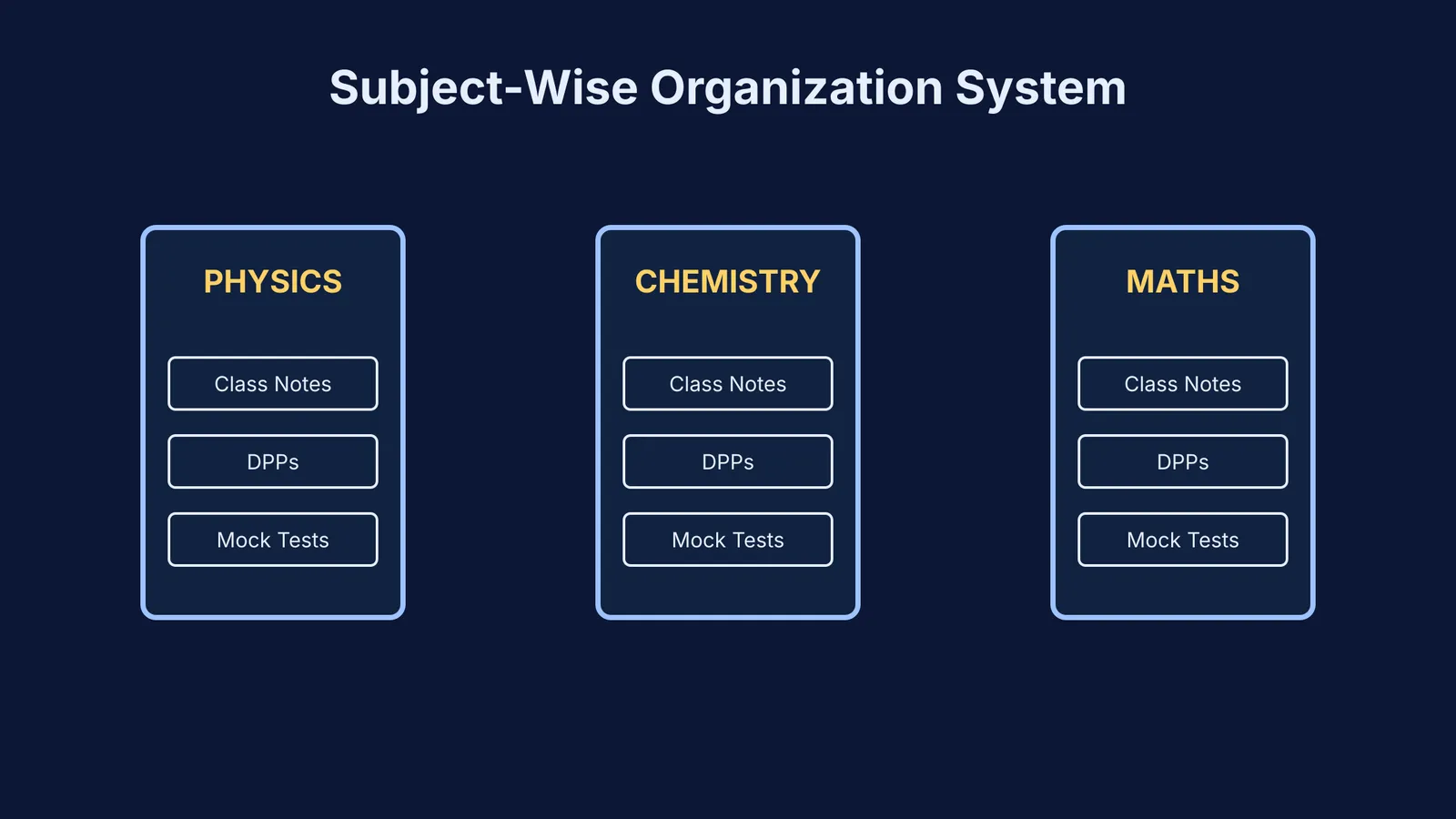
The most effective way to manage physical materials is a dedicated subject-wise binder system. This gives every piece of paper a permanent "home" and makes retrieval instant, mimicking the way professional researchers organise their data.
Use separate binders for each subject: Buy three sturdy, wide-ring binders (one each for Physics, Chemistry, and Maths or Biology). Colour-coding them helps your teen grab the right one quickly without having to read the labels.
Create three fixed sections: Inside each binder, use tabbed dividers to create three distinct sections: *Class Notes*, *DPPs & Modules* (Daily Practice Problems), and *Mock Tests*.
Use a "Drop Zone" box: Place a single tray or box on their desk. When they return from coaching exhausted, they can drop all new handouts into this box instead of stuffing them into random books.
Once their notes are neatly filed away, it becomes much easier to maintain a solid schedule. You can then help them build a study routine that lasts, and ensure they have a dedicated home study space free from distractions.
What is the best way to manage mock test papers?
Mock tests are the most valuable diagnostic tools a student has, but they are useless if they are lost at the bottom of a drawer or stuffed into the back of a textbook. By filing test papers in the third section of their subject binders, your teen can easily track their progress over time and spot recurring mistakes.
When physical notes are finally sorted, conceptual gaps become glaringly obvious. Instead of just re-reading the textbook, students must actively target their weak areas. If a student is consistently getting stuck on specific topics across their test papers, they can use the Fermi Concept Library to find the exact lesson they need. Fermi's AI tutor can then work out what they already know and build a plan for the session, so they sit down to a clear next step instead of a blank page.
Organization is a skill that takes time and patience to build. By helping your teenager set up a simple, subject-wise system today, you are giving them the structure they need to reduce stress, reclaim lost study time, and succeed in their exams.


