

On this page
Can a child safely do chemistry experiments at home?
Yes, if you choose the materials and stay in the room. A child who wants to 'do chemistry' usually wants to see something change: a colour, a fizz, a separation. Kitchen materials can do all three. NCERT's Class 7 science chapter on acids, bases and salts uses lemon juice, vinegar, baking soda, soap solution and lime water as test solutions.
The same chapter opens with a caution box: do not taste anything unless asked to, and do not touch anything unless asked to. That is a good model for home: curiosity gets room, while an adult fixes the materials and the rules.
Which kitchen chemistry experiments are safe to start with?
Start with indicators, substances that change colour in acidic or basic solutions. The NCERT chapter names turmeric, litmus and china rose (gudhal) petals as naturally occurring indicators. Three activities work well at a kitchen table:
Turmeric paper. Mix a tablespoon of turmeric with a little water, spread the paste on blotting or filter paper, dry it and cut thin strips. A drop of soap solution turns the yellow strip red, which NCERT uses to explain why a haldi stain on a white shirt goes red in the wash.
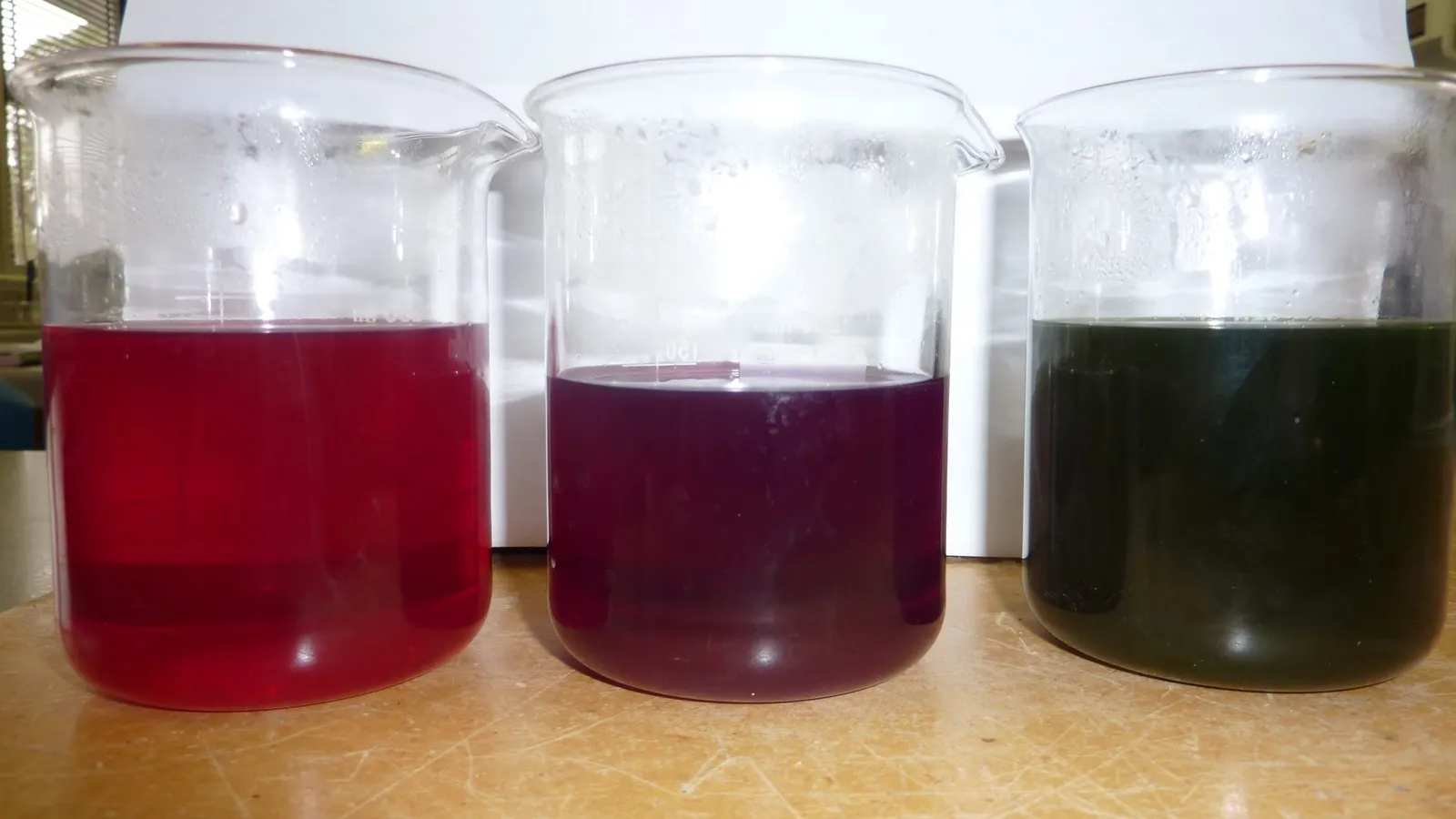
China rose indicator. Soak gudhal petals in warm water until the water is coloured. NCERT says this indicator turns acidic solutions dark pink (magenta) and basic solutions green. Test lemon juice, vinegar, baking soda solution, sugar solution and salt solution.
Marker chromatography. Separate the dyes in felt-tip ink using only water and paper. Our step-by-step guide to marker chromatography with kids walks through it.
For each test, ask your child to predict the colour before adding the drop, and write the guess down. A home science journal turns a quick colour change into a record they can come back to and compare.
When the colour change raises a 'but why?', the Fermi Concept Library has a lesson for every concept in chemistry, including acids and bases, so the question gets a real answer rather than a guess.
What should children never mix or do at home?
The real danger sits under the sink, not in the spice box. The Washington State Department of Health warns that bleach mixed with ammonia produces toxic gases called chloramines. The same page says bleach mixed with an acid such as vinegar gives off chlorine gas, and that bleach also reacts with oven cleaners, hydrogen peroxide and some insecticides. Symptoms it lists include coughing, shortness of breath, chest pain and watery eyes.
Keep these off the experiment tray entirely:
Bleach, toilet and drain cleaners, oven cleaners, insecticides, and anything with a hazard symbol on the label.
Window cleaner: NCERT's table lists ammonium hydroxide as a base found in window cleaner, and ammonia is one half of the bleach reaction above.
Tasting anything, even if it started as food.
The gas stove, flames and boiling liquids, unless an adult does that step.
Fizzing mixtures sealed inside a closed bottle, where gas has nowhere to go.
What supervision rules should parents set?
Agree on the rules before the first experiment, not halfway through it. Here is a set of house rules you can copy onto a card:
An adult is in the room for every experiment and approves every ingredient.
Only materials from our written list of food-cupboard items.
No tasting, no sniffing up close, long hair tied back.
Small amounts in open cups, on a tray, away from the stove.
Old clothes or an apron, and glasses if we are pouring.
Clean up together, rinse the cups, wash hands.
If something fizzes, smokes or smells odd, step back and call the adult.
A younger child might pour and watch; an older one might plan the test while you check the ingredient list. Add independence one step at a time.
When your child says 'Let's mix everything and see what happens', try this: 'Good idea to test things. Scientists change one thing at a time so they know what caused the result. Pick one liquid, guess the colour, then we check.'
For a longer project, you can plan a safe science experiment at home with AI and still check every step yourself.
What should you do if something goes wrong?
If a liquid splashes into an eye, the NHS advice on eye injuries is to run lots of water over the eyeball for at least 20 minutes, and to get emergency help if a strong chemical such as bleach or oven cleaner gets in. Take the container with you, because the label may help with treatment.
If a child swallows or breathes in something harmful, call the AIIMS National Poisons Information Centre, which runs a toll-free line, 1800 116 117, 24 hours a day, 7 days a week. For serious symptoms such as trouble breathing, go straight to the nearest hospital. This is first-aid guidance; a doctor decides on treatment.
This weekend, one tray, a spoon of turmeric and five test liquids are enough for a first experiment.


