On this page
In short
UNESCO warns that many AI tools harvest data, advising a minimum age of 13 for schools. You should never share your full name, contact details, school records, passwords, or classmates' data with a public AI chatbot.
Generative AI tools can draft essays, debug code, and explain complex concepts in seconds. But behind the blank prompt box, most public AI chatbots are constantly learning from what you type. When you ask a chatbot to rewrite your college admissions essay or solve a problem from your school worksheet, you are handing that text to the company that built the AI.
Because AI companies often use user prompts to train their next generation of models, any private details you share could eventually surface in someone else's chat window. UNESCO's 2023 global guidance for generative AI warns about this risk of data harvesting, recommending a minimum age of 13 for school use.
To protect your digital footprint, here is exactly what you should keep out of your prompts, and how to use an AI tutor safely.
What personal information should I not share with AI?
Treat an AI chatbot like a public bulletin board. If you would not post the information on social media, you should not paste it into a prompt.
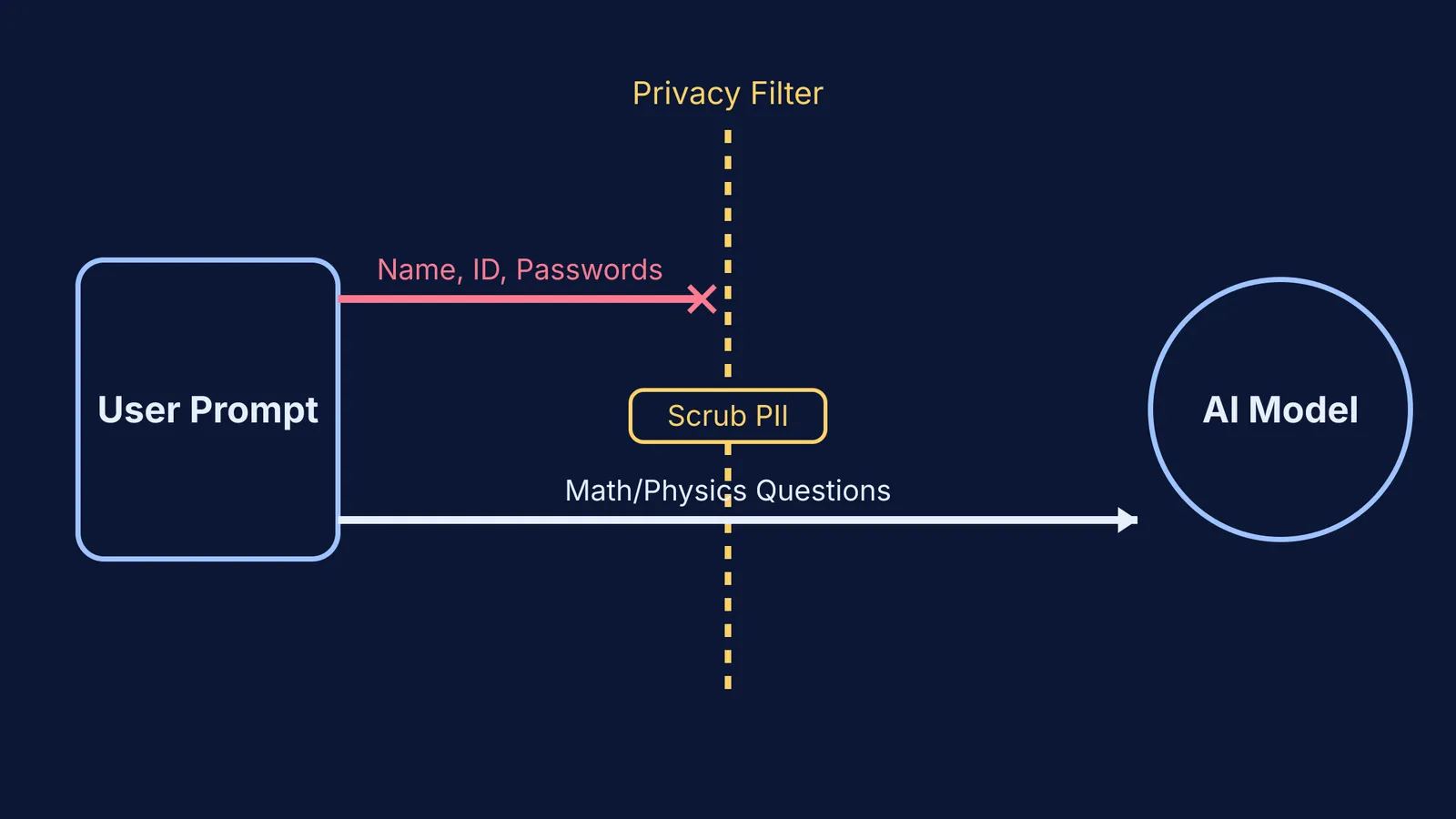
Your full name and contact details: Never introduce yourself with your full name, home address, personal email, or phone number.
School records and identification: Do not upload photos of your student ID, driver's license, or exam hall ticket. Keep your grades, transcripts, and financial fee receipts out of the chat.
Passwords and credentials: Never ask an AI to help you generate a secure password based on your real life, and never share login details for your school portals.
Classmates' and teachers' data: It is easy to accidentally include the names of your classmates when asking an AI to summarise a group project. Remove all names before hitting send.
Why does a chatbot need my data?
Large language models are built by reading vast amounts of text. To get better at holding conversations and answering questions, companies feed their models enormous volumes of real user interactions. When a model trains on your chat, it breaks your sentences down into patterns and probabilities.
The problem is that AI models do not have a reliable "delete" button. Once a model learns a piece of personal information, engineers cannot easily reach into the system and erase that specific memory. If a future user types a prompt that closely matches yours, the AI might output the very details you shared. This is why checking Privacy in learning apps: what parents should check in India is such a critical step before signing up for a new tool.
How do you safely write prompts for schoolwork?
You do not have to abandon AI to stay safe. You just need to scrub your prompts of personally identifiable information.
Use placeholders instead of real names. If you are writing a story about your family, use "Person A" and "City X". If you need help structuring a personal statement for a university application, outline the themes (like "overcoming a challenge in a high school debate club") rather than pasting the raw, highly personal draft.
When using AI for homework, the goal is to learn the method, not just to extract the final answer. You can practice Using ChatGPT for physics: prompts that make you think, not copy by asking the AI to explain the underlying concept rather than pasting the exact exam question.
Can an AI tutor teach without harvesting data?
Public chatbots are built for general conversation, not for secure, private education. This is where dedicated AI tutors differ. An educational platform should protect your data by design, ensuring that your struggles with calculus do not become training material for a global model.
At Fermi, we believe a tutor should be a safe space to make mistakes. Fermi's AI tutor works out what you already know, builds a plan for the session, and teaches through it — writing on a board, drawing the figure, running the simulation, and checking understanding as it goes. Progress, notes and everything generated along the way stay in your library.
Understanding AI and homework honesty: where help ends and copying begins starts with having a secure environment where you can freely ask "why" without worrying about who is reading your data.
A checklist for safe AI learning
Before you start your next study session, run through this quick checklist:
Scrub the prompt: Did you remove all names, locations, and school names?
Check the images: If you are uploading a photo of a worksheet, did you crop out your name and your teacher's name at the top?
Toggle the settings: Is "model training" switched off in the chatbot's privacy menu?
Examine the tool: Is this a public chatbot or a secure educational platform?
By setting these boundaries, you can take full advantage of AI's ability to explain complex ideas while keeping your personal life firmly off the record.