On this page
Most online shopping happens inside one app, where the buyer, the seller and the rules all live on the same platform. ONDC works differently. Here is what it is, how an order travels across it, and a 30-second way to explain it.
What is ONDC in simple words?
ONDC stands for Open Network for Digital Commerce, an initiative of the Department for Promotion of Industry and Internal Trade (DPIIT) launched in April 2022, according to a Press Information Bureau research note from January 2025.
In simple words, ONDC is a shared set of rules (a protocol) that lets a buying app made by one company talk to a selling app made by another. The same PIB note says ONDC "does not own or operate e-commerce services" and that it "acts as an enabler for interconnectivity".
ONDC was set up as a non-profit Section 8 company, incubated at the Quality Council of India, with Protean as co-founder, the note adds.
If "protocol" sounds abstract, think of it as an agreed format for messages. The PIB note says the network lets buyers and sellers on different platforms deal with each other through standardised APIs. Our explainer on what an API is, told through a school canteen shows the same idea on a smaller scale.
How is ONDC different from a single shopping platform?
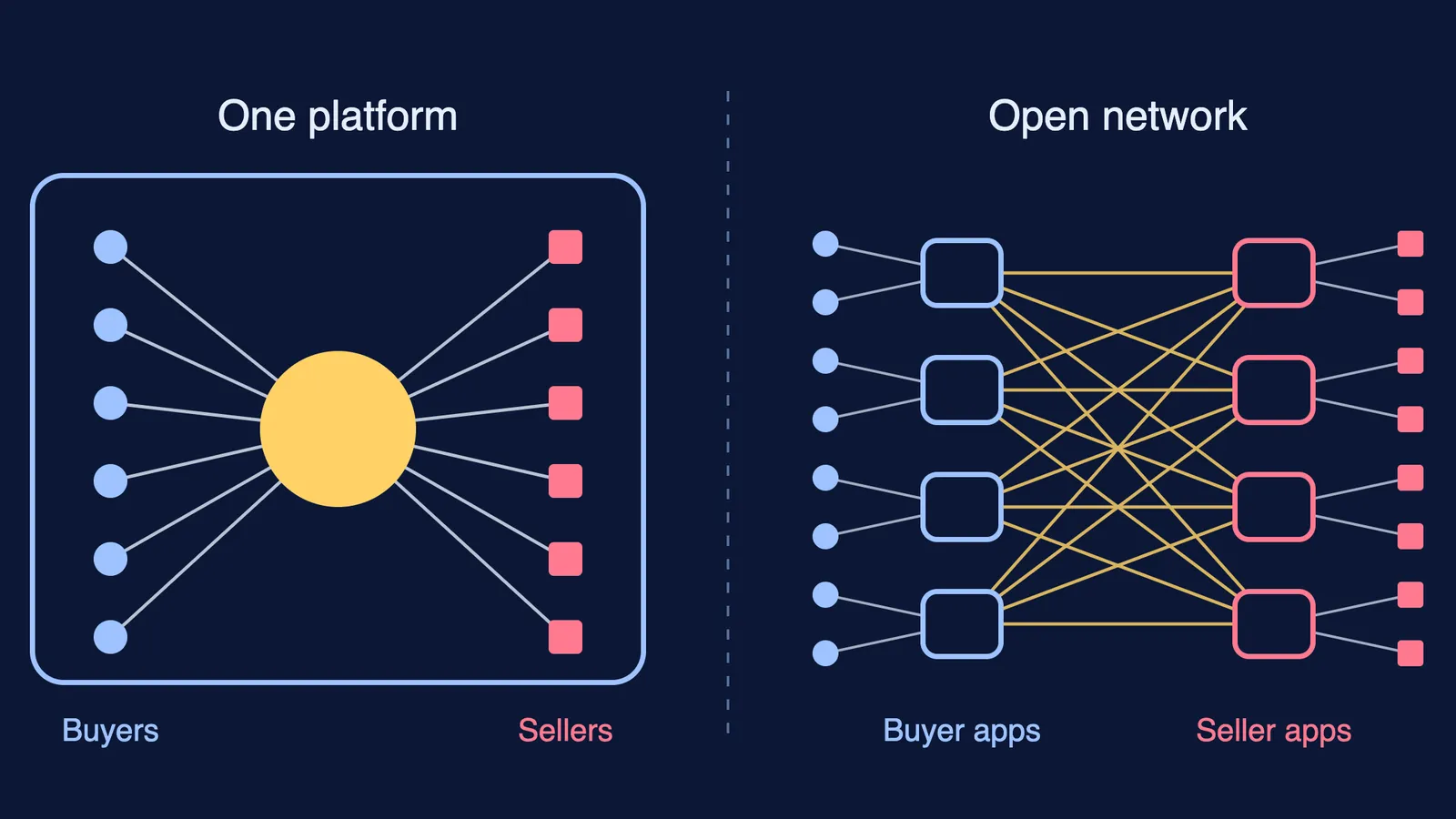
On a single platform, one company runs the app you search in, decides which sellers appear, sets the fees and often arranges delivery. A seller who leaves the platform usually loses easy access to the customers they found there.
On an open network, the jobs are split up. The PIB note lists four roles:
Buyer applications, where customers find sellers and order.
Seller applications, where businesses list and manage what they sell.
Logistics providers, who move the goods.
Technology enablers, who supply the IT tools.
Any buyer app that follows the protocol can reach sellers on any seller app that follows it. On a platform, the app and the market are the same thing. On ONDC, the network is the market and each app is one door into it.
For the payment side, read our explainer on how a UPI payment works technically.
How does an ONDC order work, step by step?
This is an illustration, not a real order. Meera, a Class 11 student in Nagpur, needs a geometry box by tomorrow.
She searches for it in a buyer app that is on the network.
Her app sends the search across the network, using the shared rules. Seller apps that follow the same rules answer with what they have, including a stationery shop near her school that joined through a different company's seller app.
She picks the nearby shop and places the order in her own app. The order passes to the shop's seller app.
A delivery partner, such as a logistics provider on the network, collects the box and delivers it, and updates come back to Meera's app.
Meera and the shop never had to join the same app.
How big is ONDC, and is it working?
The PIB note gives these network figures:
More than 616 cities live.
13 domains live.
239 network participants (the apps and providers on the network).
More than 7.75 lakh sellers and service providers.
More than 14.4 million orders in November 2024.
The 13 domains go well beyond groceries. They include mobility (cabs and metro rail), financial services, agriculture, and education and training, according to the same note.
Being open does not mean everyone will use it: people still pick apps for convenience, price and trust. When you read a newer figure in the news, ask three things: what date is it from, does it count orders or sellers, and who published it?
How do you explain ONDC in 30 seconds?
Here is a script you can adapt for a group discussion, an interview or a viva:
"ONDC is the Open Network for Digital Commerce, a DPIIT initiative launched in 2022. It is not an app. It is a common set of rules that lets a buying app from one company connect with a selling app from another, much as UPI connects payment apps and banks. The aim is to give small sellers more buyers without depending on one platform."
Three points that lift an answer above the basics:
Name the roles: buyer apps, seller apps, logistics providers.
Give one dated figure, and say where it came from.
Give one honest limit: openness alone does not bring users.
For the computing ideas underneath all this, the Fermi Concept Library has every concept in physics, chemistry, biology, mathematics and computing.