On this page
A call comes at 11 pm. It sounds exactly like your son in his hostel, or your mother, crying, saying something has gone wrong and money is needed now. This guide explains how that voice can be faked, what gives the call away, and a family plan you can set up tonight.
How do scammers clone a voice from a short clip?
A voice clone is AI-generated speech that copies how a real person sounds and makes them say words they never said. In January 2023, the researchers behind the VALL-E speech model reported that it could produce “high-quality personalized speech with only a 3-second enrolled recording of an unseen speaker” (Wang et al., arXiv).
The US Federal Trade Commission warns that a scammer needs only “a short audio clip of your family member’s voice”, which could come from content posted online, plus a voice-cloning program (FTC consumer alert, March 2023). For a student, that could be a public reel or a forwarded voice note. India’s Press Information Bureau lists deepfakes made with AI among the cyber threats that are on the rise (PIB backgrounder, October 2025).
Can you tell an AI voice from a real one by listening?
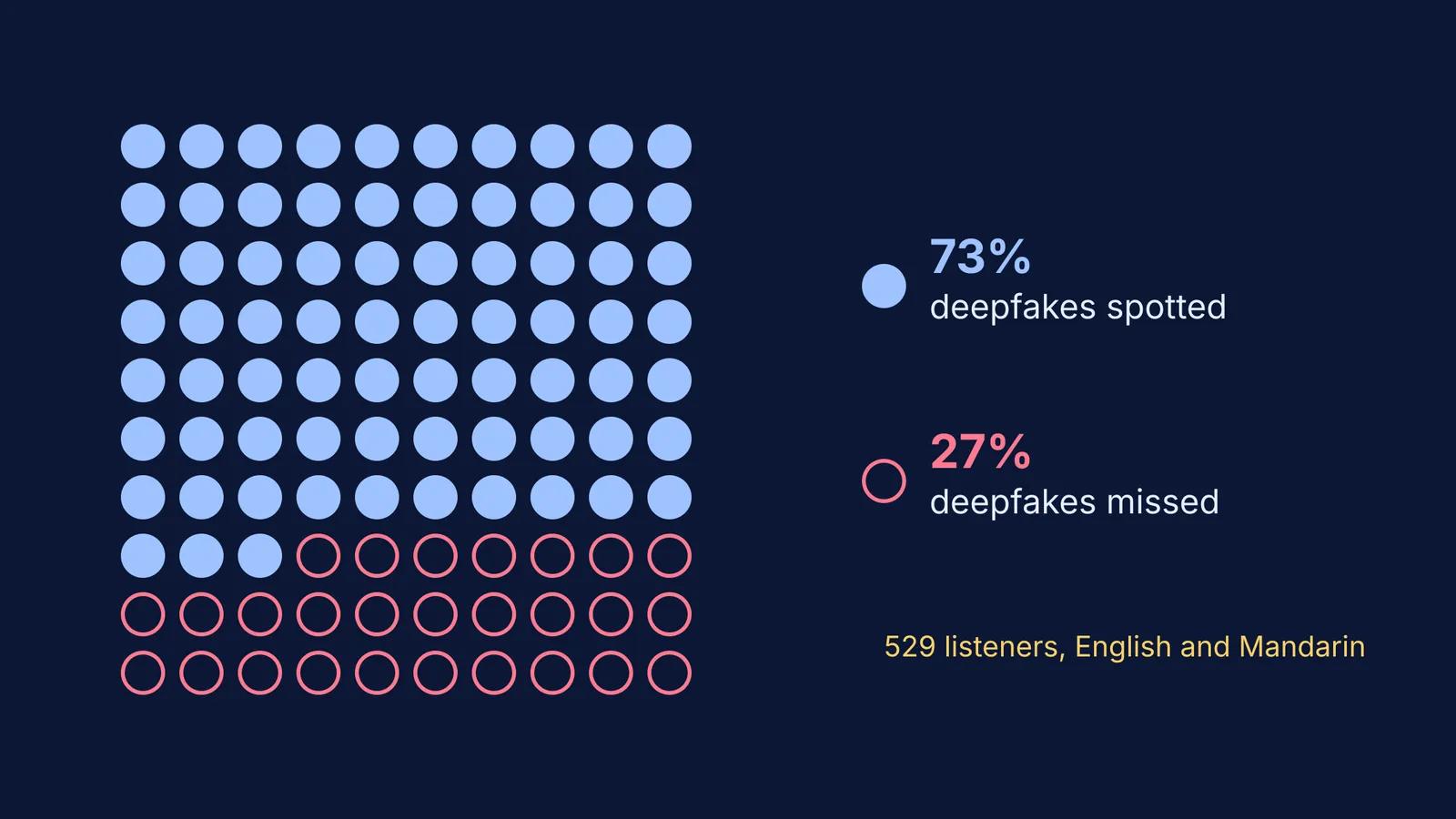
Not reliably. In a study by University College London researchers, 529 people listened to real and deepfake speech and correctly spotted the deepfakes only 73% of the time (Mai et al., PLOS ONE, 2023). They found no difference between English and Mandarin, and showing listeners examples of deepfakes beforehand helped only slightly.
A real call from someone you love, apparently in trouble, is far harder than a calm test. The FBI does suggest listening closely “to the tone and word choice” (FBI IC3 alert, December 2024), but treat an odd phrase as a reason to check, and never treat a perfect-sounding voice as proof.
What are the warning signs of an AI voice scam call?
Be alert when you notice several of these together:
Panic and a deadline. An accident, an arrest, a hospital or a lost phone, and money needed right now.
Secrecy. “Don’t tell Papa” or “Don’t call anyone, it will make things worse.”
An unknown number. The excuse is often a borrowed or new phone.
Someone else takes over. A “police officer”, “doctor” or “lawyer” comes on the line to explain the payment.
Hard-to-reverse payment. The FTC flags requests to wire money, send cryptocurrency or buy gift cards. In India, also be wary of a UPI ID, QR code or bank account you have never paid before.
How do you set up a family code word?
The FBI advises families to “create a secret word or phrase with your family to verify their identity” (FBI IC3 alert).
Pick it together, face to face. Not over WhatsApp, and never in a family group chat.
Make it unguessable. Avoid pet names, birthdays or anything visible on social media. Two unrelated words work well.
Agree who asks. The person receiving the call asks for the word; nobody gives hints.
Add a callback rule. Even if the word is right, hang up and call back on the number saved in your phone, as the FTC advises.
Name two backup contacts. A roommate, warden, sibling or neighbour to ring if the person does not answer.
Change the word if it is ever said in front of others or typed anywhere.
If your child is moving cities for coaching or college, add the code word and backup contacts to your list of things to settle before they leave.
What should you say on a suspicious call?
If you are the parent: “I want to help. What’s our family word?” If there is no word, or the wrong one: “I’m going to hang up and call you back on your number.” Then do it, even if the voice begs you not to.
If you are the student and a “parent” calls asking for money or an OTP: “Okay, I’ll call you back on your saved number in two minutes.” A real parent will understand.
What should you do if you have already paid?
Act quickly. India’s national cybercrime helpline, 1930, helps victims of online financial fraud report promptly and, where possible, get fraudulent transactions frozen, and you can also file a complaint at cybercrime.gov.in (PIB backgrounder, October 2025). Call your bank as well.
Being fooled does not mean you were careless; these calls are designed to work on loving families. If the experience leaves you anxious or unable to sleep, Tele MANAS, the government’s toll-free mental health helpline, is on 14416 (PIB Research Unit, October 2024).
For more on staying safe online, read our guides to cyber safety in CBSE computer science and what parents should check in learning apps’ privacy settings. If you are curious how a speech model learns to copy a voice, Fermi’s AI tutor can work out what you already know and build a plan for the session, so you start from where you are.