On this page
A chatbot's answer to Sanskrit homework looks neat and sure of itself, yet it can be wrong in ways that cost marks. In the CBSE Class 10 Sanskrit paper for 2026-27, sandhi carries 4 marks (short answers) and samas another 4 (multiple choice), inside a 25-mark applied grammar section (CBSE Class 10 Sanskrit syllabus 2026-27). These are exact answers: one wrong letter or one wrong type and the mark is gone.
How often does AI get sandhi-viched wrong?
We found no public test of everyday chatbots on school Sanskrit grammar; the closest evidence is a model trained for this one job. In a 2025 paper at the Widening NLP workshop, two PES University researchers fine-tuned Google's Gemma-3 4B model on over 48,000 sandhi splits and tested it on about 2,000 more (Samarth P and Mahalingam, 2025).
The specially trained model split 87.7% of test words exactly right, which still left 246 wrong answers (ACL Anthology).
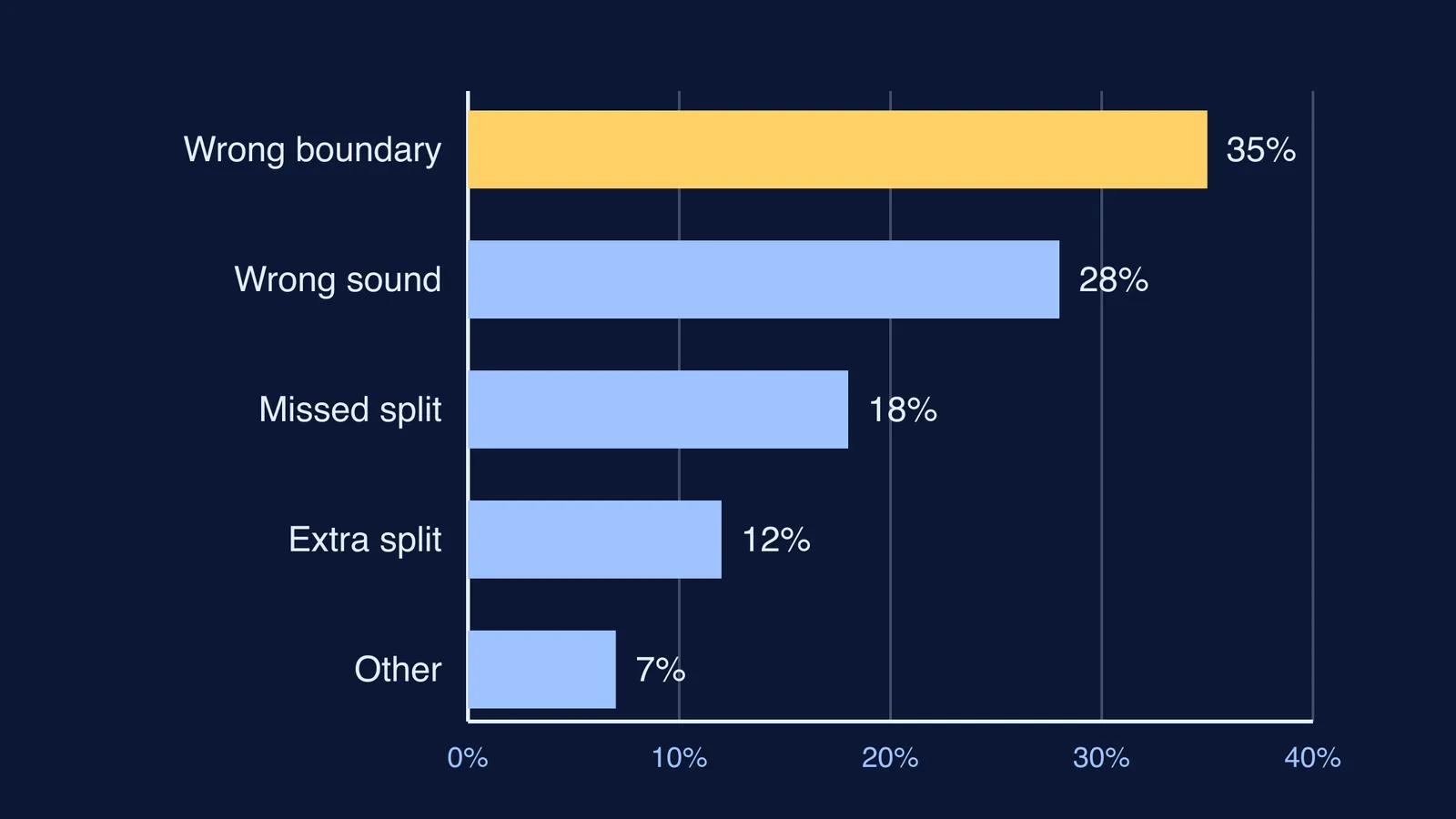
Their error analysis shows where to look:
Wrong boundary (about 35% of errors): तस्येदम् split as तस्ये + दम् instead of तस्य + इदम्.
Wrong sound restored (about 28%): चिदानन्दः split as चिद् + आनन्दः instead of चित् + आनन्दः.
Missed split (about 18%): प्रत्येकम् left whole instead of प्रति + एकम्.
Extra split (about 12%): अस्ति broken into अस् + ति.
No comparable test exists for the general chatbots students actually use, so treat their splits as a draft, not an answer key. Why they sound certain anyway is covered in our explainer on why AI sounds confident when it is wrong.
Why does AI name the wrong samas?
The CBSE syllabus covers tatpurusha (vibhakti, upapada and karmadharaya), bahuvrihi, avyayibhava and dvandva, asked as vigraha or as the compound from its vigraha (CBSE Class 10 Sanskrit syllabus 2026-27). The trouble is that the type depends on meaning, not on letters. A COLING 2022 paper calls compound type identification challenging 'primarily due to the implicitly encoded context-sensitive semantic relation between the compound components' (Sandhan et al., 2022).
Take पीताम्बरः. As पीतम् अम्बरम् (yellow cloth), it is karmadharaya. As पीतम् अम्बरं यस्य सः (he whose cloth is yellow, that is, Krishna), it is bahuvrihi. A chatbot that ignores your sentence may give either. नीलकण्ठः has the same trap.
Two smaller slips to watch: dvandva endings (रामलक्ष्मणौ is dual because it names two people) and avyayibhava vigraha (यथाशक्ति is शक्तिम् अनतिक्रम्य, not just 'as per strength').
How do you check an AI sandhi or samas answer?
Run four steps before anything goes into your notes:
Ask for the rule by name. It must be one on your syllabus list: yan, ayadi or purvarupa for vowels; the first letter of a varga becoming the third or fifth for consonants; utva, ratva, visarga lopa or visarga becoming स्, श्, ष् for visarga. A rule not on the list means unverified.
Rejoin it yourself. Apply that rule forwards. The result must match the original letter for letter, including halant and avagraha.
Check each part is a real word. Look it up in your textbook glossary or a dictionary. This catches अस् + ति and तस्ये + दम्, and it catches चिद् + आनन्दः, which rejoins correctly but uses a sandhi form instead of the word चित्.
For samas, test the vigraha in the sentence. Does the meaning fit the passage? Compare with a solved example in Shemushi Part 2 or Vyakaranavithi, two of the books CBSE prescribes.
Answers that pass go into your notes; answers that fail go on a trap list worth revising.
What does the check catch in a real answer?
Say a chatbot answers: वनेऽपि = वने + अपि, ayadi sandhi.
Step 1: the rule named is ayadi, which is on the list.
Step 2: ayadi turns ए before a vowel into अय्, so वने + अपि would give वनयपि. That does not match.
Purvarupa does match: a word-final ए absorbs the following अ, shown by the avagraha, giving वनेऽपि.
The split was right; the rule was wrong. If a question asks you to name the sandhi, that answer would lose the mark.
How should you use AI for Sanskrit grammar, then?
Use it to make practice questions and to explain a rule in plain words, then verify every answer it gives with the four steps. For a week-by-week drill, see our guide to practising Sanskrit grammar for the board exam. The rules you are checking against go back to Panini, and our profile of Panini's Ashtadhyayi as a formal grammar explains why they are so exact.
We built Fermi's AI tutor for STEM subjects around the same idea: it teaches rather than only answering, notices where a student is stuck, and checks understanding as it goes.
Tonight, take five sandhi answers from your last AI session and run them through the four steps.