

On this page
In 1992 the government asked a physicist how to lighten the load that school had become for Indian children. His committee's 1993 answer still matters if you can recite a definition but not use it.
Who was Yash Pal?
Yash Pal (1926 to 2017) began his career in the cosmic ray group at the Tata Institute of Fundamental Research, later became the first director of the Space Applications Centre in Ahmedabad in 1973, and chaired the University Grants Commission from 1986 to 1991, according to his Wikipedia biography. Many Indians knew him from Doordarshan's science programme Turning Point, where he explained science in everyday language, as Research Matters noted after his death.
A government order of 1 March 1992 set up a National Advisory Committee under him to reduce the load on school students while improving the quality of learning (Learning Without Burden, full text).
What did the Learning Without Burden report say?
The committee summed up the flaw it found in one line: "a lot is taught, but little is learnt or understood" (report, p. 3). It noted a Delhi survey in which primary school bags in public schools weighed more than 4 kg on average, but it said the load that mattered was the load of learning.
In his covering letter, Yash Pal wrote that he and most of the committee were "convinced that the more pernicious burden is that of non-comprehension". He added: "very little, fully comprehended, is far better than a great deal, poorly comprehended".
Among the problems it described:
Exams that reward recall. It said the exam system focuses on children's ability to reproduce information rather than apply concepts to new problems.
Textbooks as the only truth. Teachers saw the textbook as a body of "truths" to learn by heart, so knowledge became a load on memory.
Syllabi that cover everything. One page of a Class VII science book packed in time period, frequency, the hertz, amplitude, sound, loudness and pitch.
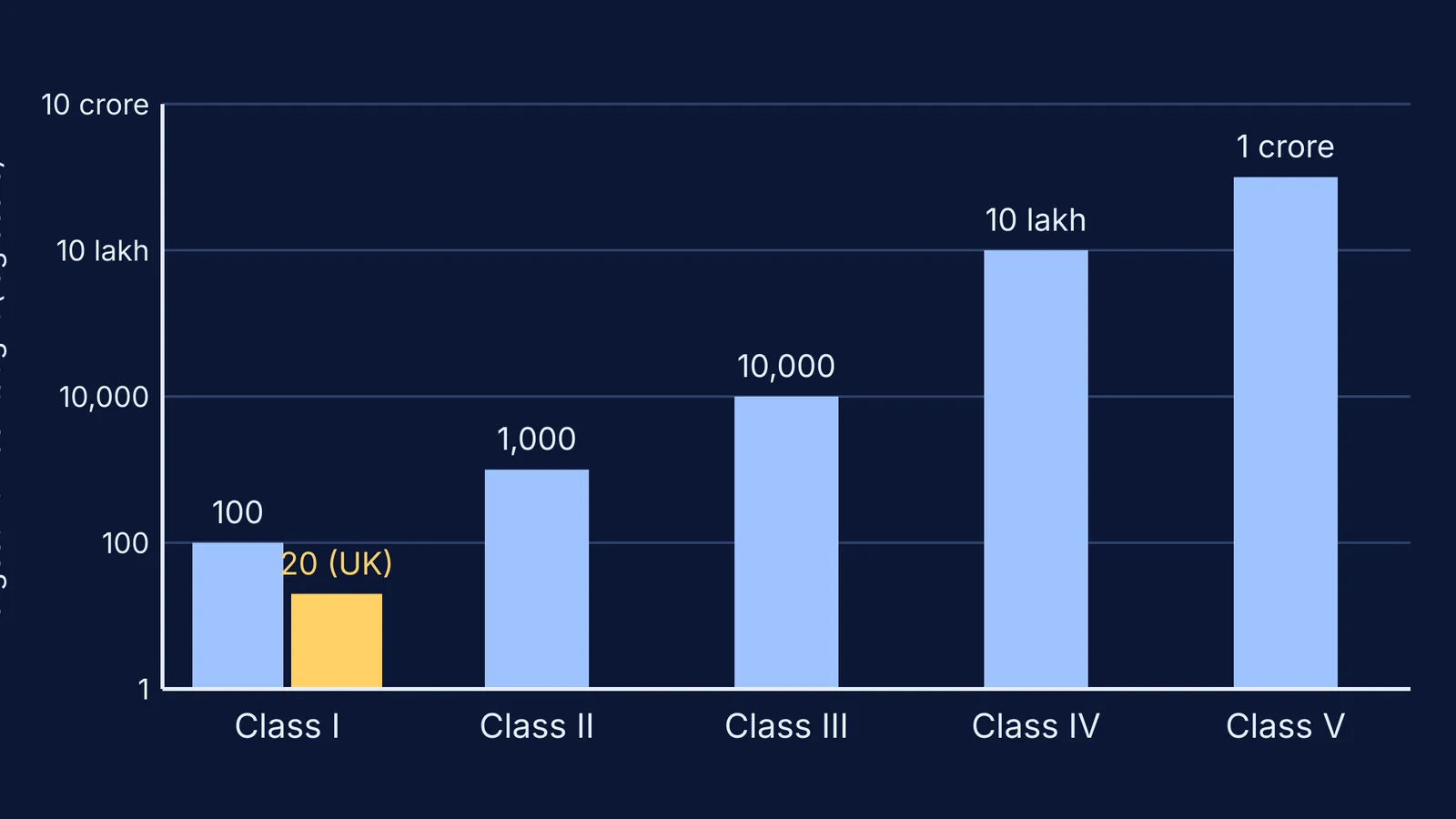
Speed over sense in maths. Children were expected to handle numbers up to 100 in Class I and up to a crore by Class V, while a British Class I child worked with numbers up to 20 all year.
One example it quoted was a Class X textbook definition of pH as the negative logarithm of hydrogen ion concentration. The committee wrote that a child is more likely than not to "mug up" that definition without grasping it, "and mugging does get the child through the examination!"
What did the committee recommend?
The recommendations (report, pp. 20 to 23) included:
Review the Class X and XII board exams to replace text-based, "quiz type" questioning with concept-based questioning, a single reform the committee said would "save the children from the tyranny of memorisation".
No homework in primary classes except explorations at home, and non-textual homework later.
Enforce a teacher-pupil ratio of 1:40 and work towards 1:30 in primary classes.
Involve far more teachers in writing textbooks.
In 2004 the education ministry asked NCERT to review its curriculum framework "in the light of" the report, and a National Steering Committee chaired by Yash Pal was set up. The resulting National Curriculum Framework 2005 set out five guiding principles, including "ensuring that learning shifts away from rote methods". For learning by doing in practice, read about Anil Sadgopal and the Hoshangabad science programme.
How can you tell if you understand something or have only memorised it?
The report offers a test you can use tonight. It says that "knowing" phenomenon X can mean three different things (report, pp. 13 to 14), and that formal education in India mostly works with the first two.
Here is the pH definition the report quoted, worked through the three levels:
Given: you have read that pH = −log[H+].
Reproduce: you can write that sentence word for word in an exam.
Apply: you can say why diluting a strong acid of pH 2 tenfold gives pH 3, because [H+] falls by a factor of 10 and the log falls by 1.
For any topic, ask yourself three questions:
Can I explain it in my own words, without the textbook sentence?
Can I predict what happens if one quantity changes?
Can I use it on a question I have never seen?
If the answer to the last two is no, you are at level 2. Derivations are good practice; see our guide on whether to understand or memorise derivations. When a concept is stuck at level 2, the Fermi Concept Library gives each concept its own lesson and its place in the map.
Parents can use the same ladder. Instead of "Did you finish the chapter?", try: "Tell me one thing from today's chapter. What would change if...?" If your child reads fluently but cannot answer, see our guide for when a child reads but does not understand. Fermi's AI tutor also checks understanding as it goes, deciding whether to explain, ask or show.
Pick one chapter this week and take it to level 3.


