On this page
In the 1880s, the French attempt to build a canal across Panama collapsed because of disease. The workforce suffered immense losses from yellow fever and malaria, which played an outsized role in undermining the effort (PMC). At the time, engineers did not know how these diseases spread, attributing them instead to bad air or contaminated soil.
When the United States took over the construction effort in 1904, the U.S. Army appointed Colonel William Gorgas as the Chief Sanitary Officer. Gorgas understood the recent discoveries of Walter Reed's yellow fever experiments in Cuba, which had proved that the *Aedes aegypti* mosquito carries yellow fever. He knew that to build the canal, he first had to control the insect population.
Why did disease stop the first Panama Canal?
The initial French effort failed because it treated the symptoms rather than the vector. Hospitals were built without screens, and the legs of hospital beds were placed in dishes of water to stop ants from crawling up. Ironically, these small pools of clean, still water provided the perfect breeding ground for *Aedes aegypti* mosquitoes right inside the wards (PMC).
When Gorgas arrived, he faced intense scepticism. Many canal officials viewed his mosquito-control plans as a waste of money. However, as the death toll from yellow fever mounted and workers began to panic, the administration eventually gave Gorgas the funding and authority he needed.
How did William Gorgas control the mosquito?
Gorgas launched an unprecedented environmental engineering campaign to remove the standing water where mosquitoes lay their eggs. His methods focused on habitat destruction and separating infected people from the insect vector (PMC).
He implemented several strict, systematic measures:
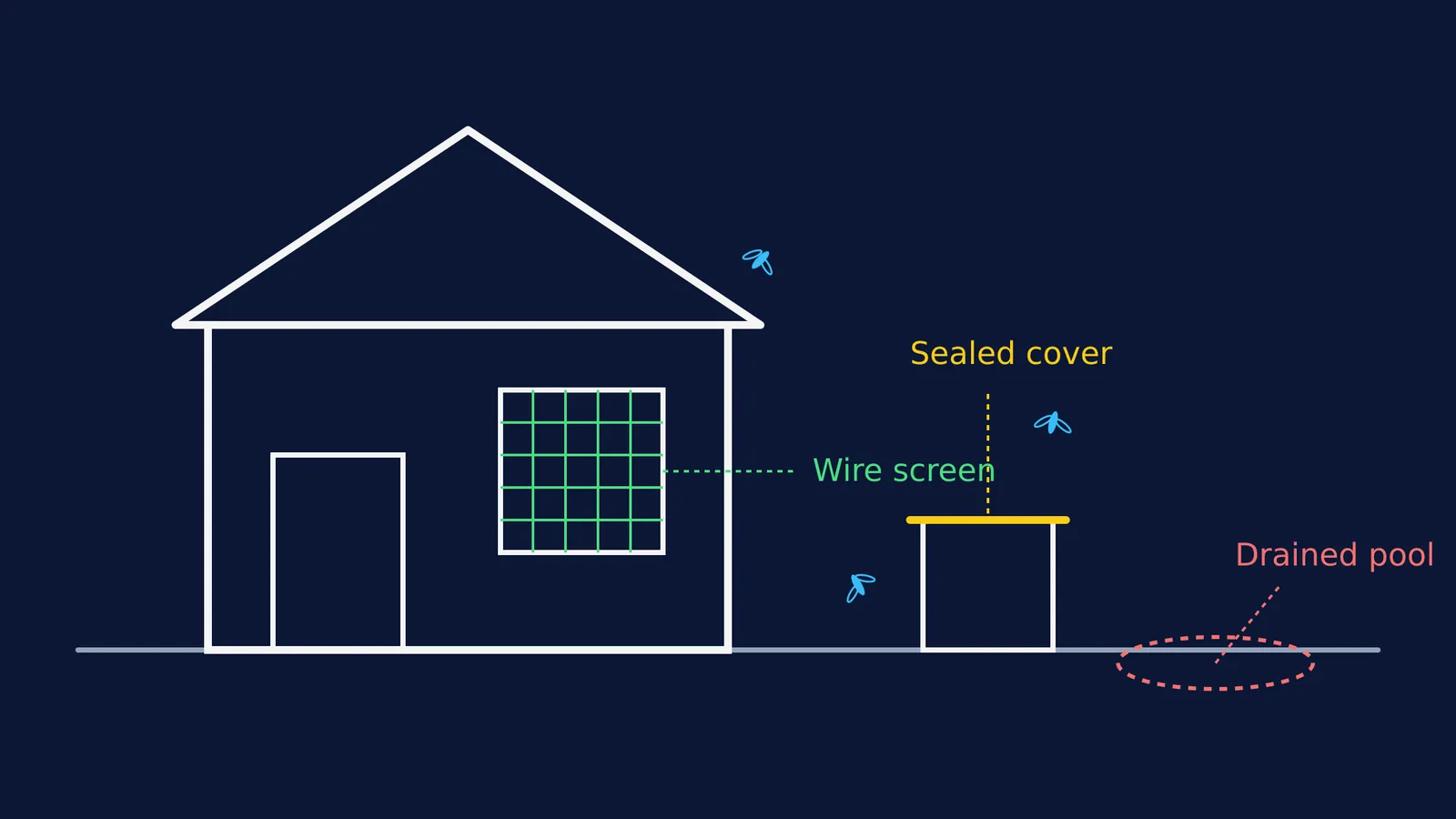
Draining and oiling: Sanitary squads drained swamps, filled in pools, and poured a mixture of oil and larvicide over any standing water that could not be drained. This thin film suffocated the mosquito larvae before they could mature.
Screening: Gorgas ordered that every hospital, barracks, and administrative building must be fitted with fine wire mesh screens on its doors and windows to keep adult mosquitoes out.
Urban sanitation: Teams scoured Panama City for tin cans, old ceramic jars, and sagging gutters. They repaired roofs and gradually replaced open rainwater barrels with piped municipal water systems, destroying the preferred habitats of the urban mosquito.
Mass fumigation: In 1905, Gorgas initiated a massive six-week campaign to fumigate every house in Panama City. Teams sealed the homes and burned sulphur or pyrethrum powder inside to kill adult mosquitoes.
What were the results of the mosquito campaign?
The impact of these intensive public health measures was immediate and measurable. By November 1906, yellow fever was entirely eradicated from the Canal Zone, Panama City, and Colón (PMC).
Malaria proved harder to eliminate because the *Anopheles* mosquito breeds in a wider variety of rural environments, unlike the urban-dwelling *Aedes aegypti*. However, Gorgas's public health measures still achieved a drastic reduction in malaria cases. Without this drop in disease and mortality, the American effort to build the canal would likely have failed. Gorgas proved that large-scale industrial projects were possible in tropical climates if rigorous public health principles were applied. His success built upon the foundational knowledge of how Ronald Ross traced malaria to mosquitoes and Alphonse Laveran and the parasite that causes malaria.
If you are a student preparing for biology exams, understanding vector-borne diseases is essential. You can use the Fermi Concept Library to review the life cycles of pathogens, such as Plasmodium, and how they spread through host populations.
How to apply the Gorgas method to your environment?
The principles William Gorgas used in Panama remain the gold standard for modern mosquito control. You can apply his habitat-destruction strategy around your own home to reduce mosquito populations and protect yourself during the rainy season.
Here is a checklist based on his methods:
Empty artificial containers: Walk around your yard once a week and dump water from plant saucers, buckets, old tyres, and children's toys.
Maintain your gutters: Clear leaves and debris from roof gutters so water flows freely instead of pooling after rain.
Check your screens: Inspect the wire mesh on your windows and doors for holes, and patch them to keep insects outside.
Cover stored water: If you keep water in barrels or tanks, seal them tightly with a lid or fine wire mesh so mosquitoes cannot lay eggs inside.
For students exploring the mathematical side of biology, such as calculating the exponential decay of an insect population, Fermi's AI tutor can work out what you already know and build a plan for the session, guiding you through the equations step by step.