On this page
Your NCERT biology book says malaria is caused by Plasmodium, a protozoan that lives in red blood cells. Before 1880 nobody had seen it, and many scientists believed malaria came from a germ in soil, water or air. Alphonse Laveran, a French army doctor, found the parasite by looking at patients' blood. Our post on Ronald Ross tells how the mosquito route was traced later. This one is about the first step: seeing the parasite at all.
Who was Alphonse Laveran?
The Nobel Prize facts page gives his dates: born 18 June 1845 in Paris, died 18 May 1922 in Paris. He won the 1907 Nobel Prize in Physiology or Medicine "in recognition of his work on the role played by protozoa in causing diseases".
His Nobel biography records that his father was an army doctor and professor at the École de Val-de-Grâce. Laveran studied at Strasbourg, served as an army doctor in the Franco-Prussian war of 1870, and in 1878 was posted to Bône in Algeria. He stayed until 1883, and did his main malaria research there and at Constantine.
What did people think caused malaria?
In his Nobel Lecture, Laveran recalls that in 1879 Klebs and Tommasi-Crudeli had described a "Bacillus malariae" in the soil and water of malarial places, and many Italian researchers had confirmed it. Others had searched the air, water and soil. Laveran took a different route. He wrote that he would have failed too "if I had been content merely to examine the air, water, or the soil", but "I had taken as the basis of my investigations the pathological anatomy and the study in vivo of malarial blood".
What did he see in 1880?
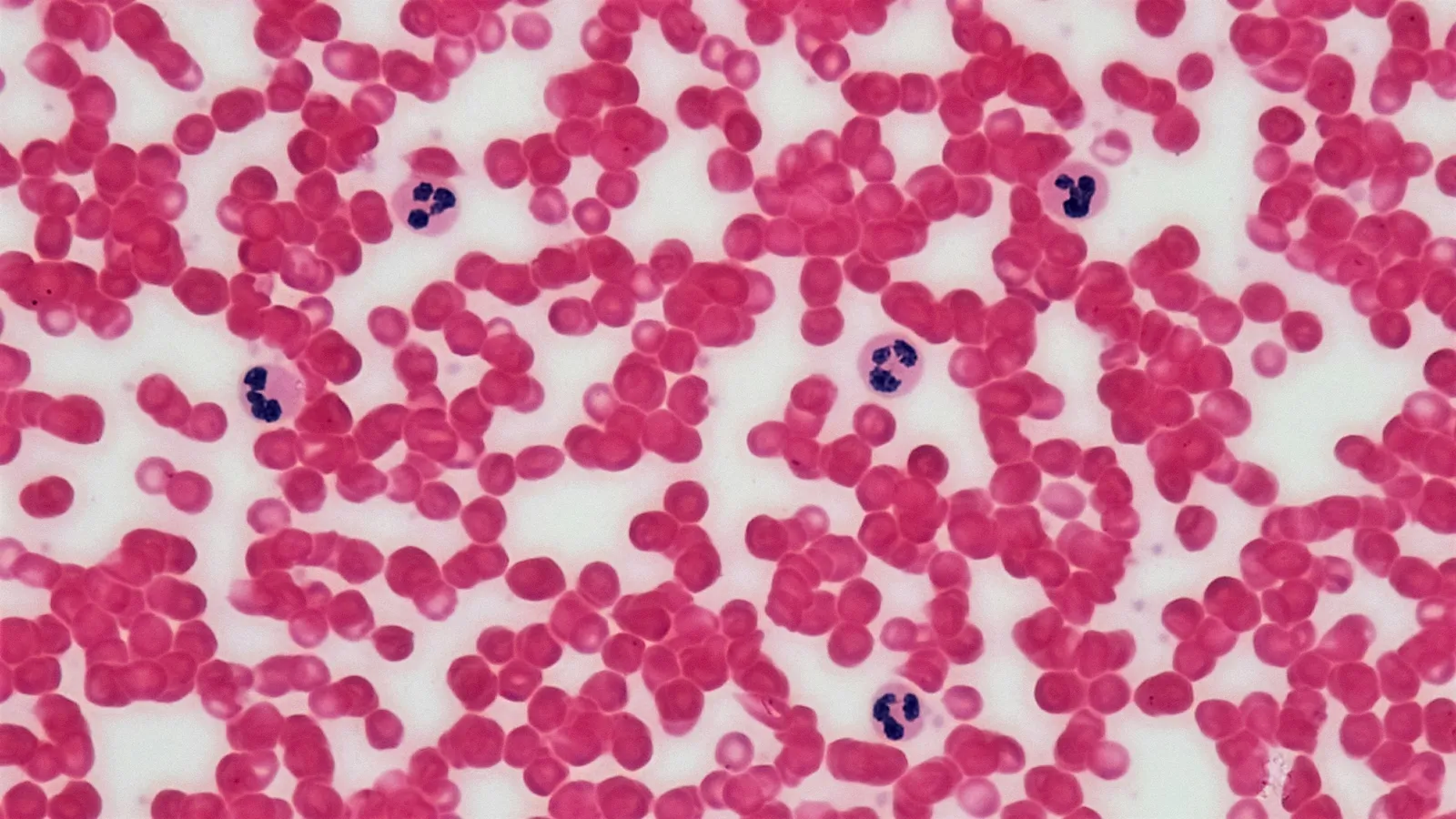
He started with a known clue: a black pigment in the blood and organs of patients who died of malaria. Looking closely at fresh blood, he found pigmented round bodies that moved like amoebae, clear spots inside red cells, and crescent-shaped pigmented bodies. He suspected they were parasites.
Then, in 1880 at the military hospital in Constantine, he saw thin threads like flagella moving very rapidly at the edges of the pigmented bodies, pushing nearby red cells aside. "From then on I had no more doubts of the parasitic nature of the elements which I had found," he said in his lecture. He reported his findings to the French academies between 1880 and 1882 and in a monograph in 1881.
Why was he doubted?
His organism did not look like any known bacterium, and blood-examination methods in 1880 were poor. In his words, many observers "found it simpler to doubt its existence". His Nobel biography records that in 1882 he went to Rome and found the same parasites in patients there. Better staining methods were developed, and confirmations slowly built up. By 1889 the parasite had been found in most malarial regions, and the French Academy of Sciences gave him the Bréant Prize for the discovery.
What were the moving threads?
Laveran did not know at first. By 1907 he could explain that work by Simond, Schaudinn and Siedlecki on related parasites had shown such threads are male sex cells. The malaria parasite reproduces in two ways: asexually, by splitting inside red cells, and sexually, with the threads as male elements. In the language of your syllabus, those threads come from gametocytes, and fertilisation happens inside the mosquito. Our post on the Plasmodium life cycle puts each stage in order.
How small was what he saw? A worked example
Laveran's lecture gives sizes: human red cells are about 7 microns across, the small early forms are 1 to 2 microns, crescents are 8 to 9 microns long, and the moving threads are 20 to 25 microns long. One micron (µm) is 10⁻⁶ m, or 0.001 mm.
Suppose, as a sample setting, a microscope magnifies 1,000 times.
Red cell: 7 µm × 1,000 = 7,000 µm = 7 mm on the image.
Early form: 1 to 2 µm × 1,000 = 1 to 2 mm.
Thread: 20 to 25 µm × 1,000 = 20 to 25 mm, about three times a red cell's width.
Common mistakes:
Treating 1 µm as 10⁻³ m. That is a millimetre. A micron is a thousand times smaller.
Forgetting that magnification multiplies length, not area. A 1,000-times image makes lengths 1,000 times larger.
Calling Plasmodium a bacterium. It is a protozoan, a single-celled organism with a nucleus, which is exactly the point Laveran had to win.
What did he say about mosquitoes?
Because he could not grow the parasite outside the body, Laveran suspected it lived in another animal. He proposed mosquitoes in his 1884 treatise, and in 1894 he wrote that he suspected the microbe lived "in the mosquitoes which are abundant in malarial areas". He left malarial countries and could not test it. In his lecture he credits Ronald Ross for the proof.
He kept working. He gave half his Nobel Prize money to found a tropical medicine laboratory at the Pasteur Institute, founded the Société de Pathologie Exotique in 1908, and spent years on trypanosomes, including the parasite of sleeping sickness.
What can a student take from Laveran's way of working?
Study the sick tissue, not just the surroundings. He went to where the disease acted.
Follow a small clue all the way. The pigment was a known fact. He asked what made it.
Expect doubt when a result fits no box. He answered it with more cases in more places.
If protozoa, bacteria and viruses still blur together, the Fermi Concept Library covers every concept in physics, chemistry, biology, mathematics and computing, so you can compare them one at a time.
Next step: draw the malaria life cycle from your NCERT chapter Human Health and Disease and mark the stage Laveran saw in 1880.