

On this page
Shrinivas Kulkarni was born in 1956 in Kurundwad, Maharashtra, took an MS in physics from IIT Delhi in 1978 and finished a PhD in astronomy at UC Berkeley in 1983, according to Physics World. In 2024 the Caltech astronomer won the Shaw Prize in Astronomy "for his ground-breaking discoveries about millisecond pulsars, gamma-ray bursts, supernovae, and other variable or transient astronomical objects" (Caltech). We have written separately about his later surveys of the changing night sky. This post covers what he found as a student.
How was the first millisecond pulsar discovered?
A pulsar is a spinning neutron star whose radio beam sweeps past Earth like a lighthouse (Physics World). A neutron star is what is left when the core of a massive star collapses: about a Sun's worth of mass squeezed into a ball roughly 20 km across (MIT News).
For years a radio source called 4C21.53 puzzled astronomers. It twinkled like a very compact source, and in 1979 Don Backer judged that it was very probably a pulsar (Demorest and Goss, NRAO). In a 1979 letter he noted that the sensitive Arecibo survey of the region had searched only for periods longer than 60 ms.
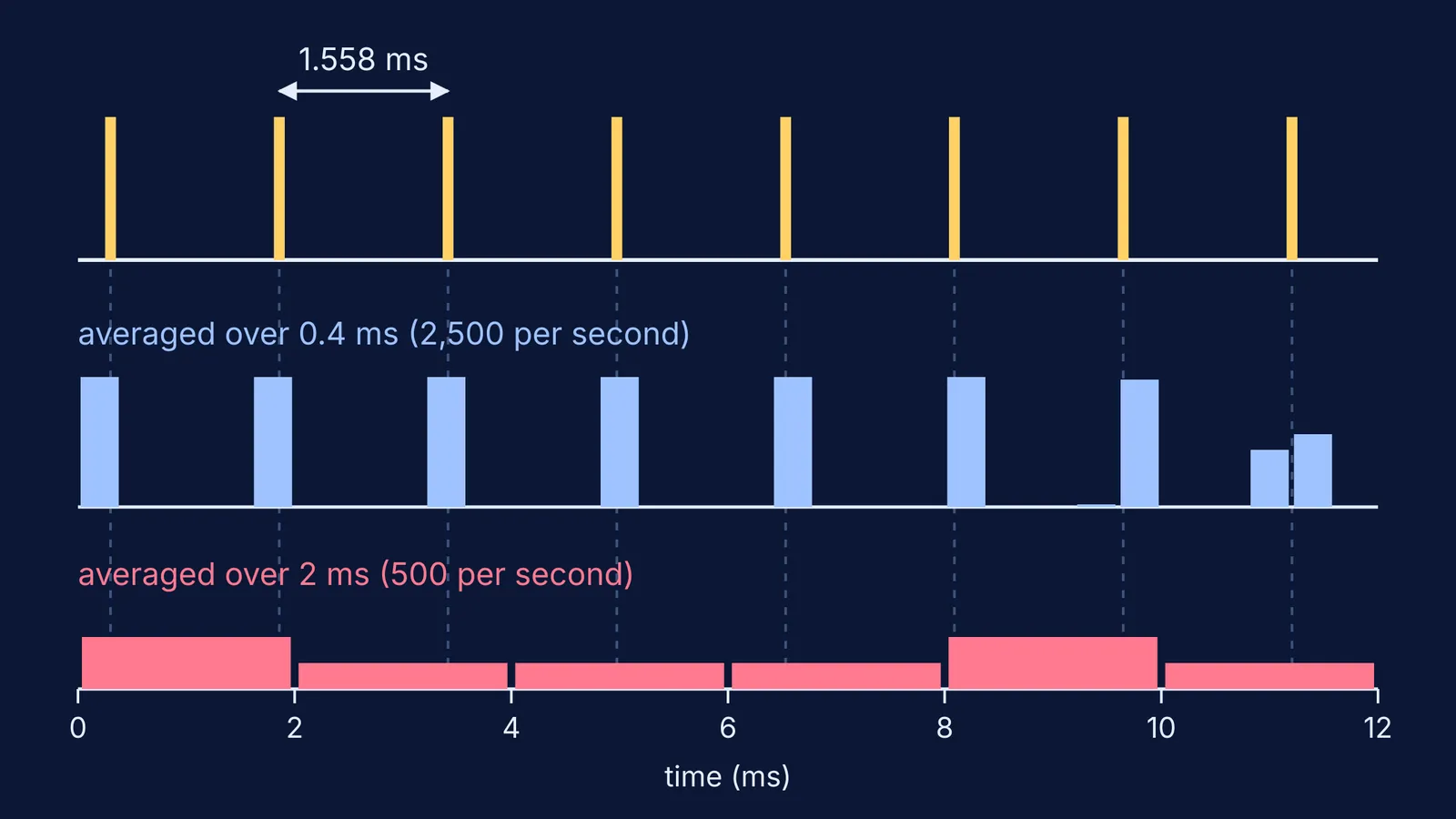
On 25 September 1982, Kulkarni, then a graduate student of Carl Heiles at Berkeley, observed the source with the Arecibo telescope in Puerto Rico. He picked up two harmonics of a 1.558 ms period in a series of short successive observations (Demorest and Goss). "I was there [at the Arecibo Observatory] all alone… it was very thrilling," he later told Physics World. The team detected the pulsar again at Arecibo on 7 November. The paper "A millisecond pulsar" by Backer, Kulkarni, Heiles, Michael Davis and Miller Goss was published in Nature on 16 December 1982.
Fast sampling made the difference. According to Wikipedia, Kulkarni averaged the signal over 0.4 ms, effectively 2,500 samples a second. The original plan of 500 a second would have been too slow for a pulsar spinning at 642 Hz.
Why was it spinning so fast? On 5 December 1982, V. Radhakrishnan and G. Srinivasan of the Raman Research Institute in Bengaluru argued in Current Science that it was an old neutron star "recycled" by a companion star. Alpar and colleagues made the same proposal in Nature later that month (Demorest and Goss). Matter spiralling onto a neutron star passes on its orbital energy and spins the star up (MIT News).
Why doesn't a star spinning 642 times a second fly apart?
You can check this with Class 11 circular motion and gravity. Take a radius of R = 10 km (half of the roughly 20 km diameter given by MIT News) and a mass of one Sun, M = 2.0 × 10^30 kg. Use G = 6.67 × 10^-11 N m² kg^-2 and the 1.558 ms period from Backer and colleagues.
Spin rate: f = 1/T = 1/0.001558 s ≈ 642 per second.
Angular speed: ω = 2πf ≈ 4,030 rad/s.
Speed at the equator: v = ωR ≈ 4.0 × 10^7 m/s, about 40,000 km/s, or roughly 13% of the speed of light. Compare that with how fast Earth's equator moves.
Acceleration needed to keep the surface going round: ω²R ≈ 1.6 × 10^11 m/s².
Gravity available at the surface: GM/R² ≈ 1.3 × 10^12 m/s², about 8 times more than needed, so the star holds together.
Break-up spin: set ω²R = GM/R², which gives f = (1/2π)√(GM/R³) ≈ 1,800 per second, about 3 times faster than the real pulsar.
This is a rough Newtonian estimate. Writing in the same issue of Nature, David Helfand said the rotation rate "is within a factor of about 3 of centrifugal break-up" and the surface is "moving at about 20 per cent of the speed of light" (quoted by Demorest and Goss). At 642 turns a second, his 20 per cent figure corresponds to a radius of about 15 km, a bit larger than ours.
If steps like 4 and 5 are where your circular-motion answers go wrong, the Fermi Problem Library has worked problems with a step-by-step solver that explains the reasoning rather than printing an answer.
What can students learn from the millisecond pulsar discovery?
Ask what your method cannot see. A search built for periods above 60 ms finds nothing at 1.558 ms. That doesn't mean nothing is there.
Check the size of your answer. A quick estimate tells you whether a claim breaks physics.
Try these two questions:
Redo steps 1 to 6 with R = 6 km, the small end of the 12-20 km diameter range from MIT News. Does the safety margin go up or down?
To catch a repeating signal, you need more than two samples per cycle. Work out the minimum sampling rate for 642 Hz and explain why 2,500 per second works and 500 does not.
If angular speed still feels abstract, the Fermi Simulation Lab has interactive simulations for ideas that are easier to see than to read. For another Indian contribution to astrophysics, see C. V. Vishveshwara's work on black-hole ringing.


