On this page
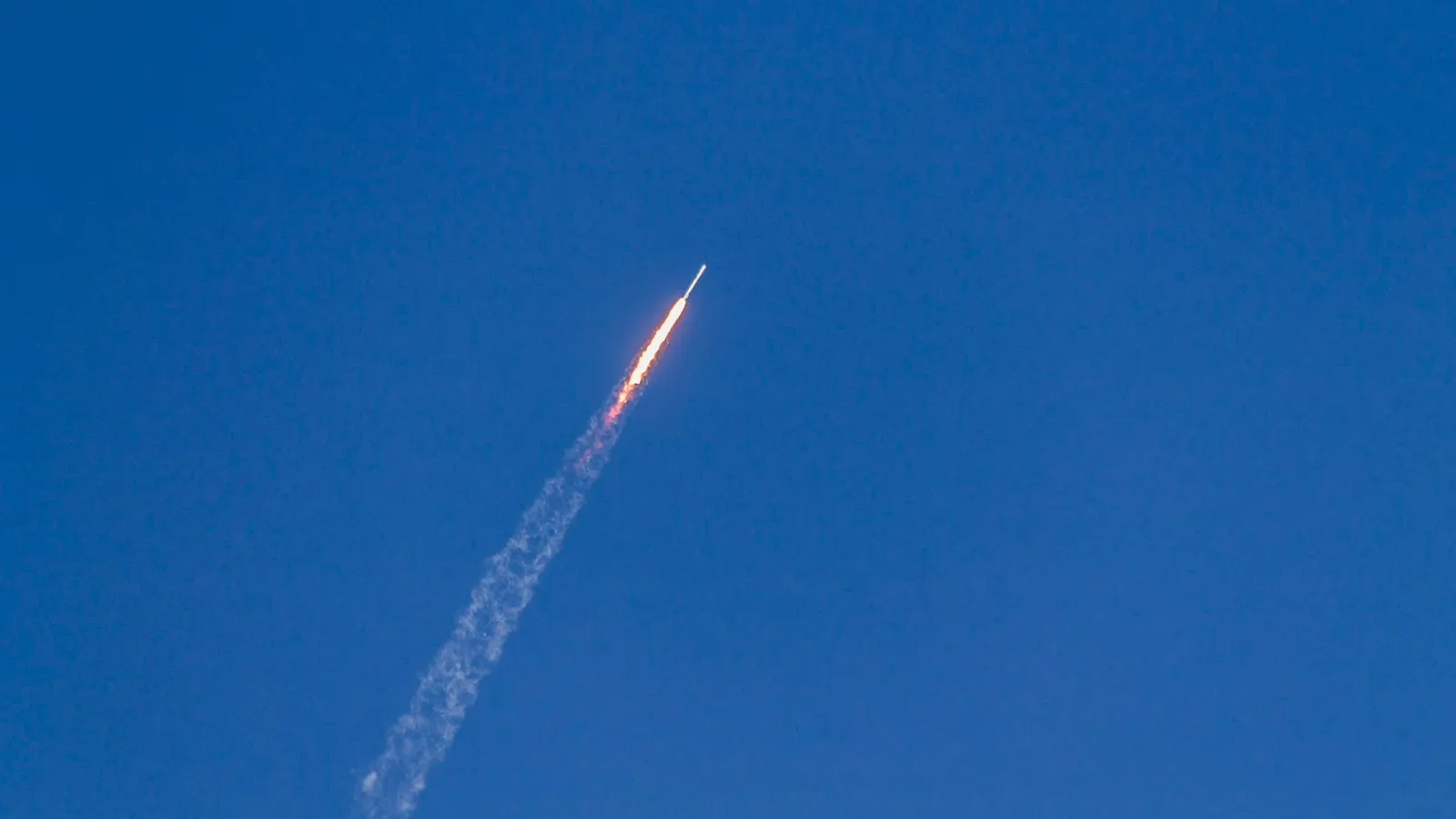
When India launches a satellite, the rocket leaves from the Satish Dhawan Space Centre. The man it is named after was a fluid dynamicist who spent much of his career on a quiet question: how much does air drag on a surface as it flows past? This post traces his work from Caltech to ISRO, using his own report and the centenary articles in Current Science, and ends with what a student can take from his way of working.
Who was Satish Dhawan?
A centenary article by T.S. Prahlad in Current Science (2020) gives his dates as 25 September 1920 to 3 January 2002. A family history in the same issue records that he was born in Srinagar, grew up in pre-Partition Punjab, did practical training at Hindustan Aeronautics in Bangalore, and went to Caltech in 1945. He arrived at the Indian Institute of Science (IISc) in 1951.
What did he study at Caltech?
When air flows over a wing or a rocket body, a thin layer next to the surface, the boundary layer, is slowed by friction. The drag this produces is called skin friction. It is hard to measure because the forces on a small patch are tiny.
Dhawan's report Direct Measurements of Skin Friction, NACA Report 1121, describes a device that measured the force on a very small movable piece of a flat plate. According to the report's summary, the forces ranged from about 1 milligram to about 100 milligrams. His measurements in slow airflow agreed well with the theoretical results of Blasius and von Kármán, and he extended them to high-speed subsonic flow up to a Mach number of about 0.8, with a few supersonic tests.
Prahlad, who later did his PhD under Dhawan, writes that this floating-element work was "already well known" when he joined IISc as a student in 1961.
How did he shape aeronautics at IISc?
Back at IISc, Dhawan built new wind tunnels on earlier work there and trained a generation of aerodynamicists. The family history records that Roddam Narasimha was his first student. Prahlad describes him as "an excellent teacher" whose aerodynamics course was "so full of physical insight". Dhawan headed the aeronautics department by 1961 and, Prahlad writes, became Director of IISc at the age of 42.
What did he do as ISRO chairman?
After Vikram Sarabhai's death, Dhawan became chairman of ISRO in 1972 while staying on as Director of IISc, and served until 1984, according to Prahlad. A second centenary article by P.P. Kale, who worked with him from 1972 to 1994, credits him with bringing ISRO's separate units in Ahmedabad, Bangalore, Sriharikota and Thiruvananthapuram together into one national organisation.
Both articles describe the review culture he introduced: open project reviews, with outside experts from universities and industry, where anyone could ask a question. Prahlad calls this "one of the most notable contributions of Dhawan".
The story most often told concerns SLV-3, India's first satellite launch vehicle, led by A.P.J. Abdul Kalam. Prahlad recounts that the first SLV-3 launch, on 10 August 1979, failed, and Kalam often told how Dhawan stood by him then and gave him full credit when the second launch succeeded on 18 July 1980.
ISRO's own page for the Satish Dhawan Space Centre SHAR describes Sriharikota as "the Spaceport of India".
How this connects to your syllabus
Viscosity, streamlines and Bernoulli's principle are in Class 11 physics. Our guide to common mistakes with fluids and Bernoulli's equation covers them. For the rest of this story, read about Vikram Sarabhai and A.P.J. Abdul Kalam.
If streamlines and boundary layers are hard to picture, the Fermi Simulation Lab has interactive simulations for ideas easier to see than read.
What can a student take from his way of working?
Measure carefully. His reputation began with a hard measurement done well, checked against theory.
Build the tools others need. Wind tunnels at IISc served students for decades.
Share credit, own failure. The SLV-3 story is about how a leader handles both.
Invite questions. His open reviews let junior engineers question senior ones, and the projects got better for it.
This week, read the one-paragraph summary of NACA Report 1121 on the NASA Technical Reports Server and write down, in your own words, what skin friction is.