On this page
A. P. J. Abdul Kalam is often remembered as a President and a speaker to students. This post is about the engineering. He led the project that built India's first satellite launch vehicle, SLV-3, and later headed the country's guided missile programme. Below are the verified facts from official records, followed by the physics of why rockets like SLV-3 are built in stages, worked through with numbers.
What did Kalam study and where did he work?
The official profile on the President of India's website gives the outline. Kalam was born on 15 October 1931 at Rameswaram in Tamil Nadu and specialised in aeronautical engineering at the Madras Institute of Technology. He worked for two decades at ISRO, then moved to the Defence Research and Development Organisation (DRDO). He was Scientific Adviser to the Defence Minister from July 1992 to December 1999 and Principal Scientific Adviser to the Government of India from November 1999 to November 2001. He became the 11th President of India on 25 July 2002 and served until 2007. He received the Padma Bhushan in 1981, the Padma Vibhushan in 1990 and the Bharat Ratna in 1997.
What was SLV-3, and what was Kalam's role?
The same official profile says Kalam was Project Director for India's first indigenous Satellite Launch Vehicle, SLV-III, which placed the Rohini satellite in near-earth orbit in July 1980. It also credits him with the evolution of ISRO's launch vehicle programme, "particularly the PSLV configuration."
ISRO's page on SLV-3 gives the engineering details:
All solid, four stages. Every stage used solid propellant.
Size. It weighed 17 tonnes, stood 22 m tall, and could place payloads of about 40 kg in low Earth orbit.
Guidance. It used open-loop guidance with a stored pitch programme, steering along a pre-planned path.
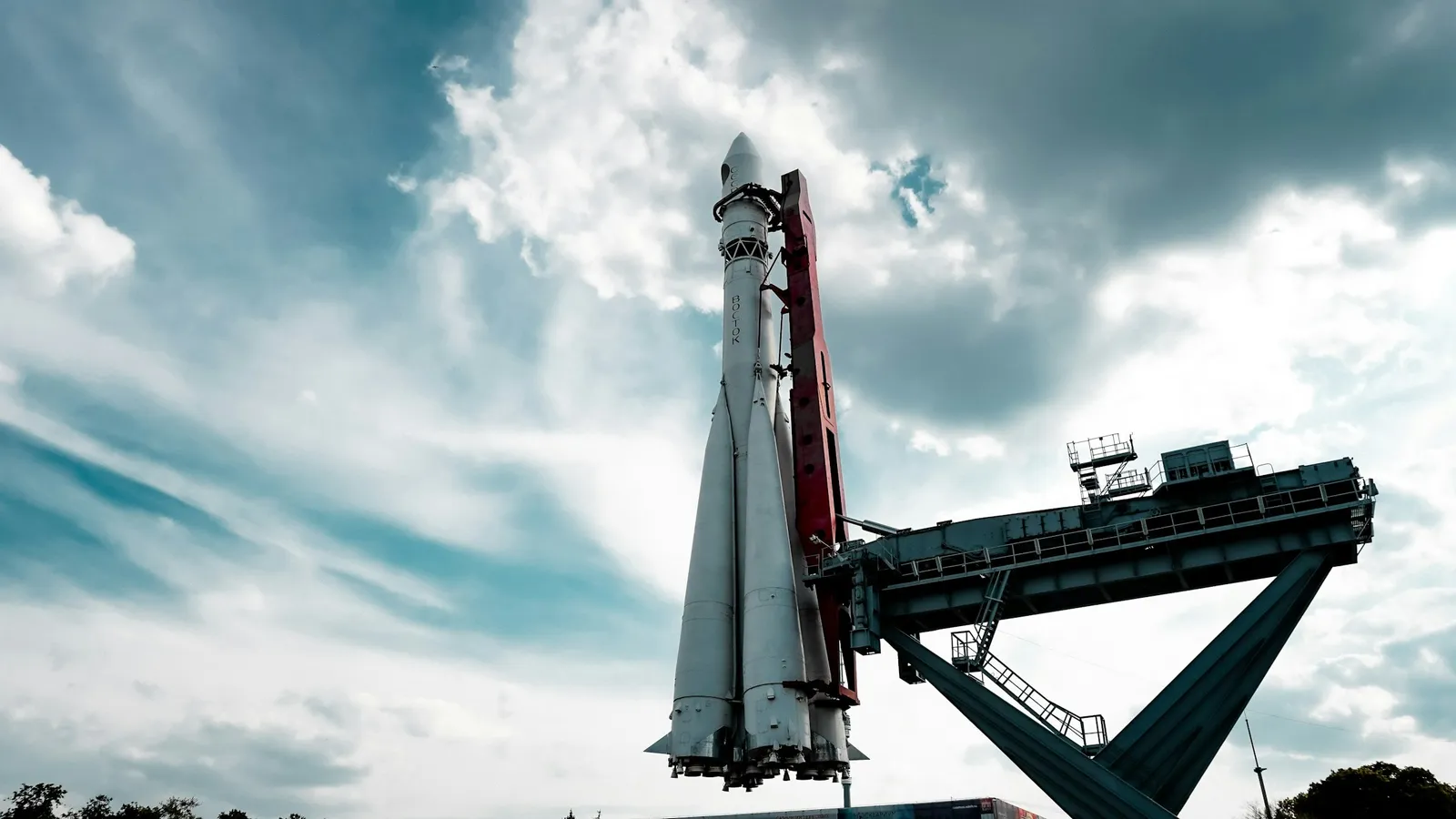
Record. The first experimental flight, in August 1979, was only partially successful. The launch on 18 July 1980 from Sriharikota put Rohini RS-1 in orbit, which ISRO says made India "the sixth member of an exclusive club of space-faring nations." Two more launches followed, in May 1981 and April 1983.
Legacy. ISRO says SLV-3 showed the way to ASLV, PSLV and GSLV.
Note the sequence: a partly failed first flight, then success eleven months later. If you are recovering from a bad mock test, our 60-minute review after a bad test uses the same idea of finding the specific fault and fixing it.
What did he do in the missile programme?
According to the President's profile, Kalam was Chief Executive of the Integrated Guided Missile Development Programme (IGMDP) at DRDO. He was responsible for developing and operationalising the Agni and Prithvi missiles, and for building capability in critical technologies by networking many institutions.
Why are rockets built in stages? A worked example
NASA Glenn's page on the ideal rocket equation derives the result from conservation of momentum:
Δu = Veq × ln(m(full) / m(empty))
Here Δu is the gain in speed, Veq is the exhaust speed, and the log term is the ratio of full mass to empty mass. Because of the logarithm, carrying empty tanks hurts. Stages let you drop them.
Use made-up but reasonable numbers: Veq = 2.5 km/s, a 1-unit payload, 90 units of propellant and 10 units of tank and structure.
One stage.
m(full) = 90 + 10 + 1 = 101; m(empty) = 10 + 1 = 11.
Δu = 2.5 × ln(101/11) = 2.5 × ln(9.18) ≈ 2.5 × 2.217 ≈ 5.54 km/s.
Two stages, each with 45 units of propellant and 5 of structure.
Stage 1 burns: from 101 down to 56. Δu1 = 2.5 × ln(101/56) ≈ 2.5 × 0.590 ≈ 1.47 km/s.
Drop stage 1's 5 units of empty structure: mass is now 51.
Stage 2 burns: from 51 down to 6. Δu2 = 2.5 × ln(51/6) ≈ 2.5 × 2.140 ≈ 5.35 km/s.
Total ≈ 6.82 km/s.
Same propellant, same structure, same payload, but about 1.3 km/s more speed, only because dead mass was thrown away halfway. Multi-stage designs, including SLV-3's four stages, rest on this principle.
The equation comes from integrating du = −Veq dM / M, a good test of the calculus in our guide to calculus for JEE physics.
What students can take from Kalam's engineering career
Engineering is iterative. SLV-3's partial failure in 1979 came before success in 1980.
Big projects are networks. His official profile stresses building capability across many institutions.
Physics sets the design. The staging choice follows straight from a logarithm.
Variable-mass problems trip up many students. The Fermi Problem Library has worked problems with a step-by-step solver that explains the reasoning, so you can check where your method went wrong. Then try the example above with three stages of 30 units each and see whether the gain keeps growing.