On this page
India's space programme is now known for missions such as Chandrayaan and Aditya-L1. It started with a physicist who studied cosmic rays and a small rocket launched from Thumba, near Thiruvananthapuram. Vikram Sarabhai connected the two. This post covers his science, the institutions he built and the idea behind India's space programme, in his own words.
Who was Vikram Sarabhai?
The Physical Research Laboratory's page on its founder records that Sarabhai was born on 12 August 1919 in Ahmedabad. He went to Cambridge University and took his tripos in Natural Sciences in 1940. He then did his doctoral research under C. V. Raman at the Indian Institute of Science in Bangalore, and Cambridge awarded him his doctorate in 1947.
What did he discover about cosmic rays?
Cosmic rays are high-energy charged particles from space. Because they are charged, Earth's magnetic field bends their paths, so what reaches the ground depends on latitude and on conditions in space, including the Sun's activity. Measuring how their intensity changes over a day, or from one direction to another, tells you about the space around Earth.
Sarabhai worked on exactly these changes. In 1948 he and a co-author published on the semi-diurnal variation in cosmic ray intensity in the Proceedings of the Physical Society. In 1961 he and U. R. Rao published a series in the Proceedings of the Royal Society on time variations of directional cosmic ray intensity at low latitudes, comparing particles arriving from the east and the west. Low latitudes matter here: near the magnetic equator, Earth's field shields the ground most strongly, which makes these effects easier to separate.
Why did he found the Physical Research Laboratory?
According to the PRL history page, the laboratory began at Sarabhai's home with research on cosmic rays and was formally established on 11 November 1947, at M. G. Science College in Ahmedabad. Its first focus was cosmic rays and the upper atmosphere. In 1951 it set up its first ozone measurement station at Mount Abu. The Vikram Sarabhai Space Centre's page on him notes that he was 28 when he founded it.
The PRL page quotes his view of what a country must do: "Countries have to provide facilities for their nationals to do front-rank research within the resources which are available."
How did India's space programme begin?
In 1962 Sarabhai became Chairman of the Indian National Committee for Space Research (INCOSPAR). ISRO's own profile explains that INCOSPAR was "set up by the Government of India in 1962, as envisioned by Dr. Vikram A Sarabhai", and that ISRO was formed on 15 August 1969 and superseded it.
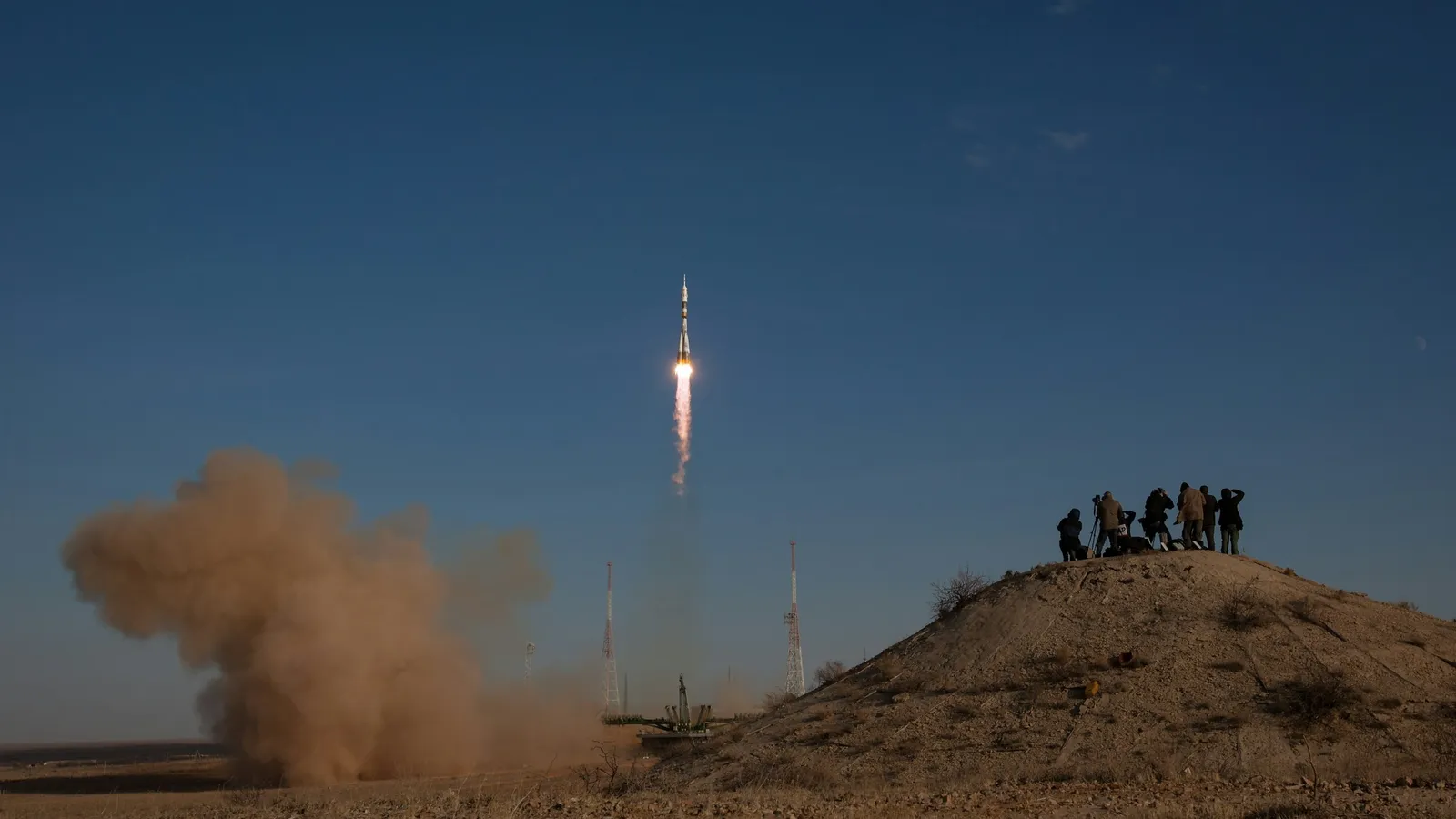
The VSSC page describes the first launch site. With Homi Bhabha's support, a rocket launching station was set up at Thumba near Thiruvananthapuram, chosen mainly because of its closeness to the equator. The first flight was launched on 21 November 1963 with a sodium vapour payload. Sarabhai also started the project to build an Indian satellite. Aryabhata reached orbit in 1975, launched from a Russian cosmodrome, after his death. His discussions with NASA led to the Satellite Instructional Television Experiment of 1975 to 1976.
Why did a developing country need a space programme?
This was the question Sarabhai was asked most, and his answer, quoted on the VSSC page, still defines the programme:
"There are some who question the relevance of space activities in a developing nation. To us, there is no ambiguity of purpose. We do not have the fantasy of competing with the economically advanced nations in the exploration of the moon or the planets or manned space-flight. But we are convinced that if we are to play a meaningful role nationally, and in the community of nations, we must be second to none in the application of advanced technologies to the real problems of man and society."
What else did he build, and how was he honoured?
PRL's page lists him as Director of PRL from 1965 to 1971 and Chairman of the Atomic Energy Commission from 1966 to 1971. The VSSC page lists institutions he founded or helped found, including the Indian Institute of Management Ahmedabad and the Community Science Centre in Ahmedabad, started in 1966 because of his interest in science education.
He received the Shanti Swarup Bhatnagar Award for physics in 1962, the Padma Bhushan in 1966 and, after his death, the Padma Vibhushan. The space centre at Thiruvananthapuram is named after him, and in 1974 the International Astronomical Union named a crater on the Moon the Sarabhai Crater.
What can a student learn from how Sarabhai worked?
Start with the physics you have. He studied cosmic rays at low latitudes, where India sits, and asked what they revealed.
Build the place where work can happen. He started PRL at home, then grew it into a national laboratory.
Ask what science is for. His answer to "why space?" was practical: apply advanced technology to real problems.
If the physics of charged particles in magnetic fields is your sticking point, our guide to the magnetic force and the right-hand rule works through it. The Fermi Simulation Lab has interactive simulations for ideas that are easier to see than read, which helps when the path of a charged particle is hard to picture.
Try it now: work out the direction of the force on a proton moving east through a magnetic field pointing north, then explain why charged particles from space arrive unevenly across Earth.