On this page
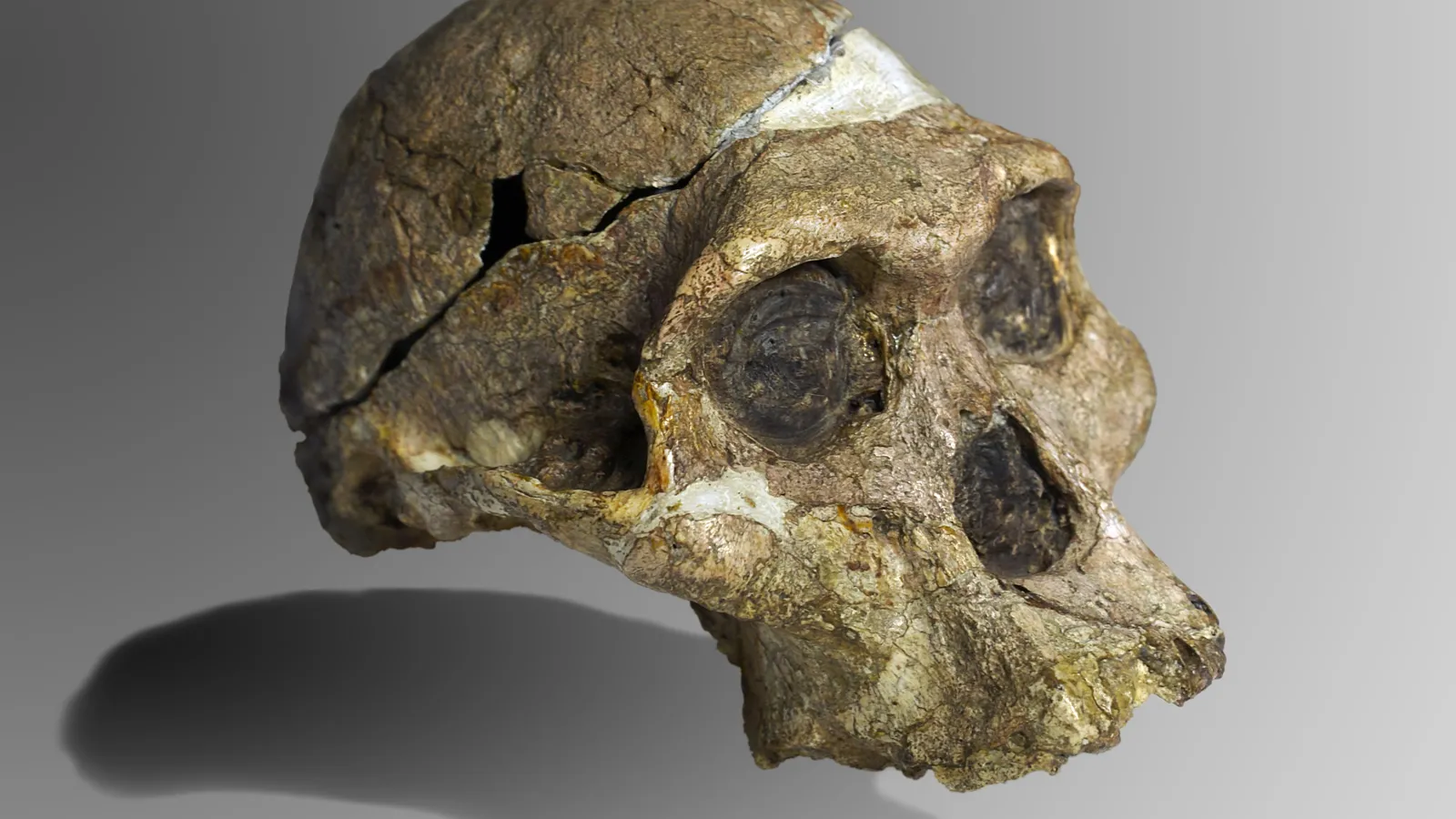
On 18 April 1947, a blast of dynamite in a limestone cave at Sterkfontein, near Johannesburg, exposed a skull. The Ditsong National Museum of Natural History in Pretoria, which holds it today, records that "a beautiful skull was blasted out" that day and that the blow took off the top of the skull, showing the inside of the braincase. The fossil was found by Robert Broom, then 80 years old, and John Robinson.
Scientists catalogue the skull as Sts 5, meaning it was the fifth specimen found at the site at that time. Everyone else calls it Mrs Ples.
Who was Robert Broom?
Broom was born in Paisley, Scotland, on 30 November 1866, trained as a doctor and moved to South Africa in 1897, according to South African History Online. He was elected a Fellow of the Royal Society in 1920, and in 1934 he joined the Transvaal Museum in Pretoria, now part of Ditsong.
Why did scientists doubt the Taung Child?
The story starts in 1925. Raymond Dart described a small fossil skull from Taung in a paper in Nature titled "Australopithecus africanus: The Man-Ape of South Africa". He argued it was a link between apes and humans.
The problem was that the Taung fossil was a child. The Smithsonian Human Origins Program explains that sceptics argued it was really a baby chimpanzee that would have gained its ape-like features as it got older.
Broom backed Dart early. In 1925 he wrote, as quoted by the Ditsong museum: "It seems to me not at all improbable that an adult Australopithecus will yet be obtained, and possibly a perfect skeleton." In August 1936 he found the first adult Australopithecus cranium at Sterkfontein, TM 1511. Eleven years later came Mrs Ples.
What did Mrs Ples prove?
The Smithsonian describes Sts 5 as a nearly complete adult Australopithecus africanus and puts its importance plainly: "This fossil showed that maturity wouldn't make A. africanus less human." An adult with the Taung Child's mix of features could not be dismissed as a baby ape.
The species had a small brain. The Australian Museum gives an average brain size for Australopithecus africanus of about 480 cubic centimetres. Yet a pelvis from Sterkfontein, Sts 14, showed the species could walk on two legs, the same museum notes. Small brain, upright walking: that combination showed that walking upright did not need a big brain.
The nickname comes from Broom's original name for the fossil, Plesianthropus transvaalensis, "near-man from the Transvaal". It was later placed in Australopithecus africanus, Dart's species.
How old is Mrs Ples?
This is still debated, which is a useful lesson in itself. The Smithsonian lists Sts 5 as between 2.5 and 2.1 million years old. A 2022 study in PNAS by Darryl Granger and colleagues used cosmogenic nuclide burial dating and placed nearly all the Australopithecus fossils at Sterkfontein at about 3.4 to 3.7 million years old. The authors argue that earlier ages of about 2.1 to 2.6 million years came from younger flowstone layers, so they underestimate the fossils' age.
If your textbook gives a single age, use it in the exam, but know it is an estimate still being refined.
For the wider story, read our posts on Raymond Dart and the Taung Child and on Phillip Tobias and Homo habilis.
How do you explain Mrs Ples in an exam answer?
This four-step frame works for most "why was this fossil important?" questions:
Claim: Dart (1925) said the Taung Child was an early human relative, Australopithecus africanus.
Objection: Critics said it was a baby ape, so its human-like features might disappear with age.
Evidence that answers the objection: Broom and Robinson's Sts 5 (1947) was a nearly complete adult skull that kept those human-like features.
What changed: Australopithecus africanus became much harder to dismiss as an ape, strengthening Dart's case.
A worked example, in about 60 words: "In 1947 Robert Broom and John Robinson found Sts 5, or Mrs Ples, at Sterkfontein. It was a nearly complete adult Australopithecus africanus skull. Critics had dismissed Dart's Taung Child as a young ape, but an adult with the same mix of ape and human features showed that growing up did not make the species less human."
If your weak spot is how australopithecines fit with Homo habilis and Homo erectus, the Fermi Concept Library gives every biology concept its own lesson and its place in the map. Our guide to human evolution for NEET covers the full sequence. And if you are not sure where to begin, Fermi's AI tutor works out what you already know and builds a plan for the session.
Next time you read about a fossil, ask the same question Broom did: what evidence would settle the argument?