On this page
The human evolution section of NCERT is one page long, and NEET questions on it are mostly about order, dates and brain sizes. Students lose marks by mixing up which form came first or which brain size goes with which name. This post turns the page into a timeline you can learn, works through an ordering question, and shows where newer research adds detail.
Where is human evolution in the syllabus?
The NEET (UG) 2026 syllabus ends the evolution unit with "Adaptive Radiation; Human evolution." The text is section 6.9, Origin and Evolution of Man, in NCERT Class 12 Biology, Chapter 6, which is in the 2026-27 reprint. Check the syllabus for your exam year when NMC publishes it.
For natural selection, Hardy-Weinberg and the evidence for evolution, see our evolution guide for NEET.
What is the NCERT timeline?
Here is section 6.9 as a list, oldest first. All figures are from NCERT.
About 15 million years ago (mya): Dryopithecus and Ramapithecus. Hairy, walked like gorillas and chimpanzees. Ramapithecus was more man-like; Dryopithecus more ape-like.
About 3-4 mya: man-like primates walked upright in eastern Africa, probably no taller than 4 feet. Fossils of man-like bones come from Ethiopia and Tanzania.
About 2 mya: Australopithecines lived in East African grasslands. They hunted with stone weapons but essentially ate fruit.
Homo habilis: called the first human-like being, the hominid. Brain 650-800 cc. Probably did not eat meat.
About 1.5 mya, Homo erectus: known from fossils found in Java in 1891. Brain about 900 cc. Probably ate meat.
1,00,000-40,000 years ago, Neanderthal man: brain 1400 cc; lived in the near east and central Asia; used hides to protect the body and buried their dead.
Homo sapiens: arose in Africa and moved across continents. During the ice age, between 75,000 and 10,000 years ago, modern Homo sapiens arose.
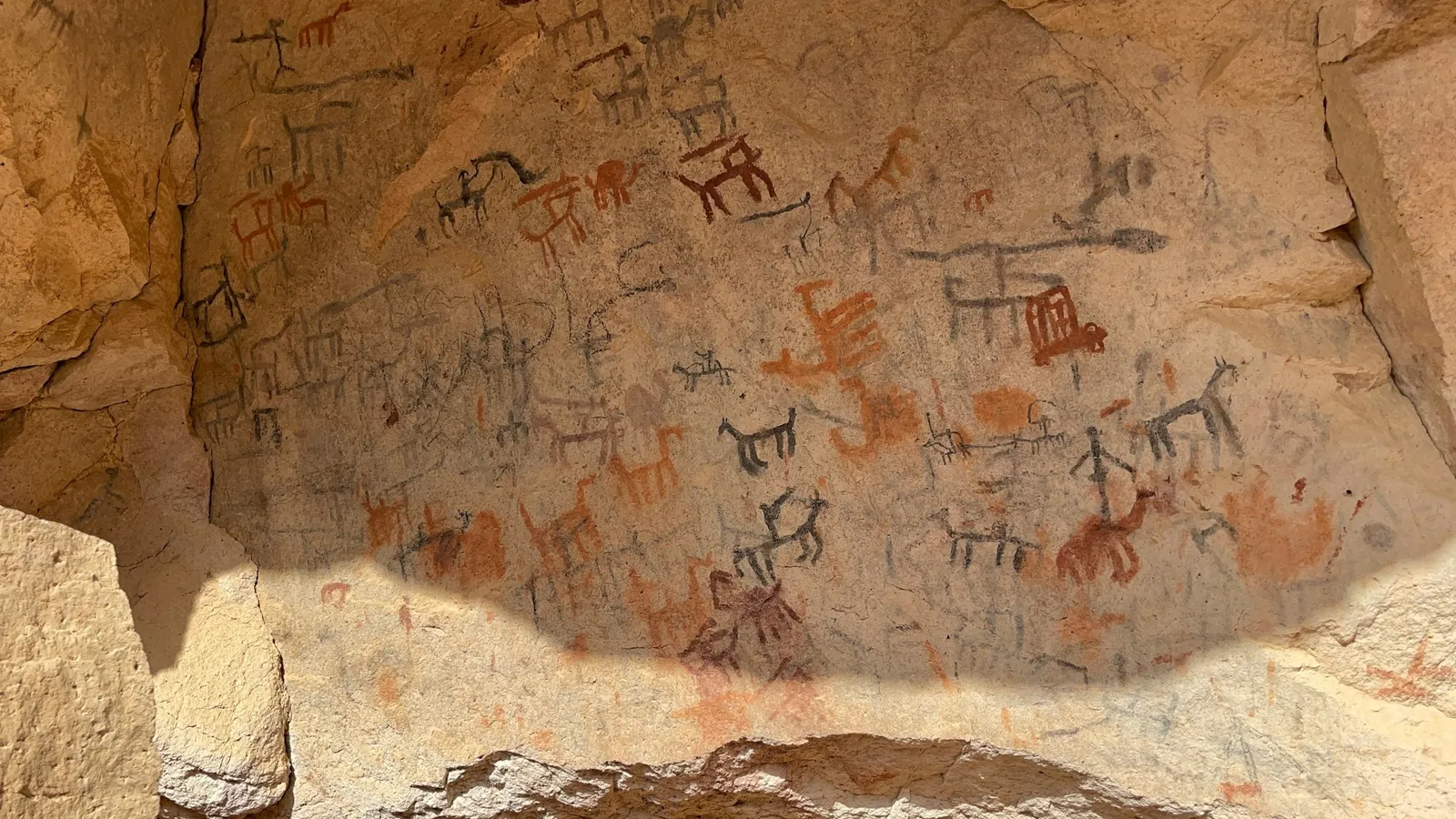
About 18,000 years ago: pre-historic cave art, such as the paintings at Bhimbetka rock shelter in Raisen district, Madhya Pradesh.
About 10,000 years ago: agriculture began and human settlements started.
Worked example: an ordering and brain-size question
Question: arrange in order of appearance, and say by roughly how much brain size grew from Homo habilis to Homo erectus and from Homo habilis to the Neanderthals: Neanderthal man, Australopithecus, Homo erectus, Dryopithecus, Homo habilis.
Step 1, order by NCERT's dates: Dryopithecus (about 15 mya), Australopithecus (about 2 mya), Homo habilis, Homo erectus (about 1.5 mya), Neanderthal man (1,00,000-40,000 years ago).
Step 2, pick one value for Homo habilis. NCERT gives a range, 650-800 cc, so use the midpoint: (650 + 800) / 2 = 725 cc.
Step 3, Homo habilis to Homo erectus: 900 − 725 = 175 cc. As a fraction, 175 / 725 ≈ 0.24, so about 24% larger.
Step 4, Homo habilis to Neanderthal: 1400 / 725 ≈ 1.93, so close to twice the size.
If you use the ends of the range instead, the erectus increase is 100 cc (from 800) to 250 cc (from 650). In an exam, quote NCERT's figures exactly and only calculate when asked.
What do newer studies add?
NCERT is the reference for the exam. It is still worth knowing that the field keeps moving as new fossils and genomes are studied.
An older date for our species. Fossils from Jebel Irhoud in Morocco, reported in Nature in 2017, were dated to 315,000 ± 34,000 years by thermoluminescence. The authors say they document early stages of the Homo sapiens lineage and that its emergence involved the whole African continent. This fits NCERT's statement that Homo sapiens arose in Africa, and pushes the start well before the ice-age window NCERT gives for modern humans.
Neanderthal genes in living people. A draft Neandertal genome published in Science in 2010 found that Neandertals shared more genetic variants with present-day people in Eurasia than with people in sub-Saharan Africa, pointing to gene flow from Neandertals into the ancestors of non-Africans. That abstract says Neandertals disappeared about 30,000 years ago, a little later than NCERT's 40,000.
A Nobel Prize for this work. The 2022 Nobel Prize in Physiology or Medicine went to Svante Pääbo "for his discoveries concerning the genomes of extinct hominins and human evolution".
For NEET, write NCERT's figures. Use the newer findings to understand the topic, not to change exam answers.
Which mistakes cost marks?
Swapping Ramapithecus and Dryopithecus. Ramapithecus was more man-like; Dryopithecus more ape-like.
Giving Homo habilis a meat diet. NCERT says Homo habilis probably did not eat meat and Homo erectus probably did.
Forgetting the Java find. NCERT's Homo erectus fossils were discovered in Java in 1891.
Mixing up the two brain sizes above 800. Erectus about 900 cc, Neanderthal 1400 cc.
Dating agriculture to 18,000 years. That is cave art; agriculture is about 10,000 years ago.
A practice routine for this section
Day 1: write the nine-step timeline from memory, then check it against NCERT.
Day 2: make flashcards with a name on one side and time, brain size and one fact on the other.
Day 3: write five ordering questions with five names each and swap with a friend.
Day 4: answer NCERT exercise 4, tracing brain size, skeleton and diet, in ten lines.
If you get stuck connecting this page to the rest of the evolution chapter, Fermi's AI tutor can work out what you already know and build a plan for the session.
Tonight, cover the list above and write the three brain sizes with their names.