On this page
Every nerve in your body grew from a few embryonic cells, and only some of the nerve cells first produced survive. Something has to tell the right cells to grow and the rest to die. Rita Levi-Montalcini found one of those signals, and she started the work in a laboratory she built in her bedroom. This post covers how she did it and what NGF does, with a small lab calculation along the way.
Who was Rita Levi-Montalcini?
The Nobel Prize summary records that she was born in Turin, Italy, on 22 April 1909, and died in Rome on 30 December 2012, aged 103, the longest-lived Nobel laureate.
In her Nobel autobiography she writes that at twenty she asked her father's permission to pursue a professional career, caught up on Latin, Greek and mathematics in eight months, and entered medical school in Turin. There she trained under the histologist Giuseppe Levi, alongside Salvador Luria and Renato Dulbecco, both later Nobel laureates. She graduated in 1936. Soon after, laws barred non-Aryan Italian citizens, including Jewish families like hers, from academic and professional careers.
How did she do research in a bedroom?
After a short stay in Brussels, she returned to Turin in spring 1940. Her family chose to stay in Italy rather than emigrate. "I then decided to build a small research unit at home and installed it in my bedroom," she wrote. Her inspiration was a 1934 paper by Viktor Hamburger on what happens in chick embryos when a limb bud is removed. Giuseppe Levi, who had fled Belgium, joined her as her only assistant.
When bombing made Turin unsafe in 1941, she rebuilt the mini-lab in a country cottage. In autumn 1943 the family fled to Florence and lived in hiding until the war ended. In 1944 she worked as a doctor in a camp for war refugees.
What did she discover in St. Louis?
In autumn 1947 Hamburger invited her to Washington University in St. Louis to repeat the chick-embryo experiments. She planned to stay a year and stayed for decades.
The 1986 Nobel press release describes the key result. In 1952 she showed that when mouse tumours were transplanted into chick embryos, they caused strong growth of the embryo's sensory and sympathetic nerves. The growth happened without direct contact between tumour and nerves. So, she reasoned, the tumour must release a substance that spreads and acts on certain nerve types. She and Hamburger had already reported the selective growth effect of a mouse sarcoma on these nerves in the Journal of Experimental Zoology in 1951.
She then built a faster test. A sensory ganglion from a chick embryo was placed in culture with the extract. If NGF was present, nerve fibres began to grow out within minutes, and after a day the ganglion "resembled a sun surrounded by rays". The lowest concentration that produced that halo was defined as one biological unit, about 10 nanograms of NGF per millilitre.
In 1953 the biochemist Stanley Cohen joined the group. Testing whether protein or nucleic acid was active, he added snake venom to break down nucleic acids and found the venom itself had even more growth activity. A male mouse salivary gland turned out to be another rich source. With these, Cohen purified NGF and made antibodies that blocked its effect.
A small lab calculation
Problem. You want 2 mL of culture medium containing 10 ng/mL of NGF, the one-unit level from the press release. Your stock is 1 µg/mL. How much stock do you add?
Convert the stock. 1 µg = 1,000 ng, so the stock is 1,000 ng/mL.
Use C1V1 = C2V2. 1,000 ng/mL × V1 = 10 ng/mL × 2 mL.
Solve. V1 = 20 / 1,000 mL = 0.02 mL = 20 µL.
So 20 µL of stock plus 1.98 mL of medium. That dish holds only 20 ng of NGF, two hundred-thousandths of a milligram, which shows how potent the factor is. The common mistake is mixing µg and ng; converting first avoids a thousandfold error.
Why does NGF matter?
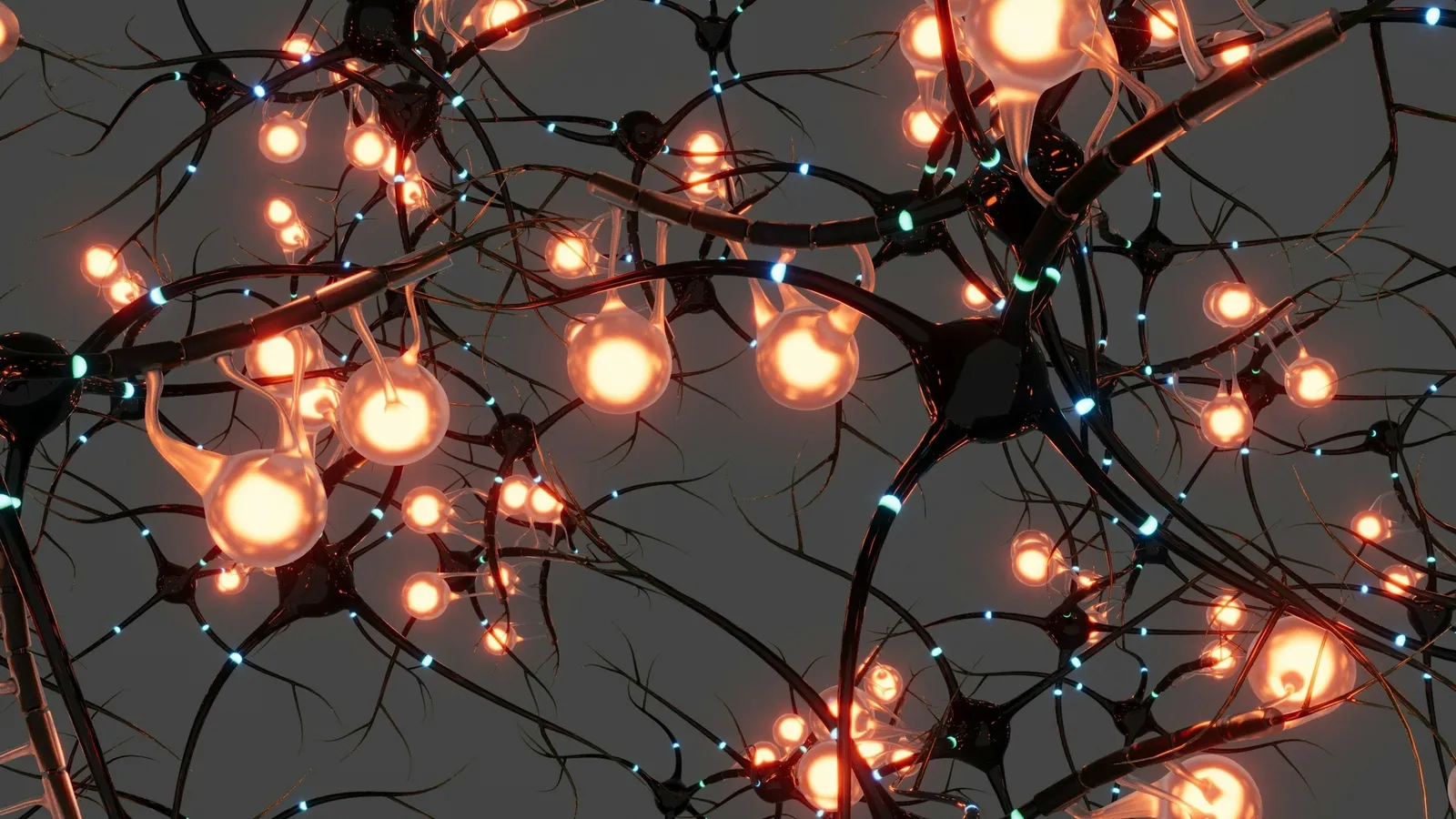
The press release explains that the developing body makes more sensory and sympathetic nerve cells than it needs. Nerve fibres grow toward tissues that release NGF, take it up at their tips and carry it back to the cell body. Only neurons that reach an NGF-producing target survive. NGF was the first of many growth factors found, and the work opened research into wound healing, dementia and tumours.
Nerve cells and their signals are part of Neural Control and Coordination in the NEET (UG) 2026 syllabus. Our guide to neural control and coordination covers the exam side.
Levi-Montalcini and Cohen shared the 1986 Nobel Prize in Physiology or Medicine "for their discoveries of growth factors".
What can a student take from her way of working?
Start small and start now. She did not wait for a proper lab.
Reason from one clean observation. Growth without contact meant a diffusible signal.
Build a quick test. The ganglion halo assay let the group screen many extracts.
Welcome surprises. The snake venom control became a new source of NGF.
If nerve cells and signals still feel like a list of terms, rebuild the picture from one neuron outward. The Fermi Concept Library covers every concept in physics, chemistry, biology, mathematics and computing, so you can trace a signal from a target tissue back to the cell body.
Try it: explain in four sentences why growth without contact told Levi-Montalcini that a chemical signal was involved.