On this page
Pushpa Mittra Bhargava (1928–2017) is remembered for two things: a laboratory and an argument. The laboratory is the Centre for Cellular and Molecular Biology (CCMB) in Hyderabad. The argument was that everyone, not only scientists, should test claims before believing them. If you are studying biology, or just tired of WhatsApp forwards, both are worth knowing.
When did P. M. Bhargava found CCMB?
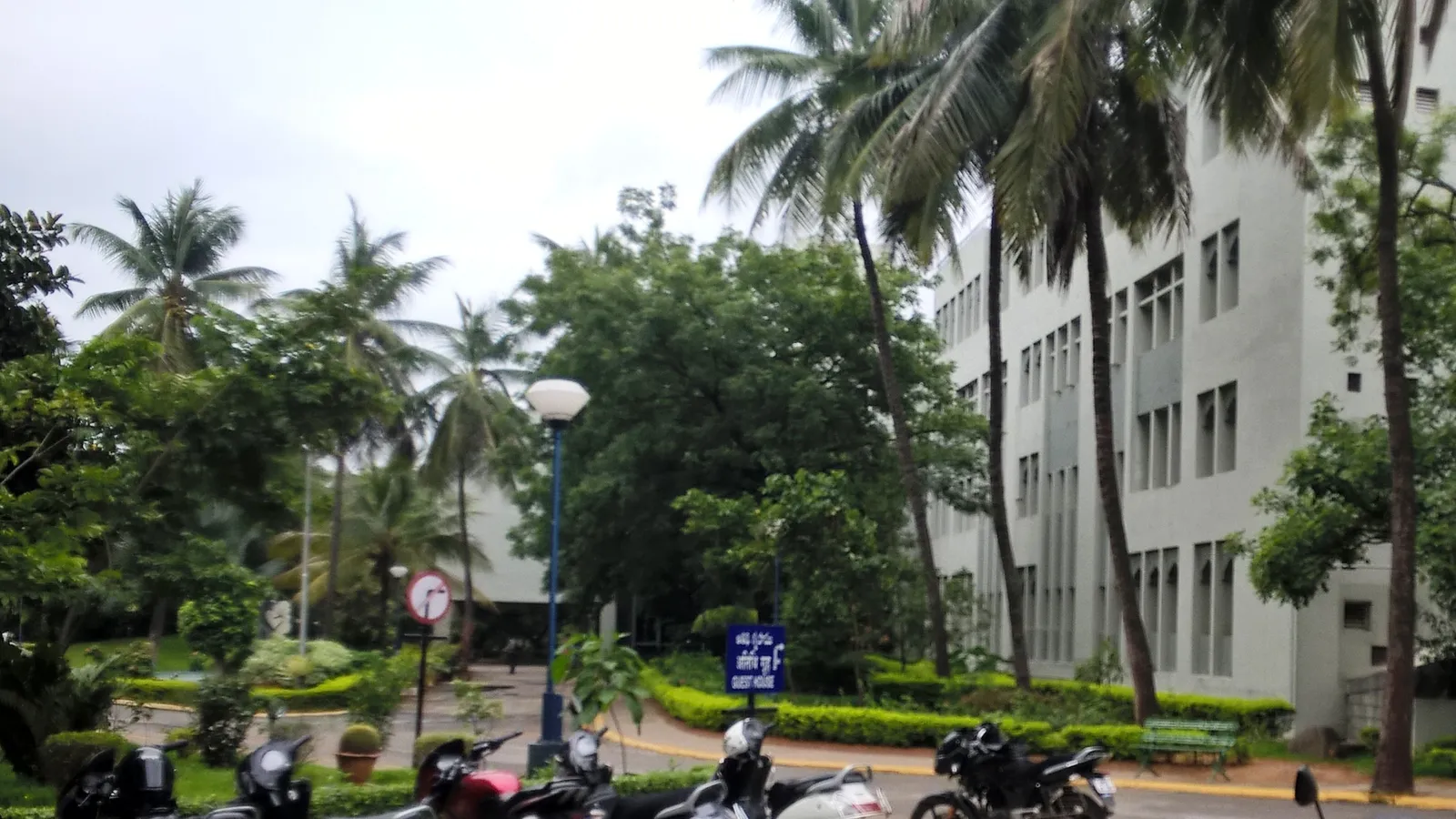
According to CCMB's official profile, the governing board of CSIR (the Council of Scientific and Industrial Research) approved a new centre for frontier biology in 1976. CCMB started on 1 April 1977, built around the Biochemistry Division of the then Regional Research Laboratory (now the Indian Institute of Chemical Technology), with Bhargava at its head. It became a full national laboratory in 1981–82.
CCMB's list of past directors shows Bhargava in charge from April 1977 to February 1990, the longest tenure on that list. Born in Ajmer, he earned his PhD in organic chemistry from Lucknow University in 1949, at 21, according to his Wikipedia biography.
A Down To Earth obituary says he was “widely considered as father of modern biology in India”, notes that CCMB later gave birth to the Centre for DNA Fingerprinting and Diagnostics, and says he was deeply involved in founding the Department of Biotechnology. The same obituary says he “stood for ethical values in science”, a concern he shared with Paul Berg in the recombinant DNA debate.
What is scientific temper?
India's Constitution makes it a fundamental duty of every citizen “to develop the scientific temper, humanism and the spirit of inquiry and reform”, in Article 51A(h), added by the Forty-second Amendment in 1976 (text of Article 51A).
The best-known attempt to say what that means is the Statement on Scientific Temper, released on 19 July 1981 and signed by P. N. Haksar, Raja Ramanna and Bhargava (Peter Ronald deSouza on the statement). It calls scientific temper “an attitude of mind which calls for a particular outlook and pattern of behaviour”, and asks for the “fullest use of the method of science in everyday life”.
In a 2015 interview with The Caravan, Bhargava explained how it began: “I got the Nehru Centre in Mumbai to fund a four-day meeting of eminent scientists in Coonoor, and out of that meeting came out that statement.” He added that it “was translated in many languages.” He also co-founded the Society for the Promotion of Scientific Temper with Satish Dhawan and Abdur Rahman (Research Matters).
How did Bhargava test astrology's claims?
In 2001 the University Grants Commission decided to start degree courses in Vedic astrology. Bhargava, with Osmania University's K. Subhash Chandra Reddy and the writer Chandana Chakrabarti, challenged this in the Supreme Court, which ruled on the case in May 2004 and did not stop the courses (The Wire on the judgment).
His sharper move came outside court. Outlook reported that he collected the horoscopes of four people born at different times in the last century and challenged astrologers to predict their life events: Rs 10,000 for every correct prediction, a Rs 2,500 fine for every wrong one. “Not one, alas, took me up on this,” he said.
How can you use scientific temper in your own studies?
Here is a five-step check in the spirit of Bhargava's bet. Use it on study tips, exam rumours and forwards.
Write the claim as one sentence.
Ask: what result would show it is wrong?
Ask for the evidence and who collected it. Our five-question check for science news helps here.
Look for a fair comparison: the same thing done without the trick.
Decide for now, and change your mind if better evidence arrives.
Worked example. A senior says writing formulas in green ink makes them stick.
Claim: green ink helps me remember formulas better than blue.
Wrong if: I recall the green ones no better than the blue ones.
Evidence so far: one person's feeling.
Fair test: copy half of a new chapter's formulas in green and half in blue, then test yourself on all of them a few days later.
Verdict: one small trial on one person, so hold it lightly.
The point is not the ink. It is the habit of asking how you would check.
For parents: when your child shares a claim, try “How could we test that?” instead of “That's nonsense.” Our guide to helping teens spot fake news and AI images has more ideas.
When a claim is about the science itself, read the idea properly before judging it. The Fermi Concept Library gives every concept in physics, chemistry, biology, mathematics and computing its own lesson, so you can see what it actually says.
Bhargava's bet is still the model: make the claim specific, and let the evidence decide.