On this page
Long before LED bulbs lit Indian homes, a young researcher at a Soviet radio laboratory was watching tiny points of light on silicon carbide crystals. His name was Oleg Losev, and his 1920s experiments describe the effect that powers every LED you own.
Who was Oleg Losev?
Losev was born in Tver in 1903 and, after finishing school in 1920, joined the Nizhni Novgorod Radio Laboratory, according to a centenary biography by M. A. Novikov in Physics of the Solid State. After it closed in 1928 he moved to Leningrad, working at the Central Radio Laboratory, the Ioffe Physico-Technical Institute (1929 to 1933) and, from 1937, the Leningrad First Medical Institute.
His first fame came from radio: a crystal detector with an extra DC voltage that could amplify and generate radio waves, called the crystadin. Losev died of starvation on 22 January 1942 during the siege of Leningrad, and the place of his burial is unknown (Novikov, 2004).
What did Losev see in silicon carbide crystals?
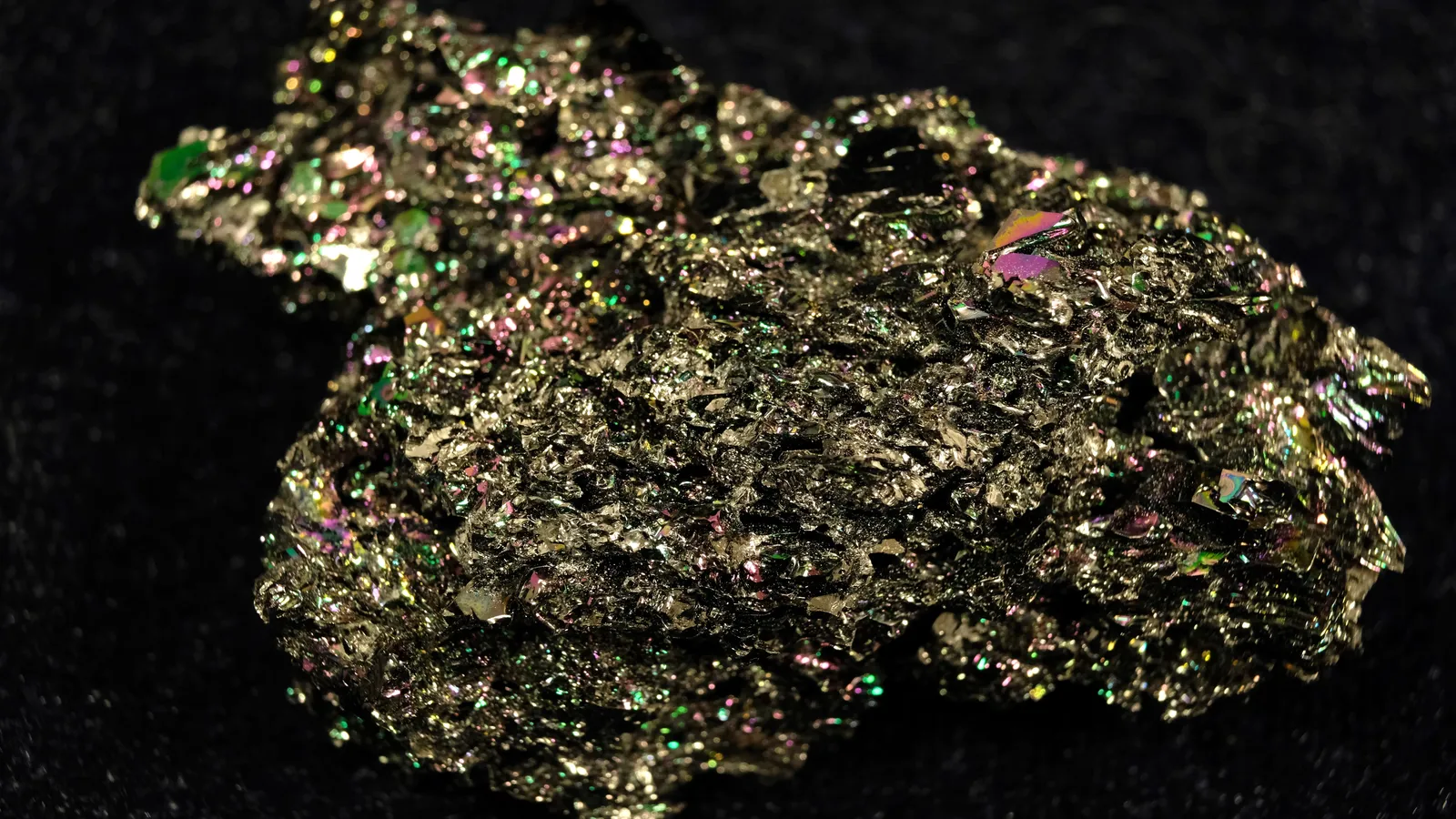
Early radios used crystal detectors: a thin metal tip pressed against a crystal such as silicon carbide, then called carborundum. When Losev passed current through these contacts, they glowed.
Novikov reports that Losev found two different kinds of light at the two polarities of the contact voltage, which he called luminescence I and luminescence II (Novikov, 2004). Luminescence II is what we now call injection electroluminescence, the basis of LEDs and semiconductor lasers. Luminescence I, seen before electrical breakdown, was later found again by the French scientist G. Destriau and is now called the Destriau effect.
In November 1928 the Philosophical Magazine printed his English paper “Luminous carborundum detector and detection effect and oscillations with crystals”, signed O. V. Lossev (journal record). In 1930–1931, using a fine metal probe, he located an active layer about 10 µm thick where the injection glow occurs, according to Novikov.
Did Oleg Losev invent the LED?
It depends on what you count. The first recorded sighting came earlier: in 1907, H. J. Round of the Marconi laboratory published “A Note on Carborundum” in Electrical World, reporting light from a silicon carbide detector contact with no further details (Novikov, 2004). Losev found the effect independently. Novikov notes the glow was called “Losev light” in the West for a time, and that Losev held the first patent for a device with an electroluminescent light source, a “light relay”.
The theory came later. In 1951, K. Lehovec, C. A. Accardo and E. Jamgochian published “Injected light emission of silicon carbide crystals” in Physical Review. Novikov writes that this work linked the light to electrons and holes recombining at p–n junctions, and that it cited Losev first of all.
Bright blue LEDs came much later: the 2014 Nobel Prize in Physics went to Isamu Akasaki, Hiroshi Amano and Shuji Nakamura “for the invention of efficient blue light-emitting diodes which has enabled bright and energy-saving white light sources” (Nobel Prize).
A fair answer: Round reported the glow first; Losev studied it seriously and saw its promise as a light source.
How does an LED make light? A worked example
In a forward-biased LED, electrons from the n-side meet holes from the p-side near the junction. An electron falling into a hole can release its energy as one photon, whose energy sets the colour through E = hc/λ.
The Planck constant is exactly 4.135667696 × 10⁻¹⁵ eV s (NIST), so hc ≈ 1240 eV nm. Suppose an LED glows green at 530 nm:
Write E = hc/λ.
Substitute: E = 1240 eV nm ÷ 530 nm ≈ 2.34 eV.
Compare: a red LED at 650 nm gives 1240 ÷ 650 ≈ 1.91 eV, and a blue one at 450 nm gives about 2.76 eV.
Conclude: shorter wavelength means more energy per photon, so a blue LED needs a material with a larger energy gap than a red one.
If junctions still feel abstract, the Fermi Concept Library has a lesson for every physics concept, and the Fermi Simulation Lab has interactive simulations for ideas that are easier to see than to read.
What can you learn from how Losev worked?
Novikov points out that the band theory of semiconductors only appeared in the early 1930s, so Losev worked with almost no theory to guide him (Novikov, 2004). His method still works when a lab result or a problem does not add up:
Notice the odd result. A glowing detector was a side effect; Losev treated it as a question.
Change one thing at a time. Reversing the voltage showed him two glows, not one.
Look closer. He measured the contact point by point instead of guessing.
Write it up. His 1928 English paper put his results in front of readers abroad.
Link it to theory. When you study p–n junctions, ask which part explains what Losev saw.
Next time you switch on an LED torch, remember the glow a young radio researcher wrote up nearly a century ago.