

On this page
In 1895 a Danish doctor, Niels Ryberg Finsen, aimed concentrated beams of light at patients with a disfiguring skin infection, with some success. In 1903 he won the Nobel Prize in Physiology or Medicine “in recognition of his contribution to the treatment of diseases, especially lupus vulgaris, with concentrated light radiation”, according to the Nobel Prize facts page. The surprise came a century later: his lamps probably did not work the way he believed.
What did Niels Finsen discover about light and lupus?
Finsen was born on 15 December 1860 in Thorshavn in the Faroe Islands and moved to Copenhagen in 1882 to study medicine (Nobel Prize facts). He suffered from a disease that caused weakness and fatigue and, as he wrote in his Nobel Prize biography, “began to believe that I might be helped if I received more sun.”
Since the 1870s it had been known that ultraviolet light inhibits bacteria, so Finsen reasoned that infected skin might respond to light (Nobel Prize facts). He separated sunlight's “heat rays” from its “chemical rays”, the most refractive part of the spectrum, and aimed the chemical rays, concentrated and free of heat, at diseased skin (Nobel Prize biography). The Finsen Institute was built in Copenhagen in 1896. Within a few years, 40 Finsen Institutes had been set up in Europe and the United States, according to a 2012 review in Clinics in Dermatology. Too ill to attend the prize ceremony, Finsen died on 24 September 1904 (Nobel Prize facts).
Is lupus vulgaris the same as lupus today?
No. Lupus vulgaris is a form of tuberculosis that attacks the skin, especially on the face and neck (Nobel Prize facts).
The lupus most people mean today is a different illness: “a chronic (long-lasting) type of autoimmune disease”, in which the immune system attacks healthy cells and tissues by mistake, as MedlinePlus explains. In cutaneous lupus, a rash or sores usually appear after the skin is exposed to sunlight. Finsen's lamp was never a treatment for autoimmune lupus, and anyone living with lupus should take questions about sun exposure to their doctor or a dermatologist.
Did Finsen's lamp really use ultraviolet light?
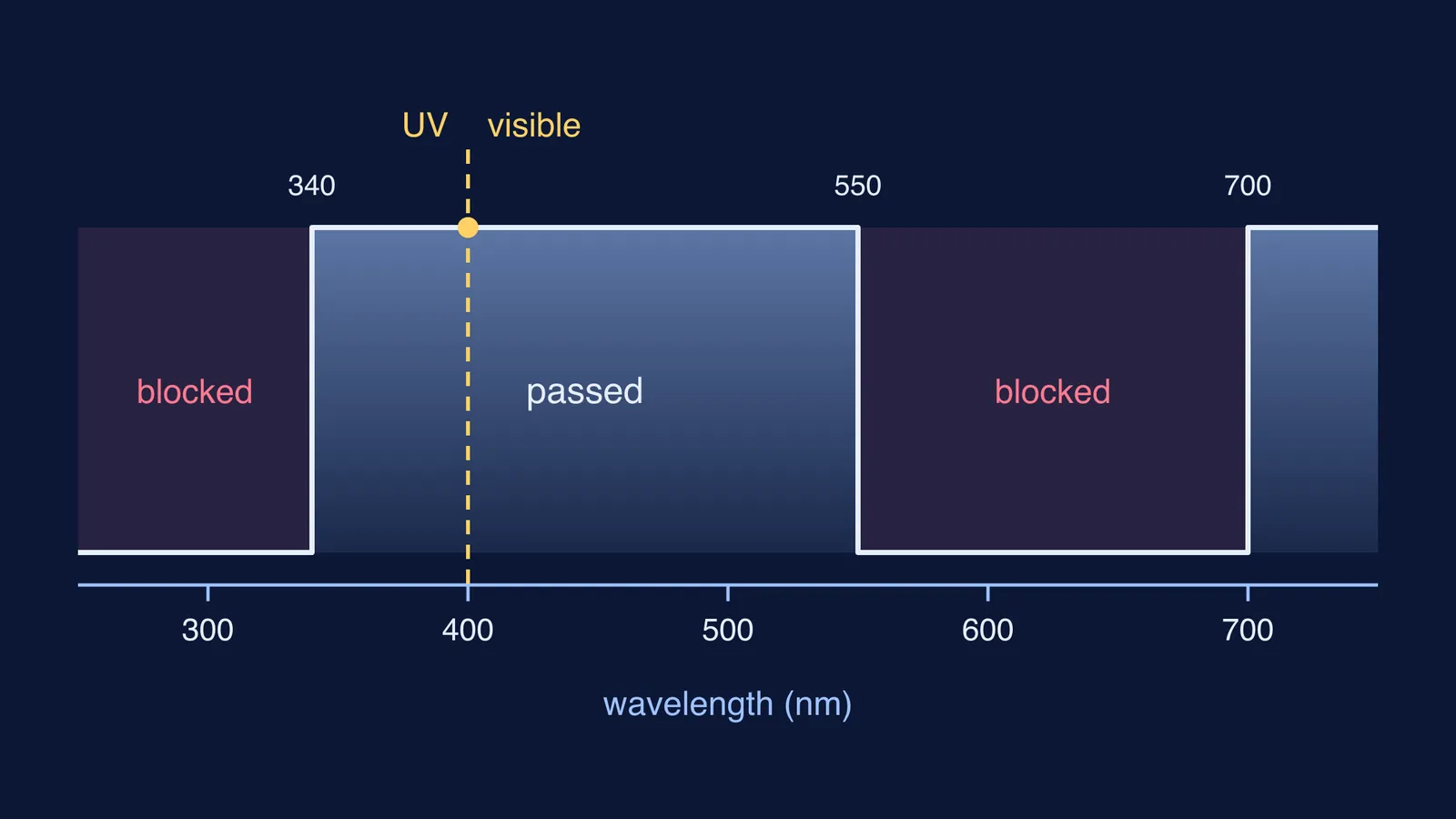
Finsen believed shortwave ultraviolet was the healing part. In 2005 a Danish team led by Kirsten Iversen Møller measured what could pass through his lens systems and filters, reporting in Photodermatology, Photoimmunology and Photomedicine. They found:
All the lens systems they tested were glass, which absorbs wavelengths below 340 nm.
The filters also absorbed wavelengths below 340 nm.
The methylene blue solution used to soak up heat blocked light below 340 nm and between 550 and 700 nm.
Tuberculosis bacteria showed signs of porphyrins, light-absorbing molecules, and a related species was confirmed to contain one.
The team's most plausible explanation is that light of wavelengths such as 400 nm struck the porphyrins inside the bacteria and produced singlet oxygen, a reactive form of oxygen that damages cells (Møller and colleagues, 2005). The WHO defines ultraviolet as 100 to 400 nm and UVA as 315 to 400 nm, so the light reaching patients was long-wave UVA and visible light, not the shortwave UV Finsen prized.
Why did light therapy for lupus stop?
Light therapy was widespread for a time, but antibiotics eventually replaced it (Nobel Prize facts). The WHO tuberculosis fact sheet describes TB as “preventable and curable”, with medicines such as rifampicin and isoniazid taken daily for 4 to 6 months. The same fact sheet counts India as having 25% of the world's new TB cases.
Light stayed in medicine, though: the NHS treats jaundice in babies with phototherapy, “shining a special light on their skin”. Doctors prescribe and dose such treatments; a UV lamp is not something to try on your own skin.
What can students learn from Finsen's experiment?
The 2005 study models a useful habit: checking whether the cause you believe in can actually reach the target. Applied to Finsen's lamp:
What is the observation? Concentrated light treated lupus vulgaris with some success.
What is the proposed cause? Shortwave ultraviolet kills the bacteria.
What actually arrives? Glass lenses and filters cut everything below 340 nm, so shortwave UV never reaches the skin.
What else fits? Porphyrins in the bacteria absorb violet light near 400 nm and make singlet oxygen.
Add some physics. Photon energy is E = hc/λ, so a 300 nm photon carries 400/300, about 1.33 times, the energy of a 400 nm photon. Finsen was right that shorter wavelengths pack more punch; his lamp just was not delivering them.
If the spectrum and photon energy still feel abstract, the Fermi Concept Library has a lesson for every concept in physics, chemistry and biology, and the Fermi Simulation Lab has interactive simulations for ideas that are easier to see than to read.
For more on this part of the spectrum, read how Johann Ritter discovered ultraviolet light in 1801, how Harry Steenbock used ultraviolet light to put vitamin D in food, and how a UV water purifier kills germs.


