

On this page
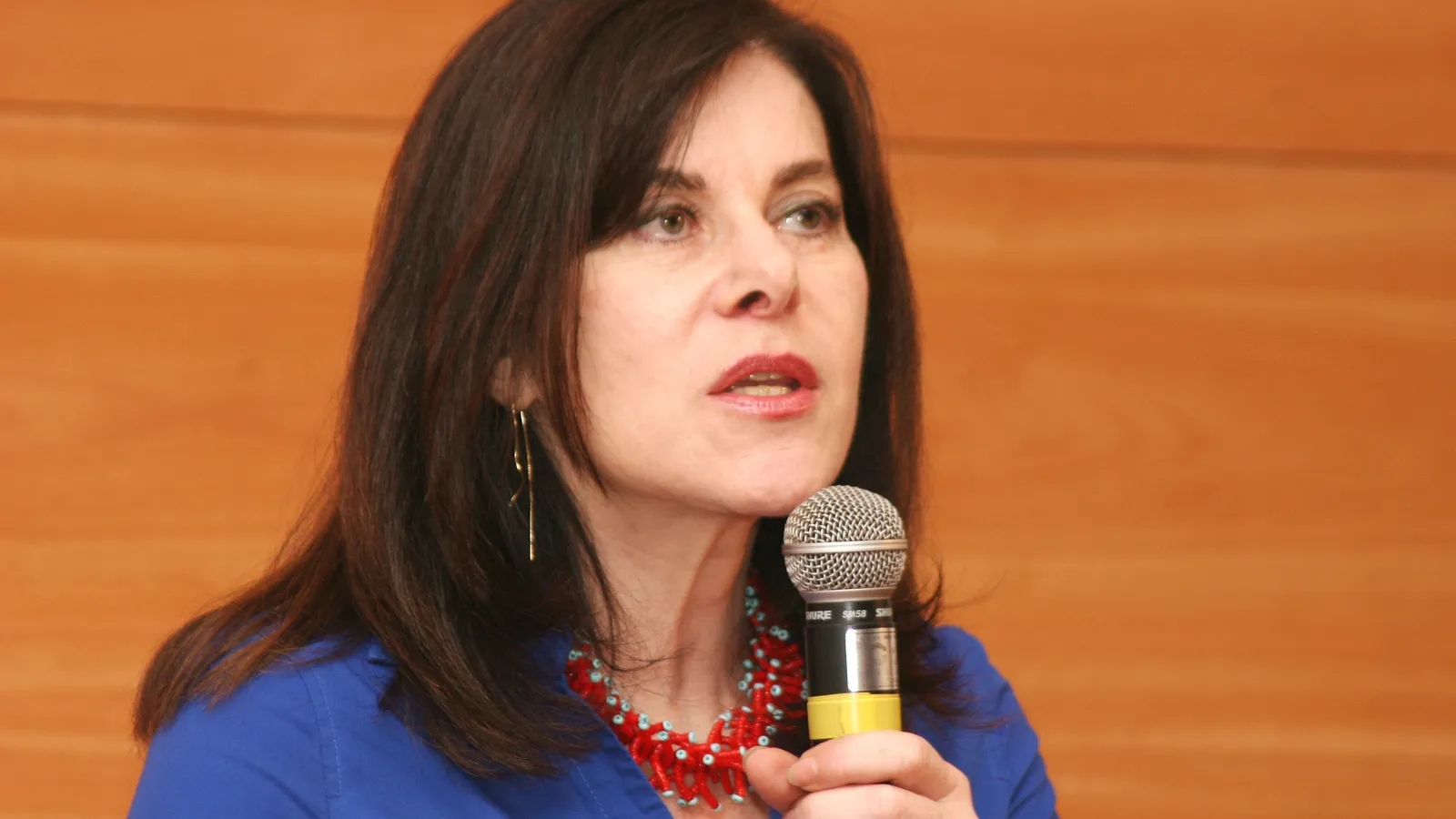
Mayana Zatz is a geneticist at the University of São Paulo (USP) in Brazil who has spent her career finding which genes break muscle, and what that means for the families who carry them. Her work lines up neatly with Class 12 biology. The NCERT chapter Principles of Inheritance and Variation teaches pedigree analysis and Mendelian disorders, and its Figure 4.14 even uses myotonic dystrophy as the example of an autosomal dominant pedigree.
Who is Mayana Zatz?
According to her Wikipedia biography, Zatz was born in Tel Aviv in 1947, moved to Brazil in 1955 and studied biology at USP. In 1981 she and her team founded the Brazilian Muscular Dystrophy Association at USP's Institute of Biosciences. In 2001 she was the Latin America laureate of the L'Oréal-UNESCO For Women in Science awards.
In December 2014, Pesquisa FAPESP reported that she had headed USP's Human Genome Research Center since 2000, and that her group had cared for 20,000 people with neuromuscular diseases. The families who come for diagnosis are also the families whose DNA shows where a faulty gene sits.
What did Mayana Zatz discover about muscular dystrophy?
Muscular dystrophies are inherited conditions in which muscle fibres weaken and break down. Three papers show how her group worked.
Sorting the severe cases (1999). Her team studied 140 patients from 115 Brazilian families00040-4) with autosomal recessive limb-girdle muscular dystrophy (LGMD). Defects in sarcoglycan proteins turned up in 68% of patients with a severe, Duchenne-like course but in only 8.5% of patients with milder forms.
Finding a new gene (2000). In Nature Genetics, Zatz and colleagues mapped LGMD type 2G to chromosome 17 in two Brazilian families, narrowed the region to a 1.2 Mb stretch, then found mutations in the gene for telethonin, a protein of the sarcomere.
Dogs that should have been sicker (2015). In Cell, her team studied two golden retrievers with muscular dystrophy that had no dystrophin at all, yet were only mildly affected and had a normal lifespan. The mild dogs had higher expression of the Jagged1 gene, which the authors suggest could be a therapy target that works without dystrophin.
How is Duchenne muscular dystrophy inherited?
Duchenne and Becker muscular dystrophy together affect 1 in 3,500 to 5,000 newborn males worldwide, according to MedlinePlus Genetics from the US National Library of Medicine. Both come from changes in the DMD gene, which makes dystrophin, a protein that helps stabilise and protect muscle fibres.
The pattern is X-linked recessive. A boy has one X chromosome, so one altered copy is enough to cause the condition. A girl with one altered copy is a carrier who usually has no symptoms, though MedlinePlus notes some carriers have milder weakness or cramps. This is the same pattern NCERT describes for haemophilia: transmission from a carrier mother to her sons.
How do you solve a muscular dystrophy cross in Class 12?
Take a carrier mother (X^D X^d) and an unaffected father (X^D Y), where d is the altered DMD allele.
Mother's eggs: X^D or X^d, half each.
Father's sperm: X^D or Y, half each.
The four children, equally likely: X^D X^D (unaffected daughter), X^D X^d (carrier daughter), X^D Y (unaffected son), X^d Y (affected son).
Read the answer carefully. Each son has a 1 in 2 chance of being affected. Each daughter has a 1 in 2 chance of being a carrier. Any one child has a 1 in 4 chance of being an affected son.
Now compare an autosomal recessive LGMD. Two carrier parents (Aa x Aa) give a 1 in 4 chance for any child, and boys and girls are equally at risk.
Use this checklist on any pedigree question:
Mostly affected males with unaffected parents: suspect X-linked recessive.
A father passing the trait to his son: argues against X-linked inheritance, because fathers give sons a Y, not an X.
An affected daughter of two unaffected parents: autosomal recessive.
Affected people in every generation, in both sexes: think autosomal dominant, like NCERT's myotonic dystrophy example.
Write a genotype beside every symbol before you calculate anything.
For more practice, work through these X-linked crosses for colour blindness and haemophilia and this guide on telling dominant from recessive pedigrees. If the steps feel shaky, the Fermi Problem Library has worked problems with a step-by-step solver that explains the reasoning rather than printing an answer.
What can students learn from Mayana Zatz's career?
Her path shows that genetics joins lab work with clinics, family histories and long follow-up. If that mix appeals to you, read how to become a genetic counsellor in India. And if sex-linked inheritance itself is the gap, the Fermi Concept Library gives each concept in biology its own lesson and its place in the map.


