On this page
In 1869 the Prussian government sent a Kiel zoologist to study oyster culture in France and England with a practical question: could it be promoted in German waters? Karl August Möbius came back with a bigger answer. An oyster bed, he argued, is not just a heap of oysters. It is a community of species that limit one another, and you cannot change one part without changing the rest. His word for it, biocönose, is the ancestor of “biocoenosis” and of the way ecologists still talk about communities.
Who was Karl Möbius and why was he studying oysters?
Möbius was born in 1825 in Eilenburg, Prussia, and in 1868 became professor of zoology and director of the Zoological Museum at the University of Kiel (Wikipedia biography). Earlier, in Hamburg, he had planned Germany’s first public aquarium, according to historian Frank Egerton’s survey in the Bulletin of the Ecological Society of America.
Egerton writes that in 1869 the Prussian government commissioned Möbius to study French and English oyster culture, so that it could be promoted in German waters. The results appeared in 1877 as *Die Auster und die Austernwirthschaft* (“The oyster and oyster culture”). An English translation was printed in the US Fish Commission’s report for 1880, and Egerton quotes the title of its tenth section: “An Oyster-Bank Is a Biocönose, or a Social Community”.
What did Möbius see on the stripped oyster beds?
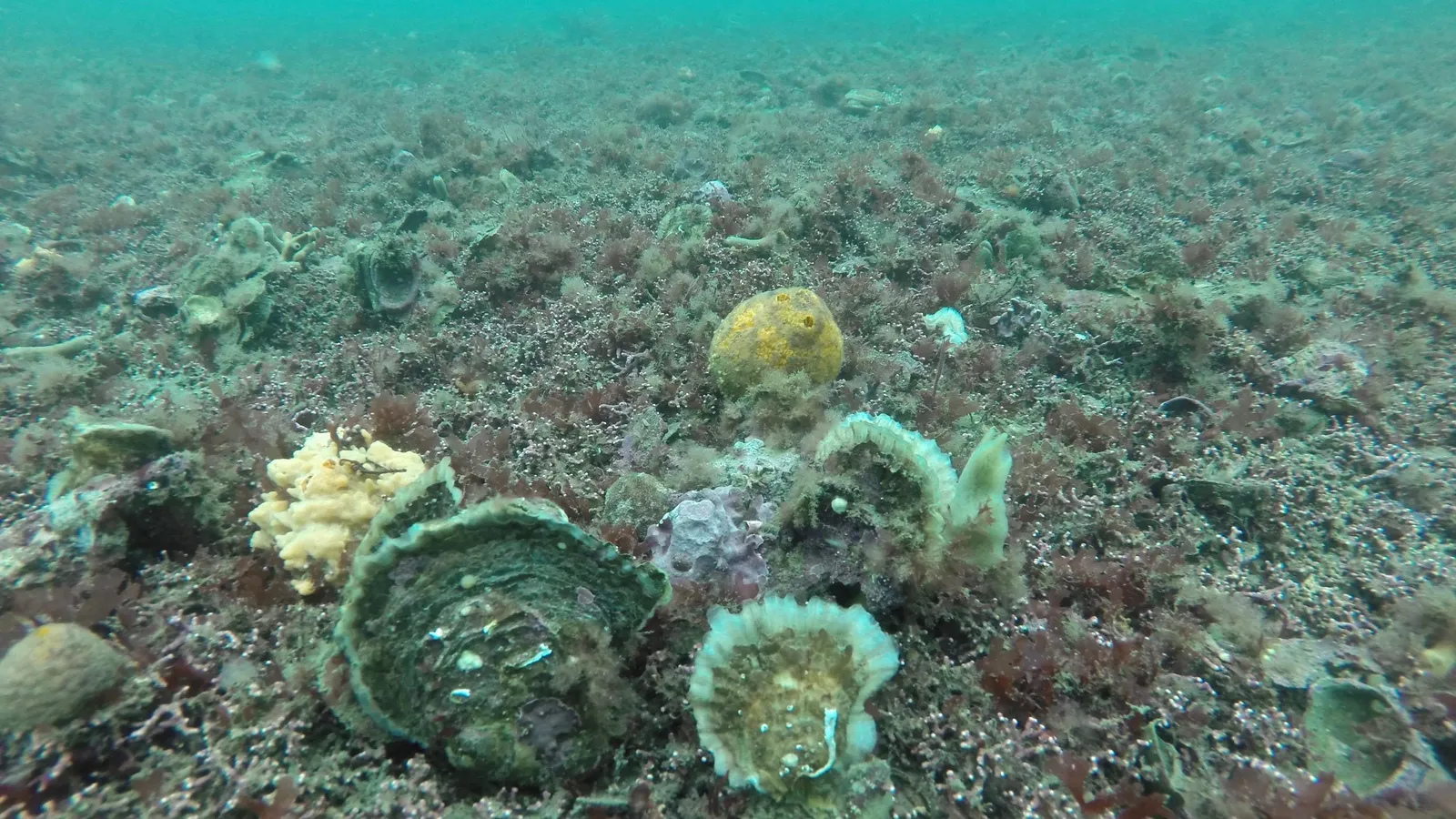
Human activity had already destroyed many productive oyster beds. A chapter on oyster populations in volume 64 of the US Fishery Bulletin sums up what Möbius reported: on the formerly rich beds of Cancale, Rochefort, Marennes and Oléron, the oysters had been replaced by cockles and mussels.
The newcomers were not invaders. The same chapter explains that cockles and mussels lived on those beds in small numbers while the oysters flourished, then increased greatly once the removal of oysters left more space for them to settle. It also records Möbius’s general point: a change in one factor of a biocoenosis affects other factors of the environment and eventually changes the character of the community.
What does biocoenosis mean?
A biocoenosis is a community of different species living together in one place, each limiting the others and all shaped by the same conditions. Möbius described every oyster bed as, “to a certain degree, a community of living beings, a collection of species, and a massing of individuals, which find here everything necessary for their growth and continuance”, a passage quoted by both Egerton and the Fishery Bulletin.
Egerton notes three things worth remembering. Möbius stressed links between individuals and between individuals and their surroundings. He said a biocoenosis could change when conditions changed. And while his term caught on in Germany, “community” won in English.
He had first used “Biocönose” in a treatise on the fauna of Kiel Bay, published a year before Ernst Haeckel coined “oecologie” in 1866, Egerton writes; our piece on how Haeckel defined ecology tells that side. The idea also has critics: Egerton quotes a modern critic, Reise, who argued that Möbius’s community concept blended Darwin’s natural selection, Humboldt’s plant associations and the old belief in a balance of nature. The word “ecosystem”, which adds the non-living surroundings, came later, in 1935 (Egerton); see Arthur Tansley and the word ecosystem.
How do you use Möbius’s idea in a biology answer?
Many ecology questions ask what happens when one species goes. Möbius’s oyster beds give you a five-step template.
Name the community: oysters, cockles and mussels sharing one seabed.
Name what they compete for: space to settle.
Name the change: people remove most of the oysters.
Trace who gains and who loses: cockles and mussels spread into the freed space.
State the rule: changing one member changes the whole community.
Turn it into one sentence you can reuse: “Because A and B both need C, removing A frees C, so B increases and the community shifts.” Then test the template on a harder case, such as Robert Paine and the starfish that defined keystone species, and check whether your five steps match what happened.
If population, community and ecosystem still blur together, the Fermi Concept Library gives each concept in biology its own lesson and shows its place in the map. For ideas that are easier to see than to read, the Fermi Simulation Lab has interactive simulations.
Are oyster beds still in trouble today?
Yes. The OSPAR Commission for the North-East Atlantic lists Ostrea edulis beds as a threatened or declining habitat. It defines them as at least 5 oysters per square metre on shallow, mostly sheltered sediments, typically 0 to 10 metres deep. Its list of pressures starts with overexploitation of natural beds, followed by non-native species, climate change and disease outbreaks.
Next time a question removes one species, start where Möbius did: ask who else was living there.