

On this page
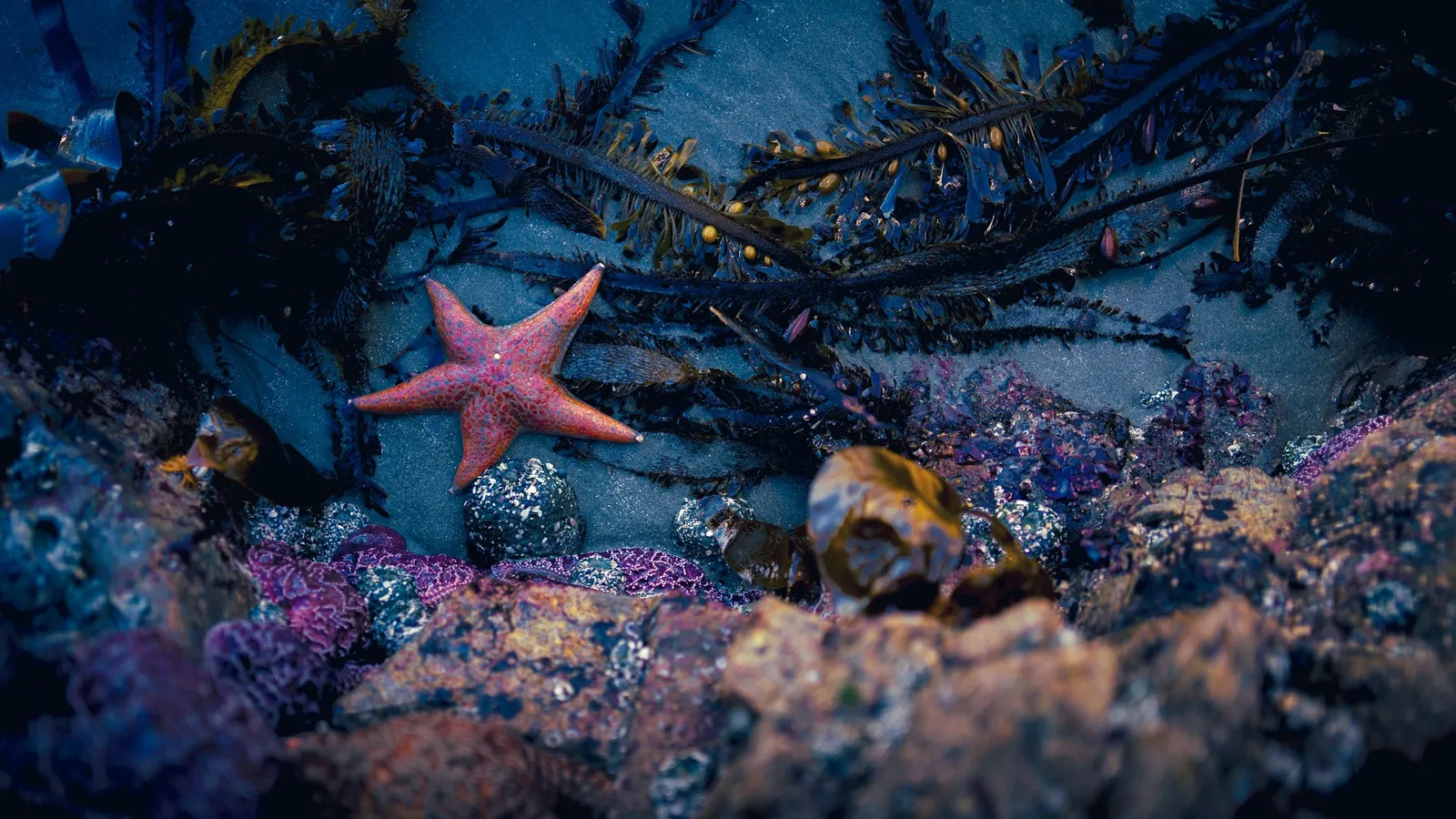
NCERT's chapter on populations has a short paragraph about a starfish called *Pisaster*. Remove it from a rocky shore, and species disappear. That paragraph describes one of the most famous experiments in ecology, by Robert Paine. This post covers what he did, how it led to the keystone idea, and what researchers found in 2025 when they checked how well the idea holds up.
Who was Robert Paine?
A memorial in the journal Ecology by colleagues including James Estes and Jane Lubchenco says Robert T. Paine died on 13 June 2016 and calls him one of the most influential people in the history of ecology. They describe him as an experimentalist, a theoretician and a believer in natural history. He served as president of the Ecological Society of America and edited its journals. Nature's obituary gives his dates as 1933 to 2016 and sums him up as the "ecologist who established concept of keystone species".
What did Paine do with the starfish?
His 1966 paper, Food Web Complexity and Species Diversity, proposed that local species diversity depends on predators that stop any single species from monopolising a limiting resource. On rocky shores that resource is usually space. The abstract states the key result: "Where predators capable of preventing monopolies are missing, or are experimentally removed, the systems become less diverse."
A 2025 review in Ecology and Evolution by Gillis, Thomsen and Tonkin describes the mechanism. *Pisaster ochraceus* prefers to eat the mussel *Mytilus californianus*. With the starfish removed, mussels took over the space and crowded out weaker competitors such as barnacles, chitons and limpets. The review puts the fall at 18 to 9 species of primary space holders, roughly half. NCERT's Class 12 chapter on organisms and populations uses the same experiment to show that predators can maintain diversity by reducing competition among their prey.
Where did the word keystone come from?
A keystone is the top stone of an arch; take it out and the arch falls. The review credits the idea of keystone predation to Paine's 1966 paper and his short 1969 note, A Note on Trophic Complexity and Community Stability. It separates two terms that students often merge:
Keystone predation is a process: a predator eats a strong competitor and so helps weaker ones.
Keystone species is any species whose effect is large relative to its abundance.
A worked example: how strong is the evidence?
The 2025 review searched the literature. It found that almost 2,000 publications mentioned keystone predation, but only 73 tested or discussed it in detail. Just 25 studies manipulated predator numbers to test it directly. Of those 25, 10 reported consistent support, 7 context-dependent support and 8 no support.
Consistent support: 10/25 = 0.40, or 40%.
Context-dependent: 7/25 = 0.28, or 28%.
No support: 8/25 = 0.32, or 32%.
Check: 40 + 28 + 32 = 100.
Share of all mentions that tested or discussed the idea in detail: 73/2000 = 0.0365, about 3.7%. The true total is a little under 2,000, so the share is a little higher.
So the idea is widely cited but directly tested far less often. The review also found that most of the 73 studies came from North America.
Common mistakes:
Calling any top predator a keystone. The test is the size of its effect relative to its numbers, shown by removal or addition.
Saying predators always reduce diversity. Paine's result was the opposite: the predator raised diversity by preventing a monopoly.
Treating one experiment as a law. Paine's shore was one system; the review shows results vary with conditions.
Sea star populations have since been tested by nature itself. A 2018 study tracked how keystone predation pressure fell and recovered after a disease-related mass mortality of *Pisaster*.
What can a student take from his way of working?
Remove something and see what changes. Paine learned more by taking starfish away than he could have by watching.
Name your idea clearly. "Keystone" is a memorable metaphor, which is part of why the idea spread.
Check famous ideas against the numbers. The 2025 review is a reminder that being cited often is not the same as being tested often.
If keystone predation and trophic cascades blur together, the Fermi Concept Library covers every concept in biology, so you can check each term on its own. For exam practice on these interactions, see our guide to ecology questions for NEET.
Next step: write one sentence each defining keystone species, keystone predation and competitive exclusion, then check them against NCERT.


