

On this page
Ibn Zuhr (1094–1162), known in Latin as Avenzoar, was an Arab physician and surgeon from Seville in present-day Spain. In an era when medicine was often mixed with astrology and unproven remedies, he insisted on a rational and empirical approach to treating patients. He documented his methods in his major works, which influenced medical practice in Europe for centuries.
Born into the notable Banu Zuhr family, which produced six consecutive generations of physicians, Ibn Zuhr began his medical education under his father. He swore the Hippocratic Oath while still a youth and eventually became the most well-regarded physician of his era. Throughout his career, which included serving as a court physician and surviving a period of imprisonment in Marrakesh, he consistently protested against quackery and the superstitious remedies of astrologers source.
His final and most famous book, *Al-Taysir fil-Mudawat wal-Tadbir* ("Book of Simplification Concerning Therapeutics and Diet"), was written at the request of his friend and contemporary Averroes. The work provided accurate clinical descriptions of various diseases, including cancers and inflammations, and was later translated into Hebrew and Latin, remaining popular until the 18th century.
How did he prove tracheotomy was safe?
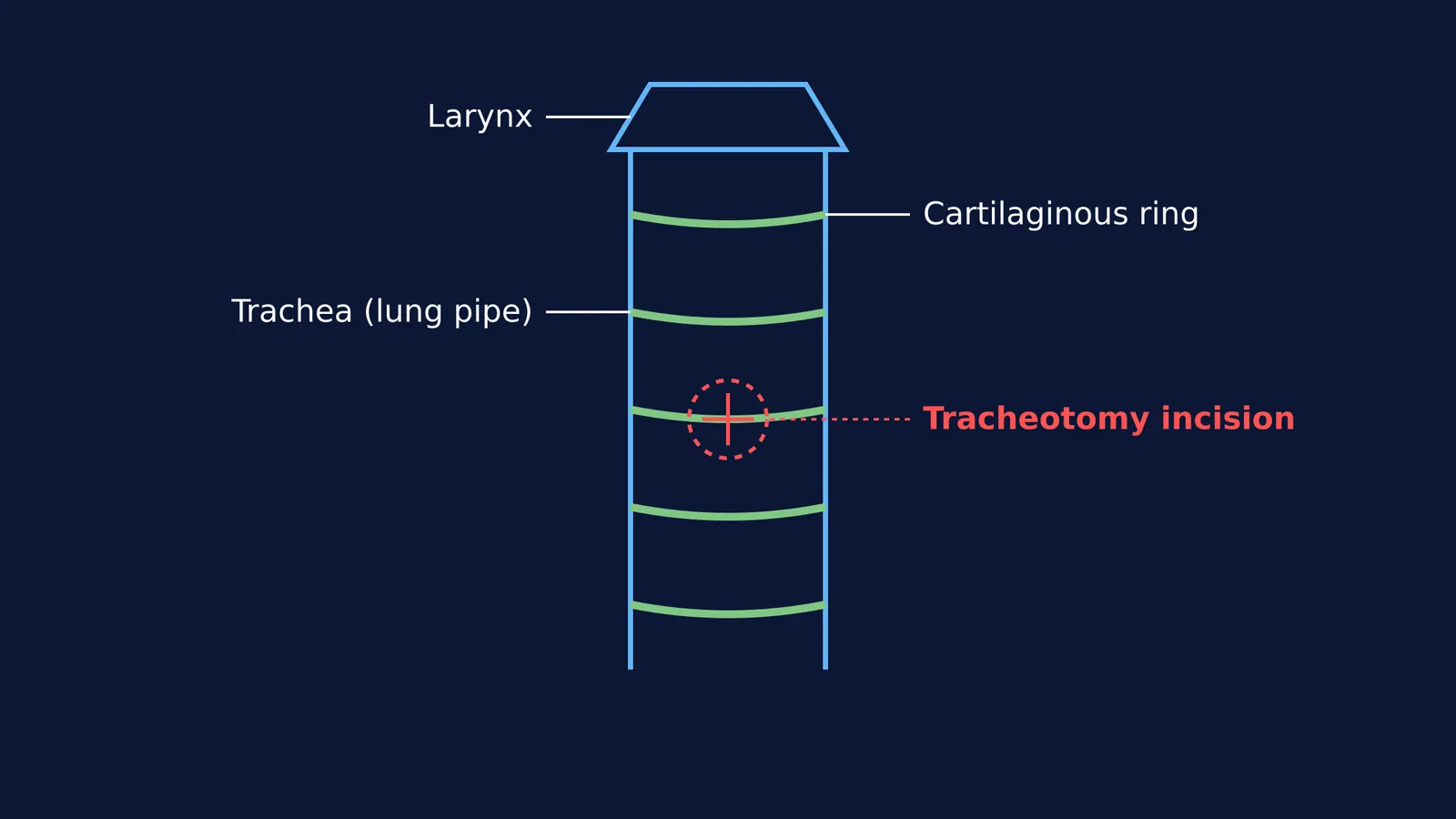
Tracheotomy — cutting into the windpipe to relieve an airway obstruction — was a highly controversial procedure in the 12th century. Many physicians believed it was too dangerous to attempt on humans.
To settle the debate, Ibn Zuhr decided to test the procedure on an animal first. He described the experiment in his writings: after incising the skin and the covering sheath of a goat's neck, he cut into the lung pipe and completely removed a small piece of cartilage. He then washed the wound with water and honey until it healed. The goat fully recovered and lived for a long time.
By demonstrating the surgery on a goat, he provided evidence that the procedure was survivable source, marking an early milestone in the use of animal testing to validate medical treatments. This empirical approach — testing a procedure on an animal before applying it to a human — was a significant departure from the practices of his time.
If you are exploring the biology of diseases and treatments, the Fermi Concept Library contains every concept in biology, each with its own lesson and its place in the map.
What did he discover about the scabies mite?
Beyond surgery, Ibn Zuhr made significant contributions to parasitology. He is credited with providing one of the earliest clinical descriptions of the scabies mite, the tiny parasite responsible for the intense itching of scabies source.
Before his observations, the cause of scabies was poorly understood, often attributed to imbalances in the body's humours. By identifying the mite, he helped shift the understanding of the disease towards a parasitic origin. He described how the parasite burrows under the skin and how it could be removed.
Scabies remains a major global health issue today. The World Health Organization estimates that scabies affects more than 200 million people at any given time, leading to more than 400 million cumulative cases worldwide every year source. It spreads through skin-to-skin contact and is particularly common in resource-poor tropical settings.
The microscopic cause of this widespread disease was first identified centuries ago. While we now have effective topical and oral treatments, identifying the physical cause of the disease rather than blaming invisible forces was a crucial first step in medical history.
How do we evaluate medical treatments today?
Ibn Zuhr's animal experiment was an early version of a safety trial. Today, testing a new medical treatment or drug follows a strict, phased framework before it reaches patients. If you are considering a career in medical research, this is the modern standard for evaluating a treatment:
Pre-clinical testing: The treatment is tested in the laboratory and on animal models to check for basic safety and biological activity.
Phase 1 clinical trial: A small group of healthy human volunteers receives the treatment to determine a safe dosage range and identify side effects.
Phase 2 clinical trial: The treatment is given to a larger group of patients who have the target disease to see if it is effective and to further evaluate safety.
Phase 3 clinical trial: The treatment is administered to large groups of patients across multiple hospitals to confirm its effectiveness, monitor side effects and compare it to existing standard treatments.
Approval and Phase 4: After regulatory approval, the treatment is continuously monitored in the general population to track long-term effectiveness and rare side effects.
Read more about the pioneers of medicine:


