On this page
Your Class 11 biology book says that blood from the right ventricle goes to the lungs and comes back to the left atrium. That pathway, the pulmonary circulation, sounds obvious now. For more than a thousand years, though, the standard teaching said something else: that blood seeped from the right ventricle to the left through tiny pores in the wall between them. The first known writer to reject this firmly was Ibn al-Nafis, in 13th-century Cairo. Here is what he argued and what you can learn from it.
Who was Ibn al-Nafis?
The US National Library of Medicine's bio-bibliography of Islamic medical writers describes Ibn al-Nafis as a Syrian physician, originally from Damascus, who spent much of his life in Cairo, where he became "Chief of Physicians". He was also an authority on religious law, logic and theology. When he died in 1288, he left his house and library to the Mansuri hospital in Cairo.
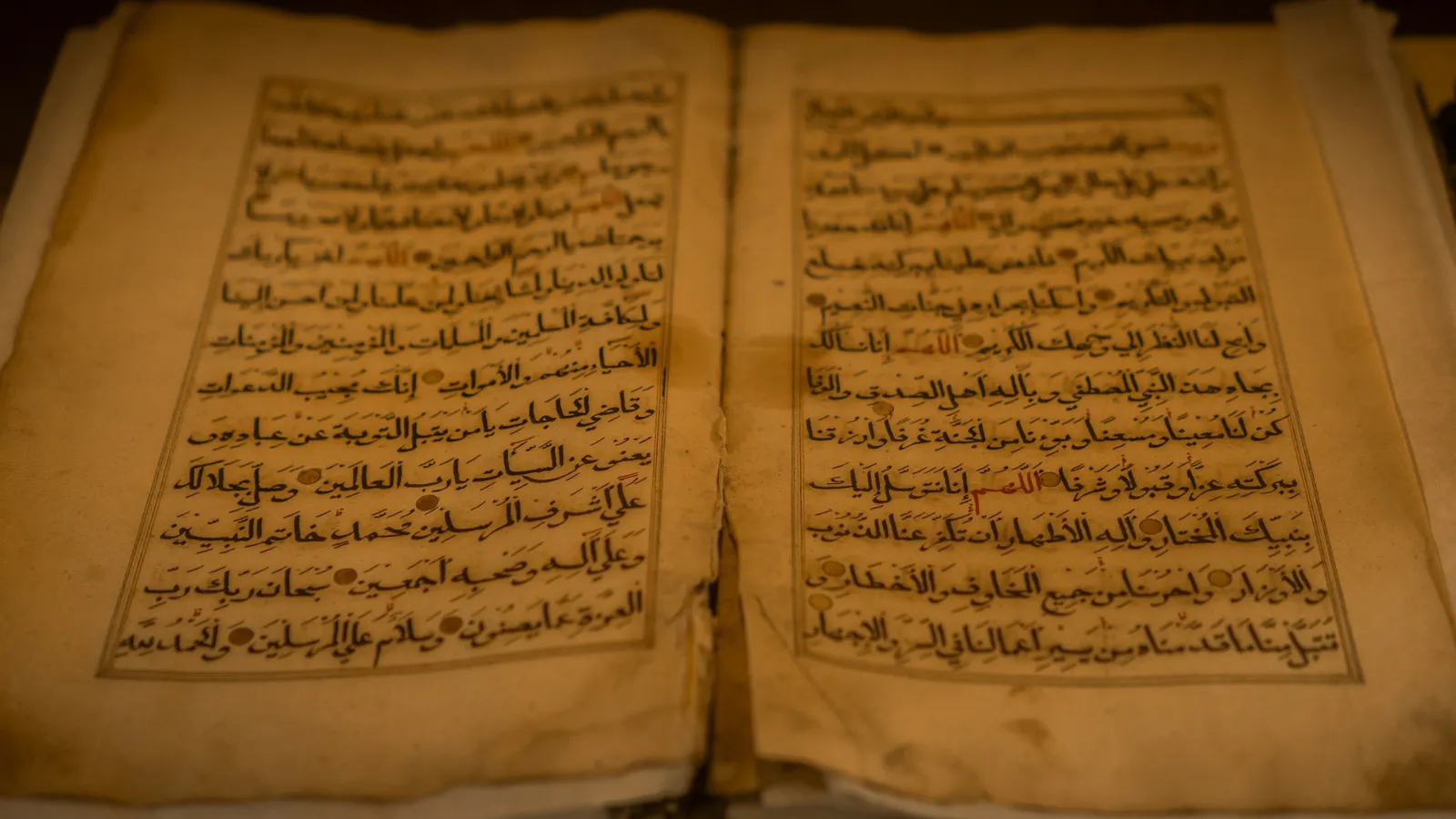
The physiologist John West, in a review in the Journal of Applied Physiology (2008), adds that he was born in or near Damascus in 1213 and trained there, moved to Cairo at about 23, and became physician-in-chief at the Al-Mansouri Hospital. West gives his age as only 29 when he produced his most important work, the Commentary on Anatomy in Avicenna's Canon (Sharh Tashrih al-Qanun).
What did Galen's school teach about the heart?
As West summarises it, Galen's scheme had blood made in the liver from digested food. It flowed to the right ventricle. Some went to the lungs to nourish them, but most was thought to pass to the left ventricle through "invisible pores" in the interventricular septum. There it mixed with air-derived "pneuma". The pores were never actually seen, but the scheme needed them, because nobody realised how much blood flowed from the lungs back to the heart.
West notes that Avicenna, whose Canon Ibn al-Nafis was commenting on, had studied Galen's writings extensively and built on them. Our post on Ibn Sina's Canon of Medicine explains why that book carried so much authority.
What did Ibn al-Nafis say instead?
West identifies three advances in the Commentary.
The septum is closed. In Max Meyerhof's English translation, quoted by West, Ibn al-Nafis writes that the substance of the heart in this region "has neither a visible passage, as was thought by some persons, nor an invisible one which could have permitted the transmission of blood, as was alleged by Galen."
So blood must go through the lungs. If nothing crosses the septum, the right ventricle's blood can only reach the left side by way of the lungs. In the translation: "the penetration of the blood into the left ventricle is from the lung".
There must be passages in the lungs. He stated that there are small passages (manafidh) between the pulmonary artery and the pulmonary vein. West calls this a prediction of the pulmonary capillaries, which Marcello Malpighi saw with a microscope about 400 years later.
How does this match what NCERT teaches today?
The NCERT Class 11 chapter Body Fluids and Circulation describes a thick-walled inter-ventricular septum separating the left and right ventricles. It then states that deoxygenated blood pumped into the pulmonary artery goes to the lungs, and oxygenated blood returns by the pulmonary veins to the left atrium: "This pathway constitutes the pulmonary circulation."
A quick check with numbers: NCERT gives a stroke volume of about 70 mL and a heart rate of about 72 beats per minute, so each ventricle pumps 70 x 72 = 5,040 mL, about 5 litres, per minute. Because the septum is closed, all 5 litres from the right ventricle must go through the lungs every minute, and the same 5 litres must come back to the left side. Ibn al-Nafis had no such numbers, but his conclusion is the one the arithmetic demands.
He still worked within the ideas of his time: the same translated passage speaks of blood being sent to the left cavity "where the [vital] spirit is generated". His argument was about the route through the lungs. The proof that blood travels round the whole body in a loop came later, with William Harvey's proof that blood circulates in 1628.
Did European anatomists know his work?
West notes that the first European to state pulmonary transit was Michael Servetus in 1553, about 300 years later. A Latin translation of a different book by Ibn al-Nafis, on compound drugs, appeared in 1547, but it apparently did not mention the lungs. West concludes that many historians think Servetus did not know of Ibn al-Nafis, in which case both deserve credit. The Commentary itself only reached modern Western scholars in the 20th century, after the Egyptian physician Muhyo Al-Deen el Tatawi found a manuscript in the Prussian State Library in Berlin while writing his doctoral thesis.
Common mistakes when revising pulmonary circulation
Saying the pulmonary artery carries oxygenated blood. It carries deoxygenated blood to the lungs. Arteries are named by direction, away from the heart.
Thinking the two ventricles pump different volumes per minute. In steady flow, their outputs must match, or blood would pile up on one side.
Mixing up the two septa. NCERT describes the interatrial septum as thin and the inter-ventricular septum as thick.
If the path through the four chambers keeps slipping, the Fermi Concept Library covers every concept in physics, chemistry, biology, mathematics and computing, so you can revisit each step separately.
What can a student take from how Ibn al-Nafis worked?
Question the textbook when the evidence disagrees. He was writing a commentary on the most respected medical book of his day, and still said plainly where he thought it was wrong.
Follow a fact to its consequences. One observation, a solid septum, forced a whole new route for blood.
Predict what you cannot yet see. His lung passages were an inference, confirmed centuries later.
Practice routine: draw the double circulation from memory, label each vessel with oxygenated or deoxygenated, then check against NCERT Figure 15.4 and correct every error in a different colour.
Next step: trace one drop of blood from the vena cava back to the aorta out loud, naming each chamber, valve and vessel in order.