On this page
Who is called the father of modern neurosurgery?
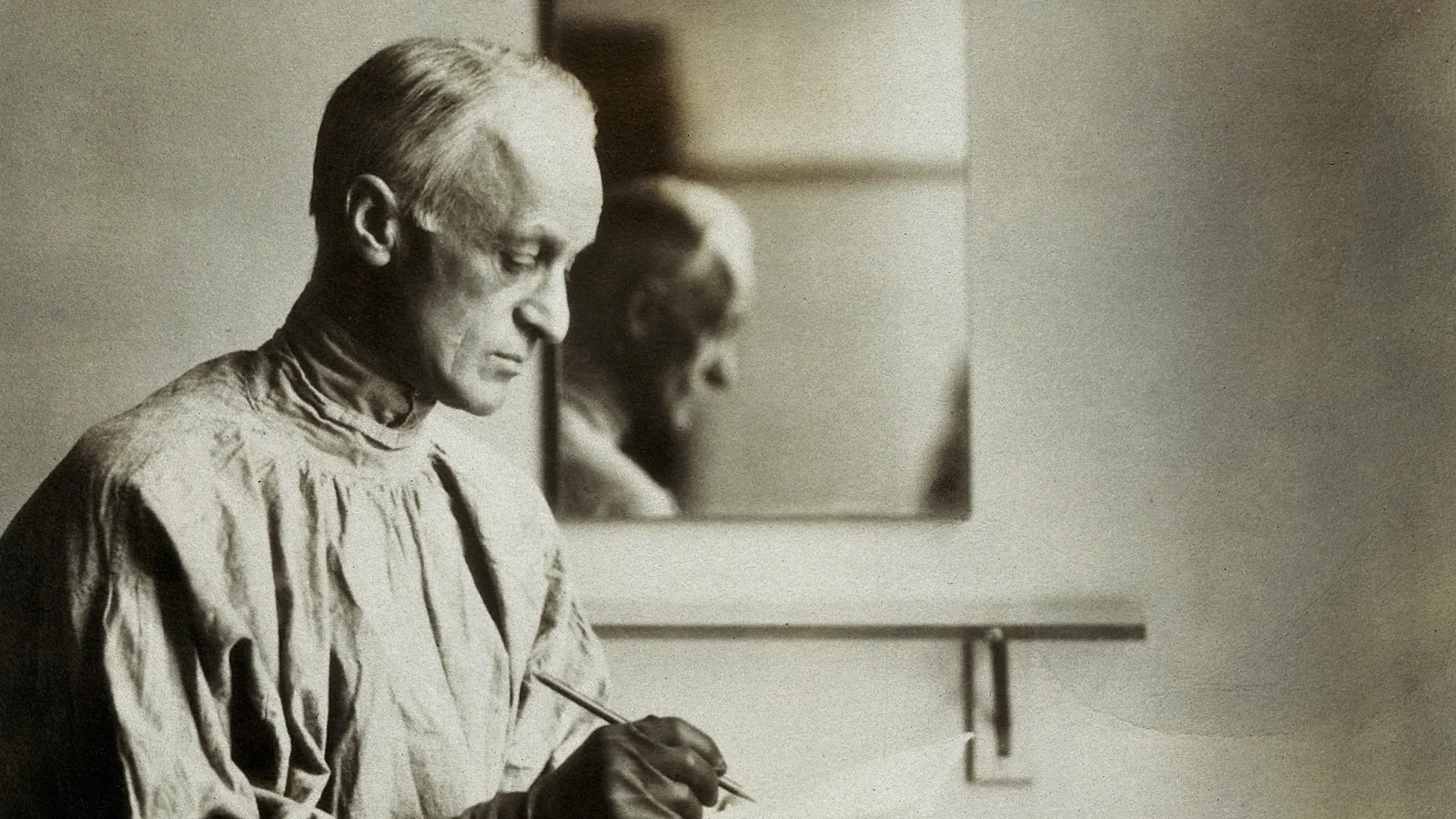
Harvey Williams Cushing, an American surgeon who lived from 1869 to 1939, is widely given that title. A 2005 paper in the Journal of Neurosurgery says he "inarguably has earned the title, 'The Father of Neurosurgery.'" His methods made operations on the brain far safer than they had been.
The numbers show the change. Cushing brought his operative mortality below 10 percent "in an era when renowned brain surgeons elsewhere admitted to losing a third to half their brain patients," reports Yale Alumni Magazine. By the time he retired from Boston's Peter Bent Brigham Hospital in 1932, he had removed more than 2,000 tumours, according to Yale's medical library.
How did Harvey Cushing make brain surgery safer?
Three habits stand out.
1. He recorded what happened during the operation, not just after it. As a medical student, Cushing devised a chart with a fellow student to record a patient's temperature, pulse and breathing under anaesthesia (Hektoen International). A 2026 review in The American Surgeon names that student as Ernest Codman and calls their anaesthesia record the foundation of modern monitoring during surgery.
2. He added blood pressure to the chart. In 1901 Cushing visited Scipione Riva-Rocci in Pavia, Italy, made sketches of his cuff device for measuring blood pressure and received a model of it (Cureus, 2024). At Johns Hopkins Hospital he built an improved version and used it mostly in operations on the brain, the same review says. The cuff "allowed him to chart blood pressure during surgery," writes historian Delia Gavrus in Medical History. He soon made it an essential tool for monitoring surgical patients, according to Yale Alumni Magazine.
3. He attacked bleeding step by step. The 2005 Journal of Neurosurgery paper explains that until 1910 Cushing worked on infection and pressure inside the skull, and only afterwards could focus on stopping blood loss. He pioneered silver clips to control bleeding inside the brain (Yale Alumni Magazine). Then, on 1 October 1926, he operated with an electrosurgical unit built by Harvard engineer William T. Bovie, which used high-frequency current to cut or coagulate tissue (Yale's medical library). By greatly reducing blood loss, the 2005 paper says, electrosurgery let him operate on patients whose tumours had been "previously deemed inoperable".
Cushing became an assistant surgeon to William Halsted at Johns Hopkins in 1896 (Hektoen International); read how Halsted brought rubber gloves into surgery.
How did Cushing link a pituitary tumour to a hormone disorder?
In 1910 Cushing examined a 23-year-old woman, known in the literature as Minnie G., who had a round face, facial hair, extreme muscle weakness, stretch marks and a systolic blood pressure averaging 185 mm Hg (JMS Pearce, Hektoen International). He described her in his 1912 book The Pituitary Body and its Disorders. In 1932 he published a paper on basophil adenomas of the pituitary, reporting two patients from his own practice and ten similar cases from the literature (same source; reprinted in Obesity Research). His claim: a tumour in the pituitary was driving the whole pattern.
Today the chain is clear. Cushing's syndrome is "a disorder that occurs when your body makes too much of the hormone cortisol over a long period of time," says the US National Institute of Diabetes and Digestive and Kidney Diseases. Pituitary tumours that make too much ACTH cause 8 out of 10 cases not caused by steroid medicines, and doctors call that type Cushing's disease, the same page explains. Our explainer on why the pituitary is called the master gland shows how one gland can steer others.
If the hormone chain (pituitary, ACTH, adrenal gland, cortisol) still feels tangled, the Fermi Concept Library gives each biology concept its own lesson and shows its place in the map.
What can a student copy from Cushing's methods?
His habits work outside the operating room. Try this on your next practice paper.
Chart during, not after. Write the clock time after every 10 questions.
Watch one vital sign, such as minutes per block. A sudden jump is your early warning.
Stop the biggest bleed first. Fix the chapter losing the most marks before polishing the rest.
Trace symptom to cause. For each wrong answer, write the concept or step that failed, not "silly mistake".
Collect cases. Cushing built his 1932 argument on twelve cases (Hektoen International). Wait for three or four similar errors before calling something a pattern.
A made-up worked example: Ananya, in Class 12, logs a 30-question physics paper. Questions 1-10 take 12 minutes, 11-20 take 13, and 21-30 take 31. That third block is her warning reading. Four of those questions were rotational motion, and three of her wrong answers used the wrong axis for torque. The cause is one method, not "physics", so next week starts there.
When the cause turns out to be a method rather than a concept, the Fermi Problem Library has worked problems with a step-by-step solver that explains the reasoning rather than printing an answer.
Start your chart at the next practice paper: one column for time, one for the cause of each mistake.