On this page
Ganesh Prasad was born on 15 November 1876 in Ballia, Uttar Pradesh. After completing his undergraduate and master's degrees in India, including earning a D.Sc. from Allahabad University, he traveled to Europe for higher studies. He first went to the University of Cambridge, where he worked with mathematicians such as E.W. Hobson and Andrew Forsyth, and later to the University of Göttingen. At Göttingen, he studied under leading mathematicians, including:
Felix Klein
Arnold Sommerfeld
David Hilbert
He returned to India in 1904 with a deep understanding of European mathematical physics and dedicated his life to building a modern research culture. For this foundational work, he is widely regarded as the "Father of Mathematical Research in India" (Wikipedia).
What is Ganesh Prasad's work in potential theory?
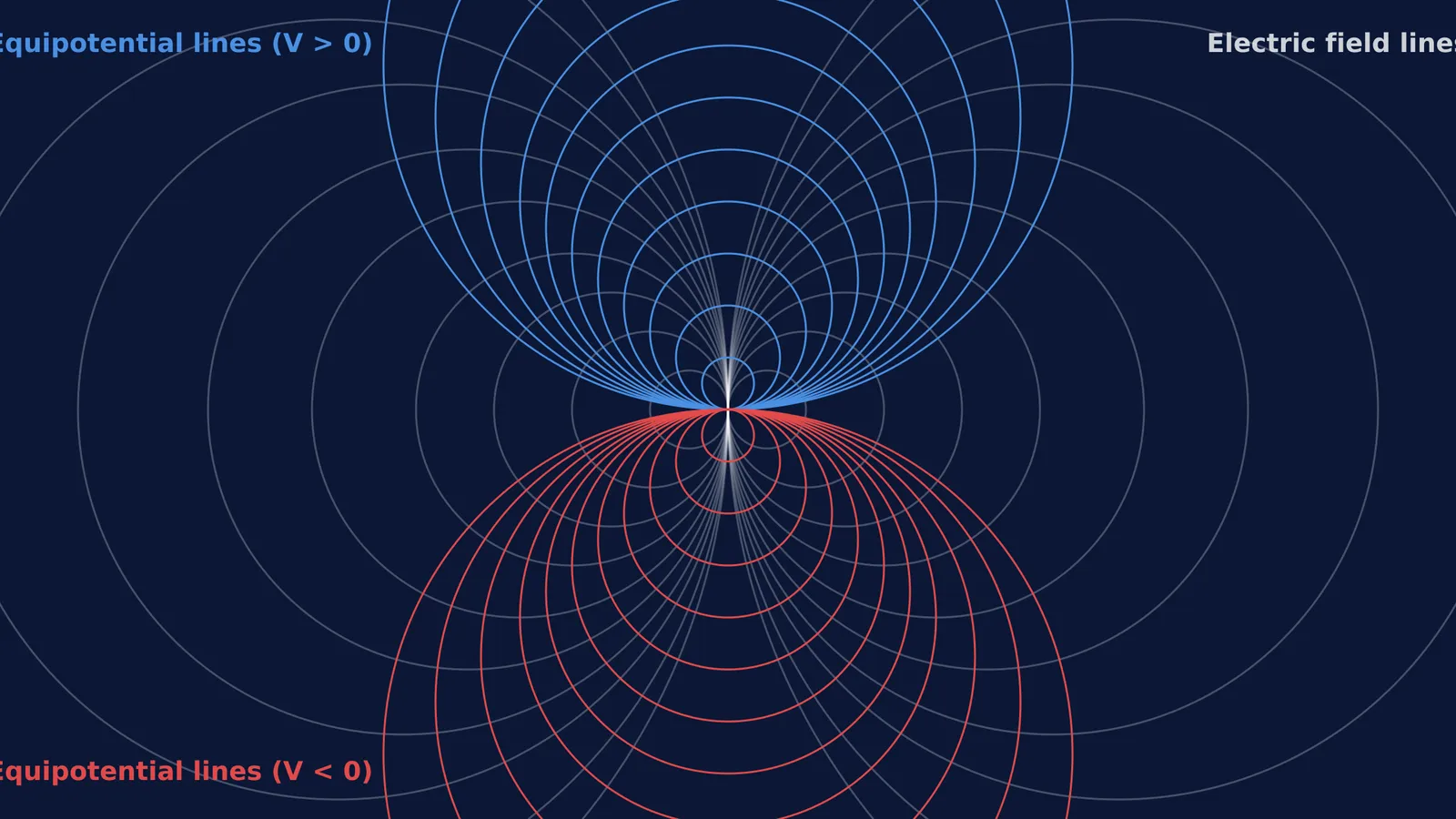
Potential theory is the mathematical study of harmonic functions, originally developed to understand physical phenomena like heat conduction, gravity, and electric fields. The field requires deep knowledge of partial differential equations and the theory of functions of a real variable. During his time at Cambridge, Prasad wrote a paper on the analytical theories of heat and the constitution of matter. When he later moved to Göttingen, Felix Klein found the work so impressive that he arranged to have it published in the *Göttingen Abhandlungen*.
He went on to author 11 books and over 50 research papers across his career (Wikipedia). His most notable technical work, *A Treatise on Spherical Harmonics and the Functions of Bessel and Lame*, became a foundational textbook for students of mathematical physics in India and abroad. Alongside his technical writing, he also published works on the history of mathematics, such as *Some Great Mathematicians of the Nineteenth Century*.
If you are preparing for exams and need to brush up on differential equations or calculus, the Fermi Concept Library covers every concept in physics, chemistry, biology, mathematics and computing, each with its own lesson and its place in the map.
How did Ganesh Prasad influence the Calcutta Mathematical Society?
The Calcutta Mathematical Society was established on 6 September 1908 under the leadership of Sir Asutosh Mookerjee, who served as its founder president (Wikipedia). Modeled after the London Mathematical Society, it aimed to foster a structured environment for mathematical research. Although Prasad was not the primary founder in 1908, he became one of the most important figures in the Society's history during its formative decades.
In 1914, Prasad became the first person to hold the Ras Behari Ghosh Chair of Applied Mathematics at Calcutta University. Later, from 1923 until his death, he served as the Hardinge Professor of Mathematics at the same university. In 1924, he was elected President of the Calcutta Mathematical Society, a position he held until his passing in 1935 (Wikipedia). As its President, he played a key role in developing the culture of mathematical research in India. He tirelessly encouraged young Indian researchers to formalize their work, bridging the gap between traditional Indian mathematics and modern global research standards.
What was his contribution to education and careers?
Prasad was a tireless institution builder. Beyond his work in Calcutta, he was instrumental in founding the Banaras Mathematical Society in 1918 while teaching as a Professor of Mathematics at Banaras Hindu University. He also strongly advocated for the democratization of education. In rural areas, he was a driving force behind the introduction of compulsory primary education in the villages of Uttar Pradesh.
His commitment to students extended to significant personal philanthropy. He donated Rs. 200,000 to Agra University to establish prizes for top-performing students in the M.A. and M.Sc. examinations, and contributed Rs. 22,000 from his personal savings specifically for the education of girls in his hometown of Ballia (Wikipedia). This was a substantial sum at the time, reflecting his belief that rewarding talent and supporting grassroots education were essential for India's scientific future.
If you are facing a difficult assignment in mathematical physics and do not know where to start, Fermi's AI tutor can work out what you already know, build a plan for the session, and teach through it — writing on a board, drawing the figure, running the simulation, and checking understanding as it goes.