On this page
Most students meet Clemmensen as one line in a reaction table: ketone, Zn(Hg), HCl, alkane. Behind that line is an industrial chemist, and a reaction that still solves a real problem in organic synthesis more than a century later.
Who was Erik Christian Clemmensen?
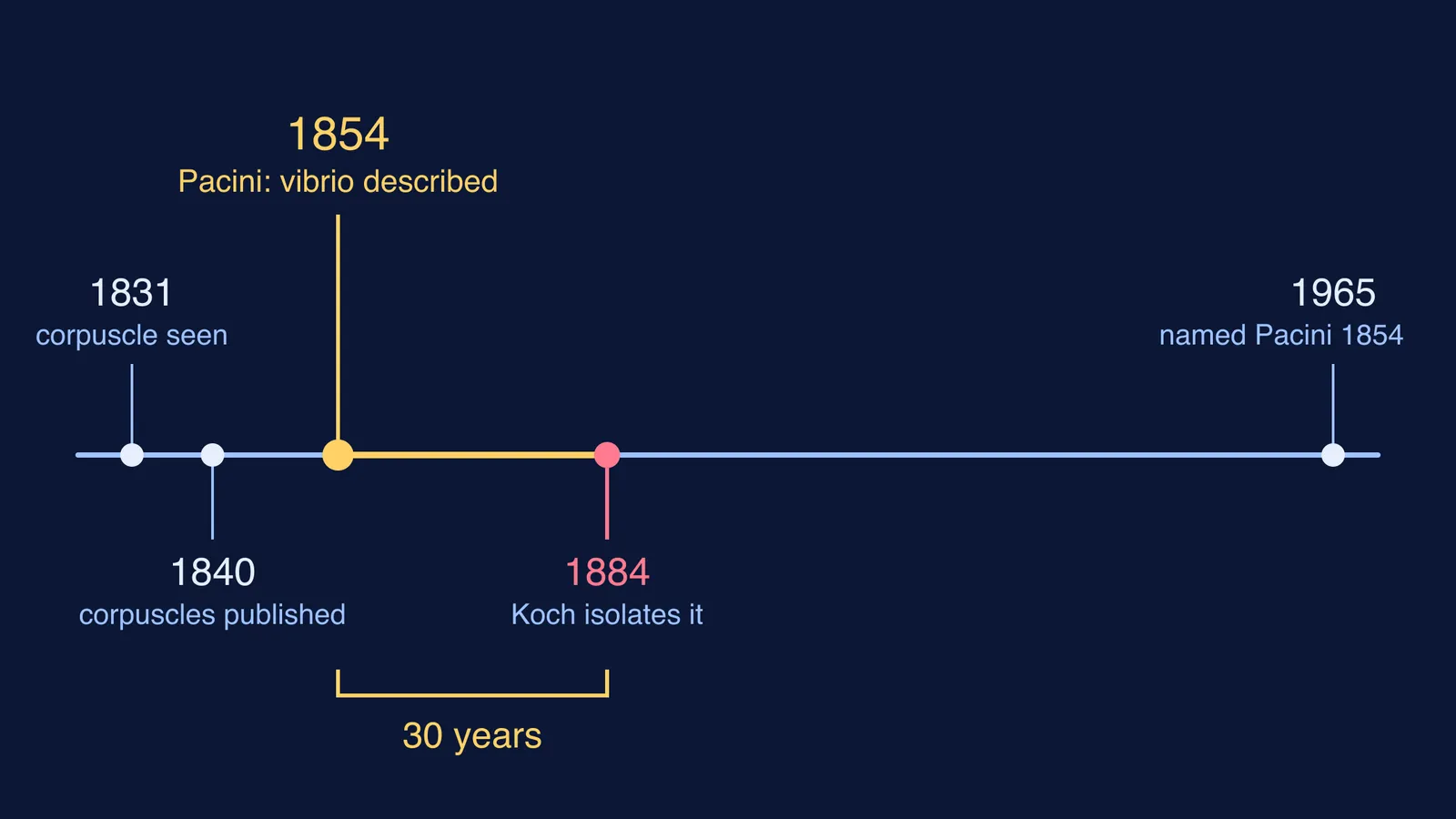
Erik Christian Clemmensen was born on 12 August 1876 in Odense, Denmark, and died on 21 May 1941, according to his Wikipedia biography. He studied at the Copenhagen Polytechnic Institute, moved to the United States and joined the pharmaceutical company Parke, Davis & Co in Detroit, where he developed the reaction. The same source says the University of Copenhagen awarded him a PhD in 1913 for the work.
His paper appeared in 1913 in Berichte der deutschen chemischen Gesellschaft, volume 46, pages 1837 to 1843, under a title that translates as "Reduction of ketones and aldehydes to the corresponding hydrocarbons using amalgamated zinc and hydrochloric acid" (Crossref record). In 1914 he followed up with a paper presenting it as a general method for reducing the carbonyl group of aldehydes and ketones to the methylene group.
He spent his career in industry. Denmark's national encyclopedia, Lex, describes him as a chemical engineer who set up his own factory around 1920 making sodium benzoate and vanillin, sold it in 1929, helped develop the sweetener saccharin, and in 1935 founded The Clemmensen Chemical Corp.
What does the Clemmensen reduction actually do?
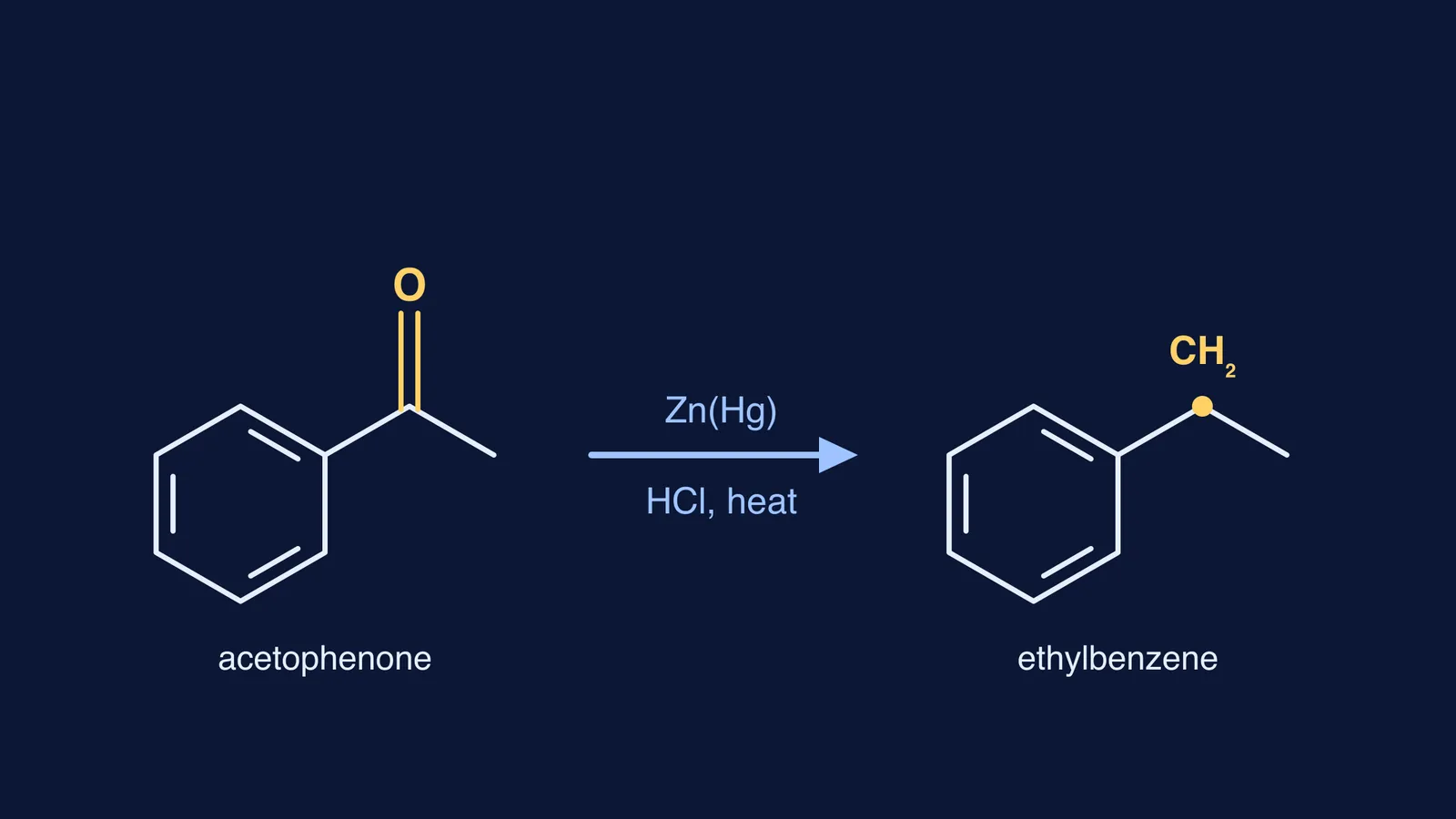
The Clemmensen reduction replaces the oxygen of an aldehyde or ketone C=O group with two hydrogen atoms, so the carbonyl carbon becomes a CH2 group. A review chapter in Organic Reactions by Elmore L. Martin describes it as replacing the carbonyl oxygen "by two hydrogen atoms through the use of amalgamated zinc and hydrochloric acid" (abstract via Crossref).
The conditions are rough. A later Organic Reactions chapter by E. Vedejs says the carbonyl compound is typically refluxed for several hours with 40% hydrochloric acid, amalgamated zinc and a water-immiscible solvent such as toluene (abstract via Crossref). The same chapter notes that a milder version using dry hydrogen chloride in an organic solvent widened what the reaction can handle.
One surprise: the mechanism is still not settled. Organozinc intermediates are proposed, and the alcohol is not believed to be an intermediate, because alcohols exposed to Clemmensen conditions rarely give the alkane (Clemmensen reduction overview). So do not draw the alcohol as a step on the way to the alkane.
Why is the Clemmensen reduction used after Friedel-Crafts acylation?
If you try to attach a straight propyl chain to benzene by Friedel-Crafts alkylation with a primary alkyl halide, the intermediate rearranges and you get almost exclusively the branched product (Friedel-Crafts reaction). The fix is to acylate first, because the acylium ion does not rearrange, and then convert the C=O to CH2 with a Clemmensen or Wolff-Kishner reduction (same source).
Martin's review notes the method was used in making polynuclear hydrocarbons and alkylated aromatic compounds, and in working out the structures of complex natural products (abstract via Crossref).
Clemmensen or Wolff-Kishner: which should you choose?
Both reactions turn C=O into CH2. The Wolff-Kishner reduction uses hydrazine and a strong base such as potassium hydroxide at high temperature, so it suits acid-sensitive molecules but not base-sensitive ones (Wolff-Kishner reduction). Clemmensen is particularly effective on aryl-alkyl ketones and needs a molecule that survives hot concentrated acid (Clemmensen reduction overview).
Run these three questions on any problem:
Do you want CH2, or an alcohol? For an alcohol, neither fits; sodium borohydride reduces aldehydes and ketones to alcohols (sodium borohydride).
Would the rest of the molecule fall apart in hot acid? Choose Wolff-Kishner.
Would it fall apart in hot strong base? Choose Clemmensen.
A worked example: making propylbenzene from benzene
Target: benzene with a straight three-carbon chain, C6H5CH2CH2CH3.
Friedel-Crafts acylation: benzene plus propanoyl chloride with AlCl3 gives propiophenone, C6H5COCH2CH3 (C9H10O).
Clemmensen reduction: Zn(Hg) and concentrated HCl with heat turn the C=O into CH2, giving propylbenzene (C9H12).
Check: the carbon count stays at nine, one oxygen is lost and two hydrogens are gained. Only the carbonyl carbon changes.
If you instead wrote benzene plus 1-chloropropane and AlCl3, you would get the rearranged, branched product, a trap examiners like to set.
If you keep picking the wrong reagent in multi-step problems like this one, the Fermi Problem Library has worked problems with a step-by-step solver that explains the reasoning rather than printing an answer. If the gap is further back, in why carbocations rearrange, the Fermi Concept Library gives each chemistry concept its own lesson and its place in the map.
Next time you write Zn(Hg) over an arrow, picture a chemist at a drug company in Detroit working out how to turn C=O into CH2.