On this page
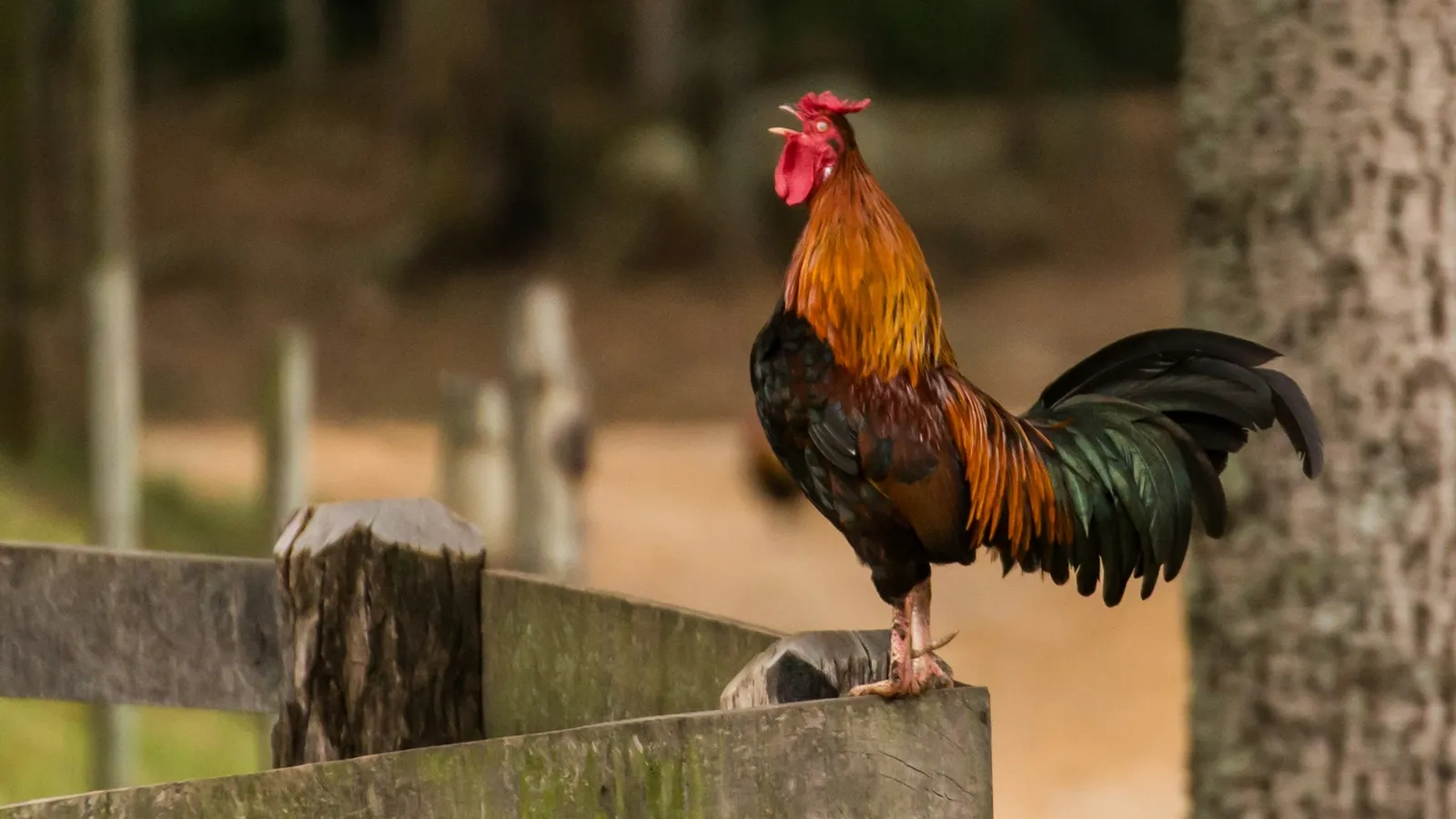
In 1849, a German physiologist and zoologist named Arnold Adolph Berthold ran a small experiment on a few roosters in Göttingen. His paper was four pages long. It is now treated as the start of endocrinology, the study of hormones. Here is what he did, why it worked, and how to use it to read any experiment in your biology textbook.
What was Berthold's rooster experiment?
Farmers had long known what castration does to a cockerel. It becomes a capon: smaller comb and wattle, no crowing, little interest in hens or fights. Nobody had shown *how* the testes control all this.
According to a historical review by Eberhard and Susan Nieschlag in the Asian Journal of Andrology, Berthold (1803–1861) castrated four cocks. Two got one testis transplanted to a new spot inside the body; the other two were left without testes. The Wikipedia summary of his work adds two uncastrated birds for comparison and dates his talk on the results to 8 February 1849, at the Royal Scientific Society in Göttingen.
The birds without testes became capons. The birds with a transplanted testis did not. In the Nieschlags' translation, Berthold wrote that they "crowed quite considerably, often fought among themselves and with other young roosters and showed a normal inclination to hens." The International Society for Fertility Preservation adds that blood vessels grew into the grafts and that comb and wattle kept their size compared with capons.
Why did it prove hormones travel in the blood?
A testis moved to a new place loses its original nerves. If the testes controlled the body through nerves, the transplant should have failed. It did not.
Berthold reasoned that because the moved testes could no longer be connected to "their original nerves", their effect had to come "through their action on the blood, and then through the suitable ensuing action of the blood on the organism as a whole" (his words, quoted in the Nieschlag review). When he examined the birds afterwards, the grafted testis had grown a new blood supply but no other link to the body, as the Wikipedia account describes. The only route left was the blood.
The HistoryofMedicine.com bibliography says Berthold "was thus the first to prove the existence of an internal secretion."
Why was Berthold ignored for so long?
The Nieschlag review notes that John Hunter had transplanted testes into capons in London in 1786, but his aim was to show the "vital principle" of living organs and he did not consider endocrine aspects. Berthold was the one who asked what the testes release. The same review records that his Göttingen rival, Rudolf Wagner, tried to repeat the work, failed, and dismissed it. Wagner became the full professor of physiology, and his opinion prevailed.
The idea came back. Ernest Starling first used the word "hormone" in June 1905, for "the chemical messengers which speeding from cell to cell along the blood stream, may coordinate the activities and growth of different parts of the body", according to Jamshed Tata's history in EMBO Reports. That story is in our post on how Bayliss and Starling discovered secretin.
The testicular hormone itself was isolated in 1935, when Ernst Laqueur's group in Amsterdam extracted 10 mg of testosterone from 100 kg of bull testes, the Nieschlag review reports. That was 86 years after the roosters.
How do you read an experiment like Berthold's?
Questions on classic experiments often test one skill: saying what each group rules out. Ask these four questions of any experiment.
What claim is being tested? Here: the testes control male traits through the blood, not through nerves.
What does each group rule out? The castrated birds show the testes matter at all. The transplanted birds show the testes do not need their usual place or nerves.
What is the key comparison? Capons versus transplanted birds. The only difference is the graft.
What result would have disproved it? If the transplanted birds had also become capons, the blood idea would have failed.
Now try one. Suppose a classmate says, "Maybe a graft only works if it is the bird's own testis." What extra group would test that? (One answer: graft a testis from a different rooster and compare it with the other groups.)
If endocrine, exocrine and target organ still blur together, our guide to chemical coordination and hormones sets out the glands and what each one makes. Claude Bernard reached a related idea from another direction in the same era, which we cover in Claude Bernard and the internal environment.
If the gap is in the concept rather than the history, the Fermi Concept Library has every concept in biology, each with its own lesson and its place in the map, so you can see how hormones connect to nerves and feedback loops.
Next time you meet an experiment in a chapter, run the four questions before you memorise the result.