On this page
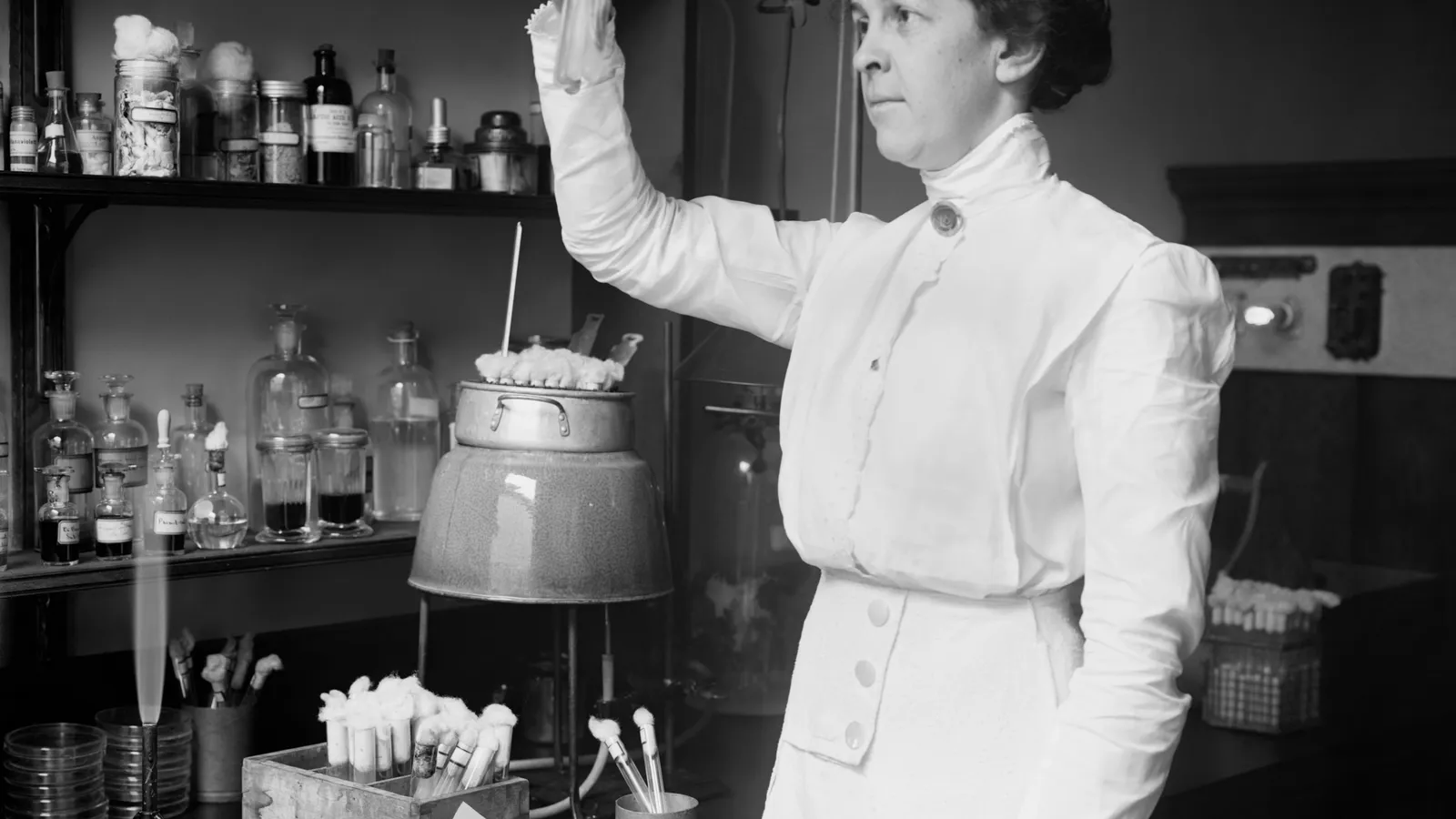
A century ago, a glass of milk could make you seriously ill. The US Food and Drug Administration, citing a 1924 report, notes that milk was second only to water as a vehicle for transmitting disease, with typhoid fever, scarlet fever and tuberculosis among the illnesses linked to it. Alice Evans, a bacteriologist at the US Department of Agriculture, added one more disease to that list.
What did Alice Evans discover about cow's milk?
Evans was studying bacteria that live in ordinary milk, including the germ that the Danish vet Bernhard Bang had linked to spontaneous abortions in cows in the late 19th century. In March 1917 she reported in the Journal of Bacteriology on the large numbers of a variety of this germ that may be found in milk.
Her question was simple: if this germ is in the milk people drink, does it make people ill? She later recalled, in a 1963 memoir, that the idea of drinking milk contaminated with bacteria capable of causing disease in animals was distasteful to her.
So she compared the cattle germ with the organism behind Malta fever (also called undulant fever), a human illness. In June 1918 she published a comparison of Bacterium abortus with the organism which causes Malta fever in the Journal of Infectious Diseases, followed that year by a paper on Bacterium abortus and related bacteria in cow's milk. Her argument was that one agent, later named Brucella abortus, caused both the cattle and the human disease.
Brucellosis is a bacterial disease caused by Brucella species, which mainly infect cattle, swine, goats, sheep and dogs, according to the World Health Organization.
How did she build the evidence?
According to the American Society for Microbiology (ASM), she infected pregnant laboratory animals with either the human strain or the cattle strain, and both groups miscarried. Antigen tests on blood serum from the separately infected animals confirmed that the two strains were similar.
Put together, her case had four links:
The germ is in the milk. It turns up in ordinary cow's milk.
It matches the human germ. The cattle and human organisms are closely alike.
It behaves the same in a living animal. Both strains caused miscarriage in lab animals.
The blood tests agree. Serum tests pointed the same way.
This echoes the logic of Robert Koch's postulates: tie a specific germ to a specific disease, step by step.
Why did people doubt her, and what changed?
Her 1917 findings met immediate scepticism from scientists, vets and the milk industry, and an NIH history notes that her lack of a PhD delayed acceptance of her findings on brucellosis and milk. Pasteurisation was also not common at the time, partly because of its expense.
What changed minds was replication: other researchers confirmed her findings a few years later. Evans worked at the US National Institutes of Health from 1918 to 1945, and the NIH credits her research with the acceptance of the need to pasteurize milk. The US Public Health Service developed the Standard Milk Ordinance in 1924, and milk pasteurisation laws were enacted in the 1930s, according to the National Women's Hall of Fame.
The cost to Evans was personal. She caught brucellosis in 1922, in the course of her research. ASM records that she was elected president of the Society of American Bacteriologists on 30 December 1927 but was too unwell to attend her own installation. She was the first woman to hold the role.
How can you use Evans's evidence chain in biology?
Her four links make a checklist for any 'X causes Y' claim, whether it is an exam question on pathogens and human disease or a forwarded message about a food scare. Here it is applied to the claim 'raw milk can spread brucellosis':
Is the agent present in the source? Yes: Evans found it in cow's milk.
Is it the same agent found in sick people? Yes: her comparison matched the cattle and human organisms.
Does it cause the effect under test conditions? Yes: both strains caused miscarriage in lab animals.
Did independent scientists confirm it? Yes, a few years later.
Does removing it reduce the harm? WHO today calls pasteurisation an important step to preventing transmission.
If a claim fails any of these checks, treat it as not yet proven. If the terms themselves trip you up (antigen, serum, strain), the Fermi Concept Library gives each biology concept its own lesson and shows where it sits in the map.
Is raw milk still a brucellosis risk today?
Yes. WHO says that most human cases come from unpasteurised milk or cheese from infected goats or sheep, and that the incubation period is usually 2 to 4 weeks.
Her work built on the germ theory of Louis Pasteur and his work on fermentation and microbes. Next time you pour pasteurised milk, you are acting on the evidence she gathered.