

On this page
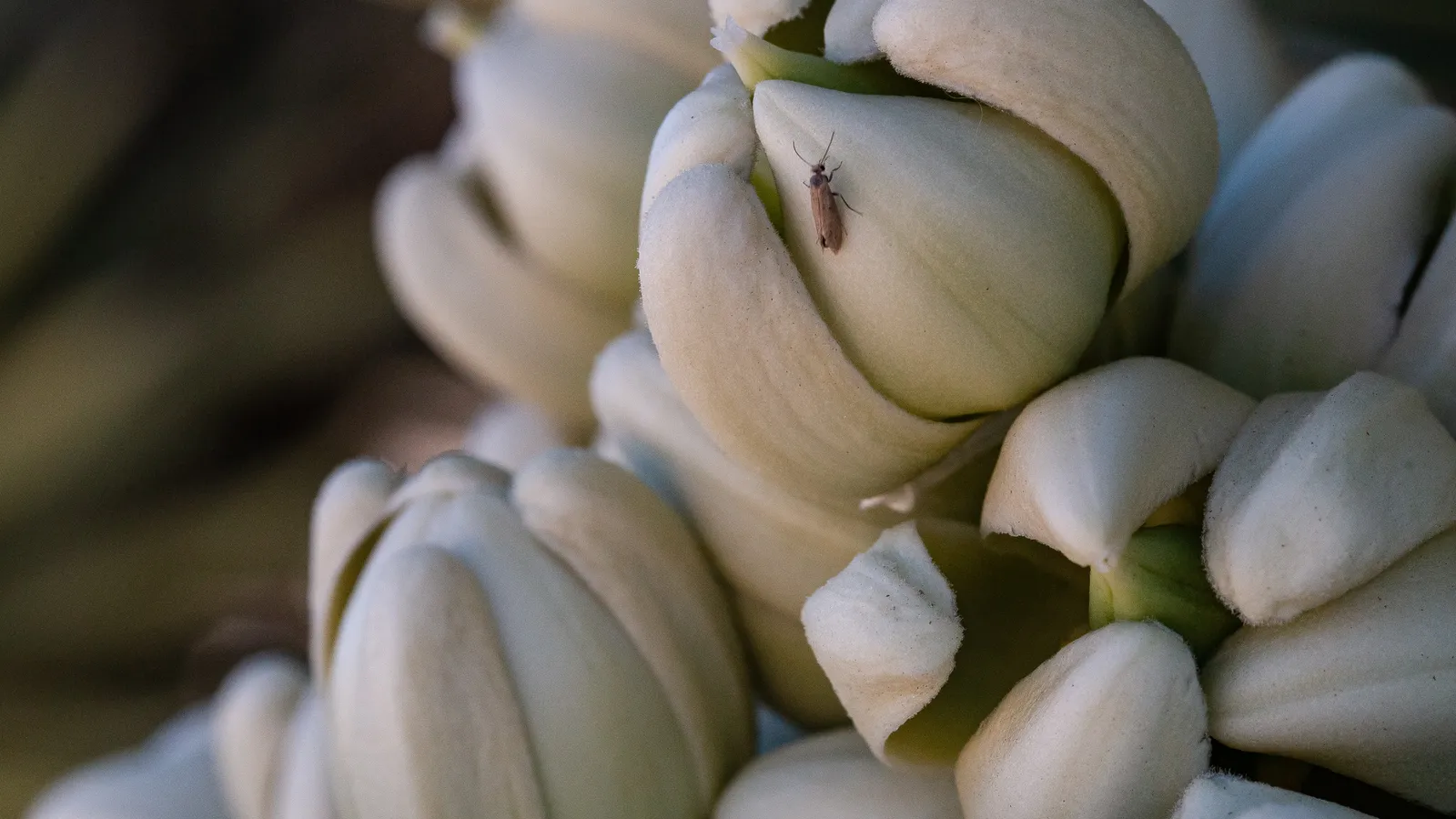
If you are reading the pollination section of NCERT Class 12 Biology, the yucca moth gets one short paragraph. A species of moth and the plant Yucca “cannot complete their life cycles without each other”, says NCERT's chapter on sexual reproduction in flowering plants. The same passage warns about insects that “consume pollen or the nectar without bringing about pollination”. Those few lines carry one of biology's classic partnerships, and an exam trap.
What is yucca moth mutualism?
Mutualism is an interaction in which both species gain: the (+, +) row of the population interactions signs table.
In the yucca system, “the adult moth pollinates yucca flowers and her progeny feed on developing seeds”, according to Olle Pellmyr's 2003 review in the Annals of the Missouri Botanical Garden, which calls it one of the classically cited examples of coevolution.
The plant gets pollen delivered to the right place; the moth gets a nursery. NCERT calls this kind of floral reward “safe places to lay eggs”.
The partnership is old. Pellmyr and James Leebens-Mack estimated in PNAS in 1999 that the moths had colonised yuccas by 41.5 ± 9.8 million years ago, with pollinating moths appearing within 0–6 million years of that.
How does the yucca moth pollinate the flower?
The female moth works in four steps, described on the Tree of Life page for the yucca moth genus Tegeticula written by Pellmyr, and in NCERT:
Collect: she uses tentacles on her mouthparts (maxillary palps) to collect pollen and press it into a load.
Lay: she lays eggs inside the flower's ovary.
Pollinate: she walks up to the stigma and pushes a small portion of her pollen onto it.
Grow: the larvae hatch as the seeds start developing and eat a modest share of them.
In most insect-pollinated flowers, NCERT explains, the visitor's body simply gets coated in pollen while it feeds. The yucca moth pollinates on purpose. Pellmyr and John Thompson argued in PNAS in 1992 that the truly coevolved features are active pollination, the moth's pollen-carrying structures, and the yucca's exclusion of other pollinators.
Why don't the larvae eat all the seeds?
If they did, the yucca would get nothing, and in the end neither would the moths. The plant has a check. A 2018 study in AoB Plants sums up the earlier work: yucca plants “selectively abort flowers with a high number of pollinator eggs”. When a moth overloads a flower, the plant can drop it, and the eggs inside are lost with it.
What are pollen robbers, and how are cheater moths different?
NCERT defines pollen/nectar robbers as floral visitors that eat pollen or nectar without pollinating. Only visitors that touch both the anthers and the stigma can pollinate.
Yuccas also have cheaters. Pellmyr's 2003 review describes two separate cases where the mutualism reversed: “cheater” moth species that lay eggs in fruits pollinated by other moth species. Their young eat seeds, but the cheaters pollinate nothing. Pellmyr and Leebens-Mack's 1999 molecular clock dates these non-pollinating cheaters to 1.26 ± 0.96 million years ago.
Pollinator, robber or cheater: how do you tell?
Ask three questions about any flower visitor:
Does it carry pollen to the stigma? Only a visitor that touches both the anthers and the stigma can pollinate.
If it pollinates, does it do so on purpose? Placing pollen on the stigma, as the female yucca moth does, is active pollination. Pollen that just sticks to its body while it feeds is passive pollination.
If it does not pollinate, what does it take? A visitor that eats pollen or nectar is a pollen or nectar robber. A moth whose young eat seeds in fruit that other moths pollinated is a cheater.
A moth that pollinates and whose young eat some of the seeds is a mutualist, paying itself in seeds.
Worked example, a 3-mark question: Explain the relationship between Yucca and its moth. Why is it called mutualism? A full answer makes three points:
The female moth lays her eggs in the locule of the ovary and pollinates the flower.
The larvae hatch as the seeds develop and feed on some of them; the rest of the seeds survive.
Both gain (+, +), and neither can complete its life cycle without the other, so it is obligate mutualism.
If mutualism, commensalism and parasitism still blur together, the Fermi Concept Library gives every biology concept its own lesson and its place in the map, so you see each one next to its neighbours.
For a second obligate partnership to compare, read how fig and wasp mutualism works. Then see how flowers attract insect pollinators with signals and rewards.


