On this page
You put a favourite school sweater through a hot wash and it came out a size smaller, thicker and stiff. Nothing was burnt. The wool did what felt makers want it to do: its fibres crawled past one another and locked together.
What is on the surface of a wool fibre?
Wool fibres are made mainly of the protein keratin and carry numerous overlapping scales, all aligned in one direction, according to the Florida State University microscopy primer on wool.
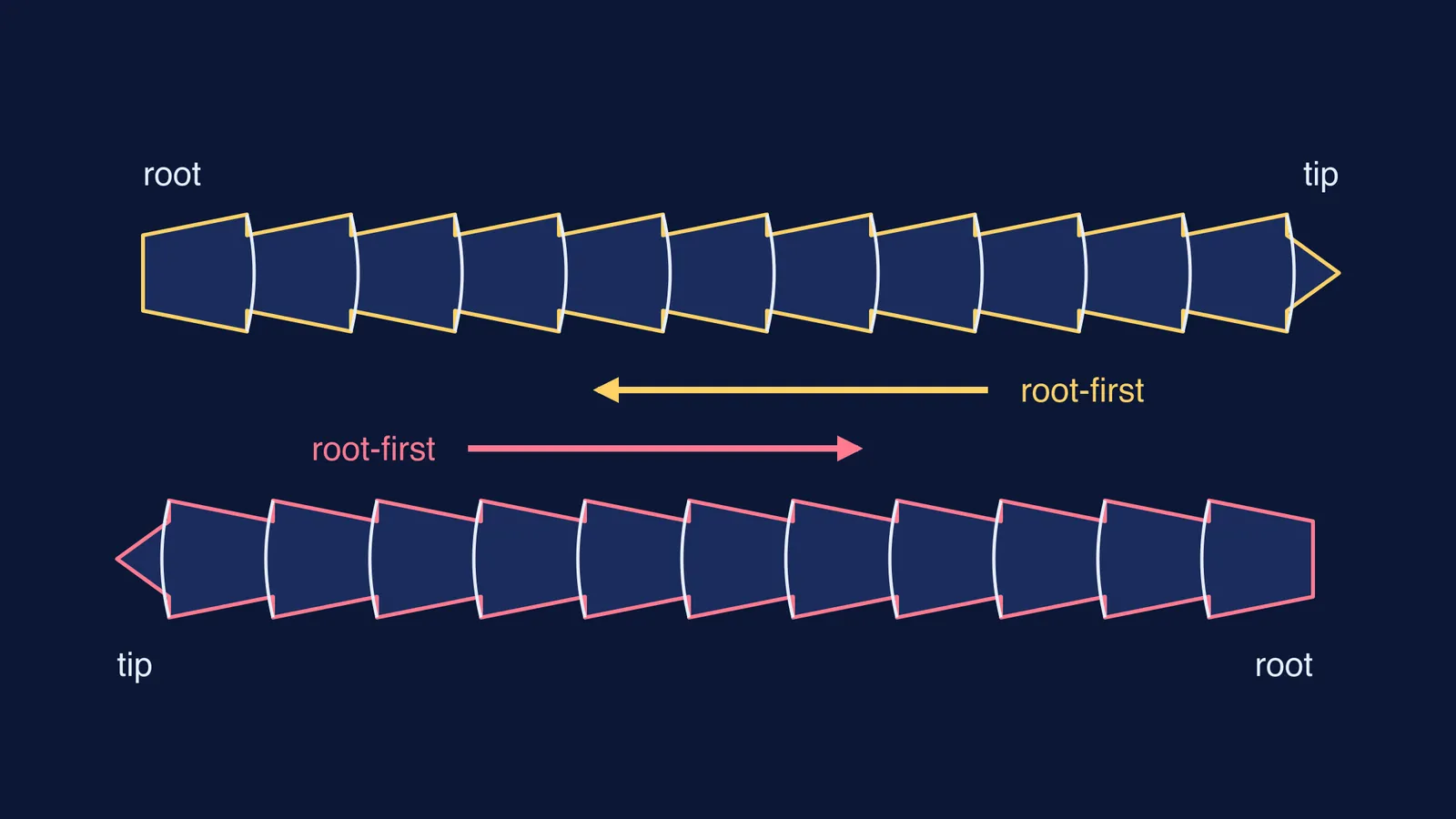
The outer layer of a wool fibre, the cuticle, is a sheath of overlapping, scale-like cells that make up about 10% of the fibre's mass, according to a 2025 review of wool structure in the journal Animals. The scales overlap like tiles on a roof, with their edges pointing from the fibre's root towards its tip.
Because the scale edges all point one way, a fibre rubs more easily in one direction than the other. The Animals review puts it simply: the overlapping scales create directional friction, and that is what makes felting possible.
Why do woollen sweaters shrink in hot water?
Shrinking needs three things at once: warmth, water and movement. The Woolmark Company explains the mechanism in one sentence: "When exposed to heat and moisture the scales lift and with mechanical agitation start to lock onto the scales of other fibres in a ratchet-like mechanism" (Woolmark, machine washable wool). Woolmark adds that this process is irreversible and leads to fibre entanglement, a denser fabric and a smaller garment.
Here is the ratchet worked through for two fibres lying side by side in the drum:
The machine pushes each fibre back and forth at random.
Pushed root-first, its scales slide smoothly over its neighbours, like running your hand down a tiled roof.
Pushed tip-first, its scale edges catch on its neighbours and it barely moves.
Random pushes in both directions therefore add up to a steady creep, root-first, the way a ratchet spanner turns a bolt only one way.
Countless fibres creeping and knotting pull the knitted loops tighter, so the sweater shrinks and thickens.
Is it the hot water or the rubbing?
Both, working together. Heat and moisture lift the scales; rubbing, wringing and tumbling drive the ratchet. Felt is made on purpose with the same recipe: under pressure, heat and moisture, the scales of adjacent fibres interlock, as the Florida State University primer describes.
Machine-washable wool exists because manufacturers tackle the scales directly. Woolmark lists three approaches: removing or smoothing the scales, reducing friction between fibres, or both. Woolmark calls Hercosett the most widely commercialised shrink-resist system: a chlorine pre-treatment modifies the scales, then a thin resin layer is applied to the fibre surface. If your label does not say machine washable, treat the sweater as though its scales are untreated.
Do other animal fibres have the same scales?
Wool is hair grown by sheep, and your own hair has a similar surface. In human hair, the cuticle is formed by flat overlapping cells in a scale-like formation, each about 0.5 µm thick and 45 to 60 µm long, according to a study by McMaster University physicists in PeerJ.
How do you wash a woollen sweater without shrinking it?
The fix follows from the physics: keep the water cool and the movement gentle. Woolmark's washing guidance gives the details:
Check the sewn-in care label first; some garments say dry clean only.
To hand wash, turn the sweater inside out.
Wash it in clean, lukewarm water of about 30°C with a mild, gentle detergent.
Let it soak for about 10 minutes before rinsing, rather than scrubbing it. Rubbing is the agitation that drives the ratchet.
Rinse in lukewarm water, then finally in cold water.
If the label allows a machine, use the wool setting, which Woolmark says is usually a gentle action at 40°C.
Dry it flat.
Woolmark does not spell this out, but the ratchet points the same way: wringing and twisting are agitation too, so squeeze the water out gently.
Next time someone describes friction as the same in every direction, you have a counter-example in your cupboard. Ratchets and one-way friction are easier to see than to read; the Fermi Simulation Lab has interactive simulations for ideas like these, and the Fermi Concept Library has a lesson for every concept in physics, chemistry and biology.