On this page
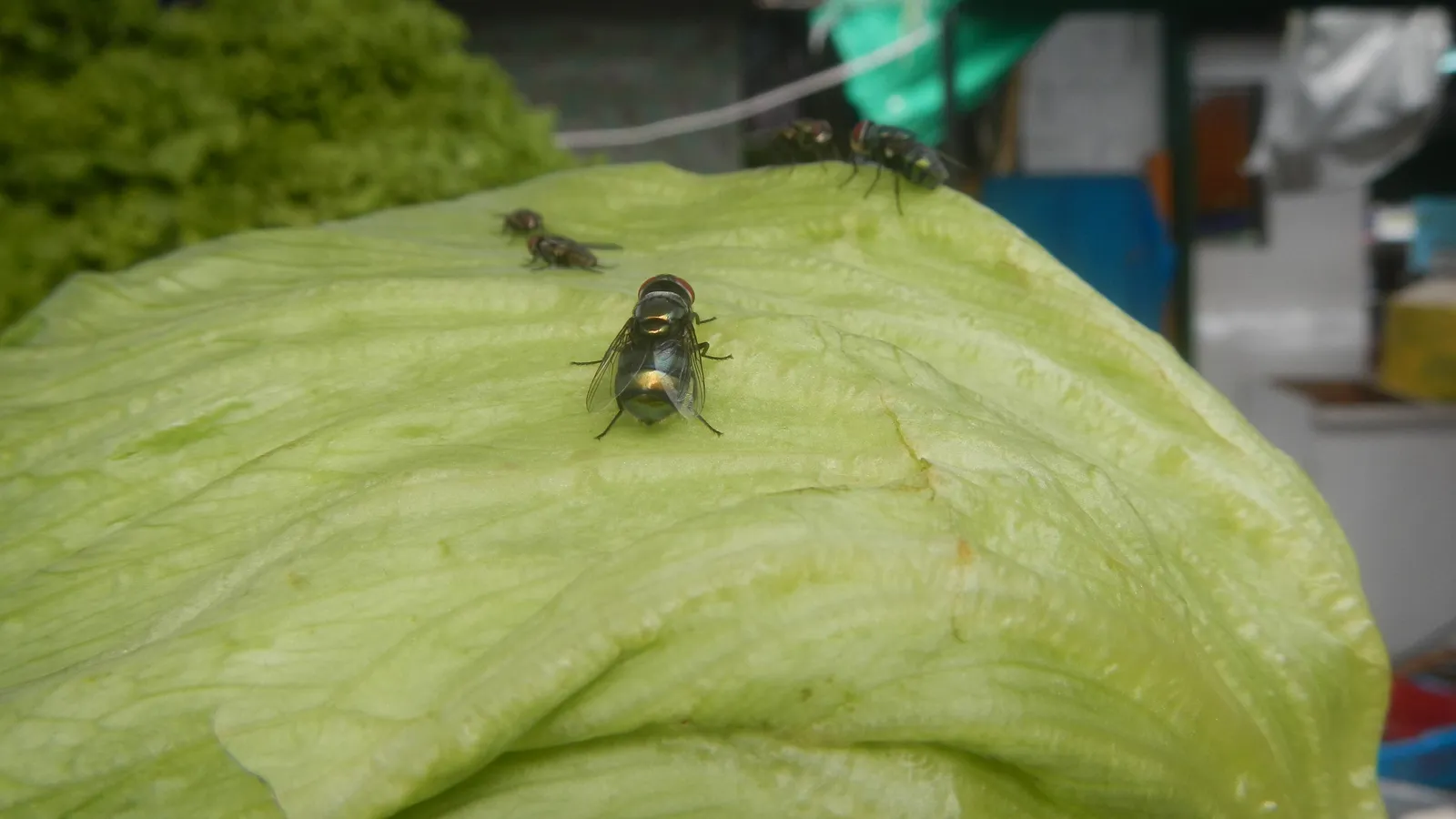
Leave a plate of jalebis or a box of laddoos open after a function and the flies soon arrive. Flies have senses tuned to find food, feet that taste sugar, and habits that move microbes from dirty places to clean ones.
Why do flies go straight for sweets?
Smell brings them in. House flies follow odours, and some sweet-smelling compounds draw them too. A 2022 study in the International Journal of Tropical Insect Science tested lures that mixed pleasant, sweet-smelling compounds such as linalool with fetid ones, and found the blend attracted house flies in lab tests and increased trap catches in two test rooms.
Feet taste first. Flies have taste receptors on their legs, so landing on a sweet is already tasting it. In fruit flies, Thoma and colleagues reported in Nature Communications in 2016 that sweet taste neurons in the legs are needed for an immediate choice of sugar, and that one group of these neurons, which projects to the brain, is involved in starting to feed.
Solid sugar sets off saliva. Flies do not chew; they have sponging mouthparts used to lick and suck food. In a classic blowfly study, Hansen Bay (1978, Journal of Experimental Biology) found that crystalline sugar touching taste hairs on the mouthparts triggered salivation, and that solid sucrose could make a fed fly regurgitate its crop contents. A sugar-dusted barfi offers the same kind of dry sugar.
How can a fly carry germs from a bin to your food?
The same fly that lands on your sweets may have just been on a drain, a dustbin or animal dung. A 2023 systematic review in Parasites and Vectors notes that faeces, garbage and sewage attract non-biting flies and are often where they breed. It describes them as mechanical carriers of pathogens that stick to their body, mouthparts and body hair, and says they pass pathogens on mainly by contact.
That review pooled studies covering 28,718 non-biting flies and estimated that 42.5% carried parasites, with a rate of 43% in house flies.
Sequencing gives a closer look. Junqueira and colleagues (2017, Scientific Reports) sequenced 116 houseflies and blowflies from three continents and found that legs and wings carried the largest microbial diversity and were an important route for spreading microbes. They also detected human pathogens such as Helicobacter pylori.
The WHO vector-borne diseases fact sheet lists mosquitoes, ticks, sandflies and biting flies such as tsetse flies and blackflies among vectors. The difference worth remembering for exams: a mosquito passes on malaria through its bite, while a house fly is a mechanical vector that moves microbes from one surface to another.
Does controlling flies actually reduce illness?
The best-known test comes from Pakistan. In a community-randomised trial in The Lancet (Chavasse and colleagues, 1999)03366-2), spraying insecticide in villages near Peshawar practically eliminated flies. During the fly season, childhood diarrhoea was 23% lower in sprayed villages, and the difference disappeared outside the fly season.
Take that result with care. A Cochrane review (2018) found only this one trial, covering 491 children, and rated the evidence low certainty. Baited fly traps, tested in the trial's third year, did not reduce flies or diarrhoea. The reviewers say spraying may reduce diarrhoea where flies peak by season, but other settings still need study.
How do you keep flies off sweets at home?
The WHO Five Keys to Safer Food include keeping clean, which covers protecting kitchen areas from insects, rodents and other animals. In practice, that means breaking the path from waste to plate.
Cover sweets the moment they are served: a lid, a mesh dome or a clean cloth.
Keep bins lidded and empty them daily, especially wet waste, since that is where flies feed and breed.
Wipe sugar spills and syrup rings straight away, so there is nothing left to draw flies.
Wash your hands before eating, and wash fruit before cutting it.
If flies have been crawling over an uncovered sweet, throw that piece away.
What does a fly-safe Diwali sweets box look like?
A box of mithai arrives at 6 pm and guests come at 8 pm. Keep it closed until serving, then put out only what will be eaten soon, on a covered plate. Seal the box and keep it away from the kitchen bin. After guests leave, wipe the table and take out the wet waste. Each step removes either the food that draws flies or the dirty surface they arrive from.
How does this connect to your biology syllabus?
Flies make a good revision hook for chapters on microbes and human health: one insect links sense organs, feeding and vectors. If a term such as vector or pathogen is still hazy, the Fermi Concept Library gives every biology concept its own lesson and its place in the map. For ideas that are easier to see than to read, try the interactive simulations in the Fermi Simulation Lab.
Next time flies find your sweets, you will know what drew them, what they tasted and why the lid matters.