On this page
When you ride a motorcycle, the engine's internal components move past each other thousands of times a minute. Without a lubricant, this immense friction would destroy the engine in seconds. Engine oil is not just a slippery fluid you pour in and forget; it is a precisely engineered layer of protection that handles friction, intense heat, and combustion byproducts.
Why does a bike engine need engine oil?
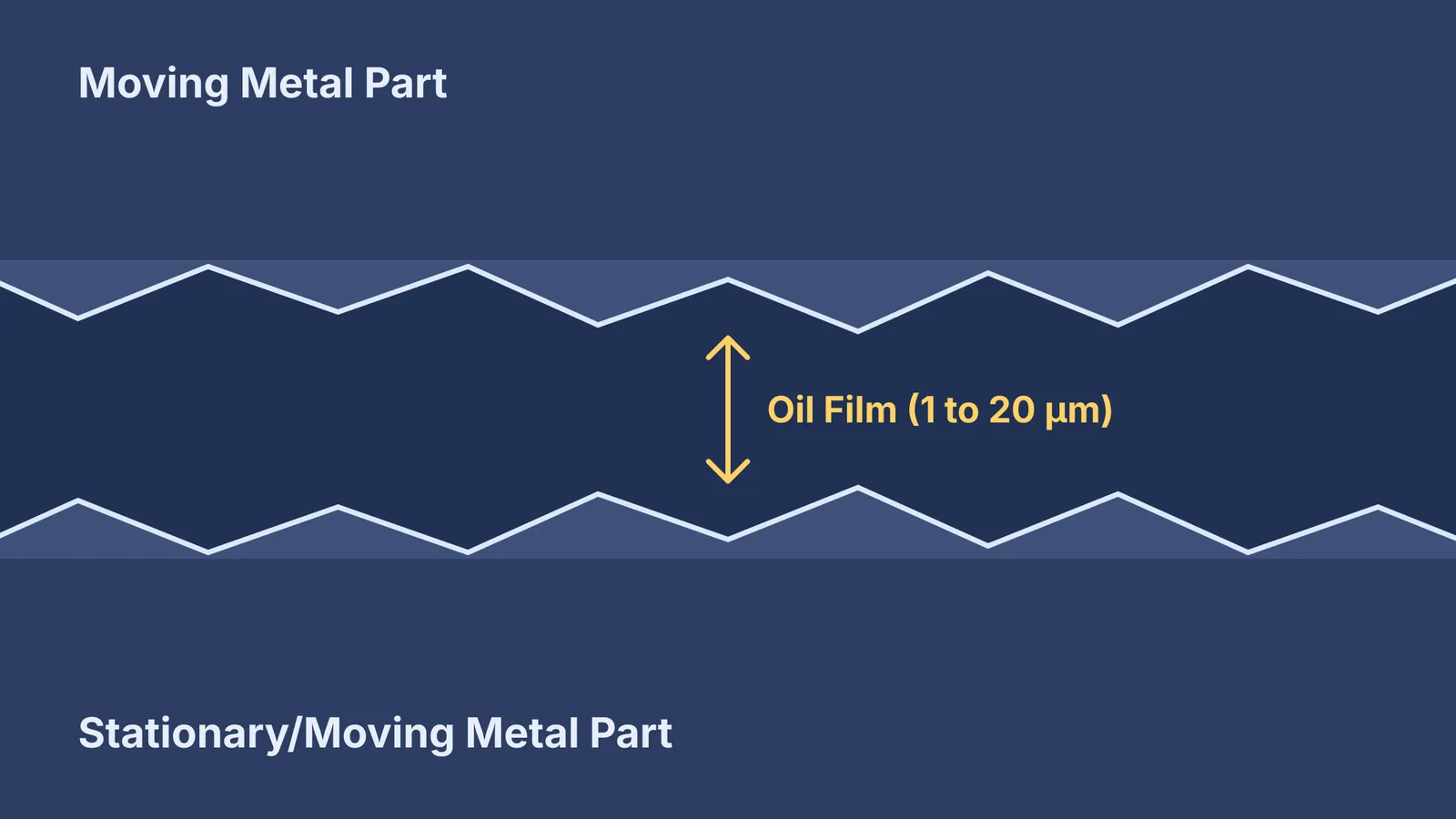
The primary job of engine oil is to prevent metal from physically touching metal. Even if a steel piston ring or cylinder wall looks perfectly smooth to the naked eye, at a microscopic level, its surface is covered in jagged peaks and valleys. When two dry steel surfaces rub together, they lock into each other, creating a high coefficient of friction according to standard references.
Engine oil forms a continuous, pressurised layer between these moving parts. In a motorcycle engine, this oil film can be as thin as 1 to 5 microns in the crankshaft bearings, and between 2 and 20 microns on the cylinder walls during mid-stroke, as detailed in lubrication studies. For scale, a single human hair is about 50 to 100 microns thick. This fluid barrier significantly drops the kinetic friction coefficient, allowing parts to slide freely over one another without wearing down the metal.
How does oil cool a motorcycle engine?
Friction naturally generates heat, but the biggest source of heat in any internal combustion engine is the burning fuel itself. The peak temperature of the combustion flame inside the cylinder can reach thousands of degrees according to typical engine parameters. While liquid coolant or external air fins cool the outside of the engine block, engine oil is responsible for cooling the internal moving parts.
The oil absorbs heat directly from the underside of the piston and the cylinder head and carries it back down to the oil pan to cool off. If the oil runs too hot, its viscosity drops. It becomes thinner, and the protective film can break, leaving metal exposed. This process of continuous fluid circulation is crucial for temperature control; much like why we sweat when we exercise, the engine must actively transfer heat away from its core to survive the stresses of high RPMs.
Why does engine oil turn black over time?
Engine oil does not stay golden brown for very long, and its colour change is actually a sign that it is doing its job. The darkening is primarily caused by the accumulation of soot. Soot consists of sub-micron carbon particles produced by the incomplete combustion of the fuel-air mixture, as noted by lubricant standards.
Modern engine oils contain detergent additives that actively scrub these carbon deposits and varnishes off the metal. Dispersants then trap these tiny particles and hold them in suspension so they do not clump together and form harmful sludge. The suspended soot and microscopic wear debris are what turn the oil black. If you want to see how fluid viscosity and particle suspension handle different physical conditions, you can explore interactive models in the Fermi Simulation Lab.
What happens if you run an engine without oil?
Without the 1 to 20 micron film of oil, the jagged microscopic peaks of the metal surfaces immediately collide at high speed. The immense heat generated by the resulting dry friction causes the metal to expand rapidly. While using energy conservation instead of Newton's laws is a standard way to calculate energy transfer in physics class, the practical result in an engine is catastrophic, uncontrolled heating.
Within minutes or even seconds, the expanding metal parts will literally weld themselves together—a mechanical failure known as seizing. The pistons lock into the cylinders, and the engine is completely destroyed. To understand how systems behave when forces are unbalanced or friction dominates, the Fermi Problem Library has worked problems with a step-by-step solver that explains the reasoning.
How do you check motorcycle engine oil?
To ensure the microscopic barrier protecting your engine remains intact, perform this simple check before a long ride:
Observe the level: Park the bike vertically on a level surface. Use the dipstick or the sight glass on the side of the engine casing to ensure the oil level sits between the minimum and maximum lines.
Inspect the texture: Black oil is entirely normal and expected. However, if the oil looks milky—indicating coolant mixing with the oil—or if it feels gritty with metallic shavings, consult a mechanic immediately.
Log the mileage: Oil additives degrade with continuous thermal cycling and shear forces. Always change the oil and the filter according to your manufacturer's scheduled intervals (e.g., every 5,000 kilometres), rather than just waiting for it to look dirty.
Checking your oil regularly is the easiest and most cost-effective way to prevent excessive wear and keep your engine running smoothly for years.