

On this page
If your ICSE Class 9 biology chapter on bacteria and fungi feels like a list of names, this guide turns it into four jobs fungi do for people: fermenting, healing, feeding and recycling. Each job has one example organism you can name in an exam, and each comes with a source you can check.
What does the ICSE Class 9 syllabus ask about useful fungi?
The ICSE Class 9 biology syllabus for 2026-27 asks for "a brief idea of the useful role of Fungi in breweries, bakeries, cheese processing, and mushroom cultivation", as reproduced by Oswal Publishers. Antibiotics appear in the same topic, listed under the useful roles of bacteria, so penicillin is worth knowing too. Syllabuses change, so check the current one on cisce.org before your exam.
"Brief idea" matters. You need the organism, what it does and the product. You do not need factory processes.
How is yeast used in brewing and baking?
Yeast is a single-celled fungus, and the main species used in bread, beer and wine is *Saccharomyces cerevisiae*. A 2020 review in AIMS Microbiology says its usefulness comes from its fermentation capacity, which produces alcohol and carbon dioxide, and lists food, beverage (especially wine) and biofuel production among its main uses.
The same reaction serves two industries, depending on which product you keep:
Brewing: the alcohol is the product; the carbon dioxide escapes or gives the fizz.
Baking: the carbon dioxide is the product; its bubbles make dough rise, and the small amount of alcohol evaporates in the oven.
For the full story of the dough, read our explainer on how yeast makes bread dough rise.
How did Penicillium give us penicillin and blue cheese?
In June 1929 Alexander Fleming published "On the Antibacterial Action of Cultures of a Penicillium" in the British Journal of Experimental Pathology, describing the antibacterial action of a mould; the substance it made became known as penicillin. The 1945 Nobel Prize in Physiology or Medicine went jointly to Fleming, Ernst Chain and Howard Florey "for the discovery of penicillin and its curative effect in various infectious diseases". Our profile of Alexander Fleming and the discovery of penicillin tells the lab story.
A different species of the same genus works in food. A 2023 review in the Journal of Fungi says *Penicillium roqueforti* is responsible for the texture, blue-green spots and aroma of blue-veined cheeses such as Roquefort, Gorgonzola and Stilton. That is your "cheese processing" example.
Why are mushrooms grown as a crop in India?
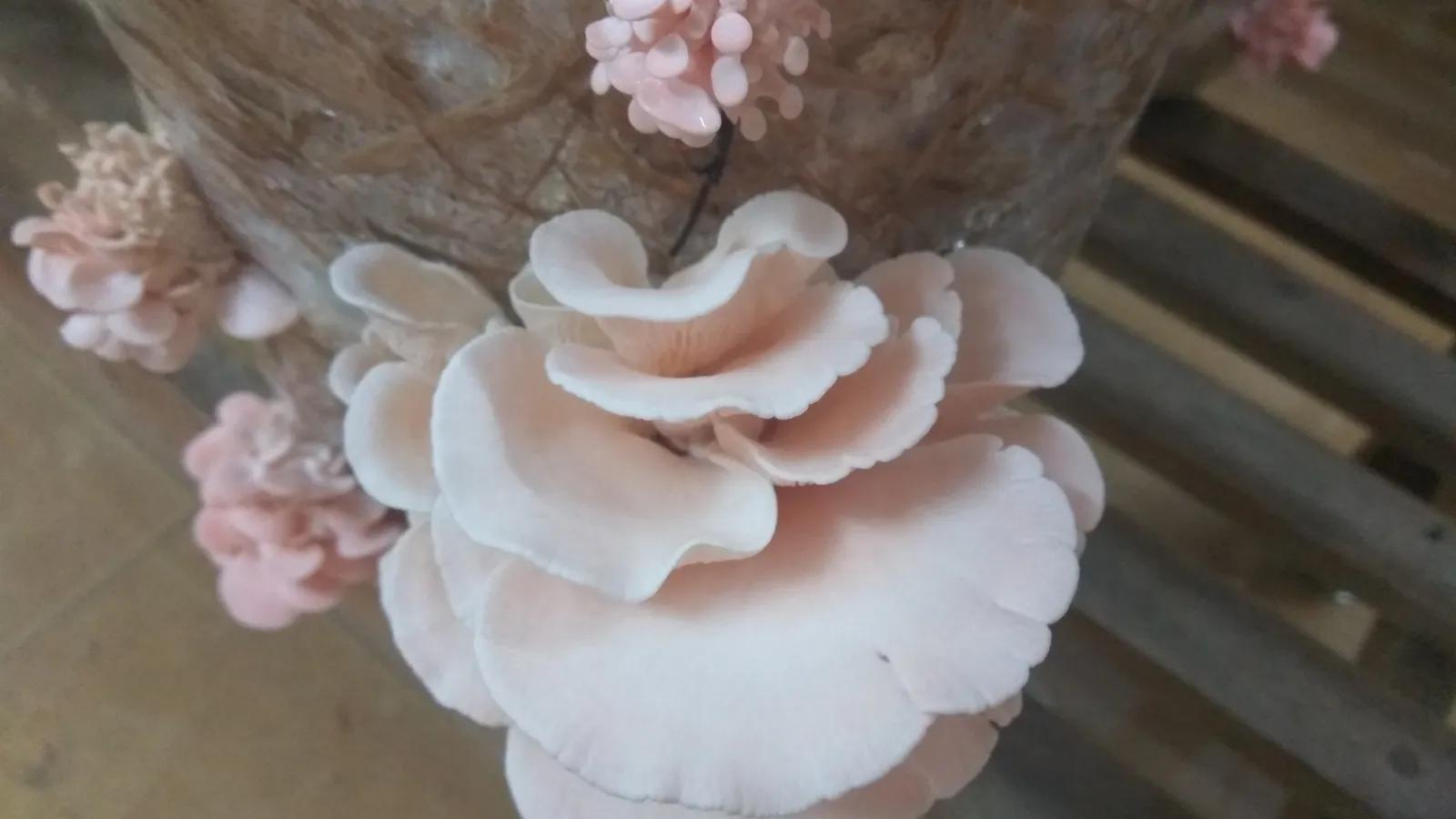
A mushroom is the fruiting body of a fungus, and several kinds are farmed for food. A status report in Mushroom Research, published in 2018 by scientists at the ICAR-Directorate of Mushroom Research, put India's total mushroom production at that time at about 0.13 million tonnes. The same report gave the shares by type: white button mushroom 73%, oyster mushroom 16%, paddy straw mushroom 7% and milky mushroom 3%.
Mushrooms grow on farm waste such as straw or compost, so a grower turns leftovers into food. That link to waste leads to the fourth job.
Why are fungi important as decomposers?
Fungi recycle dead plant matter, returning nutrients to the soil. Wood is the hardest case. A 2012 study in Science, which compared 31 fungal genomes, states that the only organisms capable of substantial lignin decay are white rot fungi; lignin is the tough polymer that makes wood resist decay. See our notes on the role of decomposers in an ecosystem for the food-chain side.
How do you write a full-marks answer on useful fungi?
Use the Role, Organism, Product frame for every point. Say what the industry is, name the fungus, then say what it makes.
Breweries: yeast (*Saccharomyces*) ferments sugar into alcohol.
Bakeries: yeast releases carbon dioxide, which makes dough rise.
Cheese processing: *Penicillium roqueforti* ripens blue cheese and gives it flavour.
Mushroom cultivation: edible mushrooms such as button and oyster are grown as food.
Antibiotics: *Penicillium* produces penicillin, which kills bacteria.
Decomposition: fungi break down dead plants and wood, returning nutrients to the soil.
Worked example. Question: "Give the useful role of fungi in any three industries. (3 marks)"
A full-marks answer: "(i) Bakery: yeast ferments sugar in dough and releases carbon dioxide, which makes bread rise. (ii) Brewery: yeast ferments sugars in grain or fruit juice into alcohol. (iii) Medicine: the mould *Penicillium* produces the antibiotic penicillin, used to treat bacterial infections."
Each line names the industry, the fungus and the product, so the examiner can tick all three without guessing.
If one link in the chain is shaky, say fermentation or what an antibiotic actually does, the Fermi Concept Library has a lesson on every biology concept and shows where it sits in the map. For practice questions, the Fermi Problem Library works through problems step by step and explains the reasoning rather than printing an answer.


