On this page
Penicillin is often told as a story of luck: a mould lands on a dish, and medicine changes for ever. Fleming himself called it "a chance observation". But the chance was the easy part. This post covers what Fleming actually saw and did, why it took another team to turn it into a drug, and the warning he gave that matters even more today.
Who was Alexander Fleming?
Fleming was born at Lochfield, near Darvel in Ayrshire, Scotland, on 6 August 1881 and died in London on 11 March 1955 (Nobel Prize biography). He worked in a shipping office for four years before entering St Mary's Medical School in London, where he qualified in 1906 and began research under Sir Almroth Wright, a pioneer of vaccine therapy.
During the First World War he served in the Army Medical Corps. The Science History Institute notes that his wartime research showed common chemical antiseptics did not sterilise jagged wounds and, at strengths too weak to harm bacteria, damaged the white blood cells the body relies on.
What did Fleming find before penicillin?
In his Nobel lecture, Fleming said that in 1922 he described lysozyme, an antibacterial enzyme found in body fluids such as tears, which could dissolve some bacteria in seconds. It never became an important medicine, but he said the techniques he developed for it were the ones he used when penicillin appeared.
What happened in 1928?
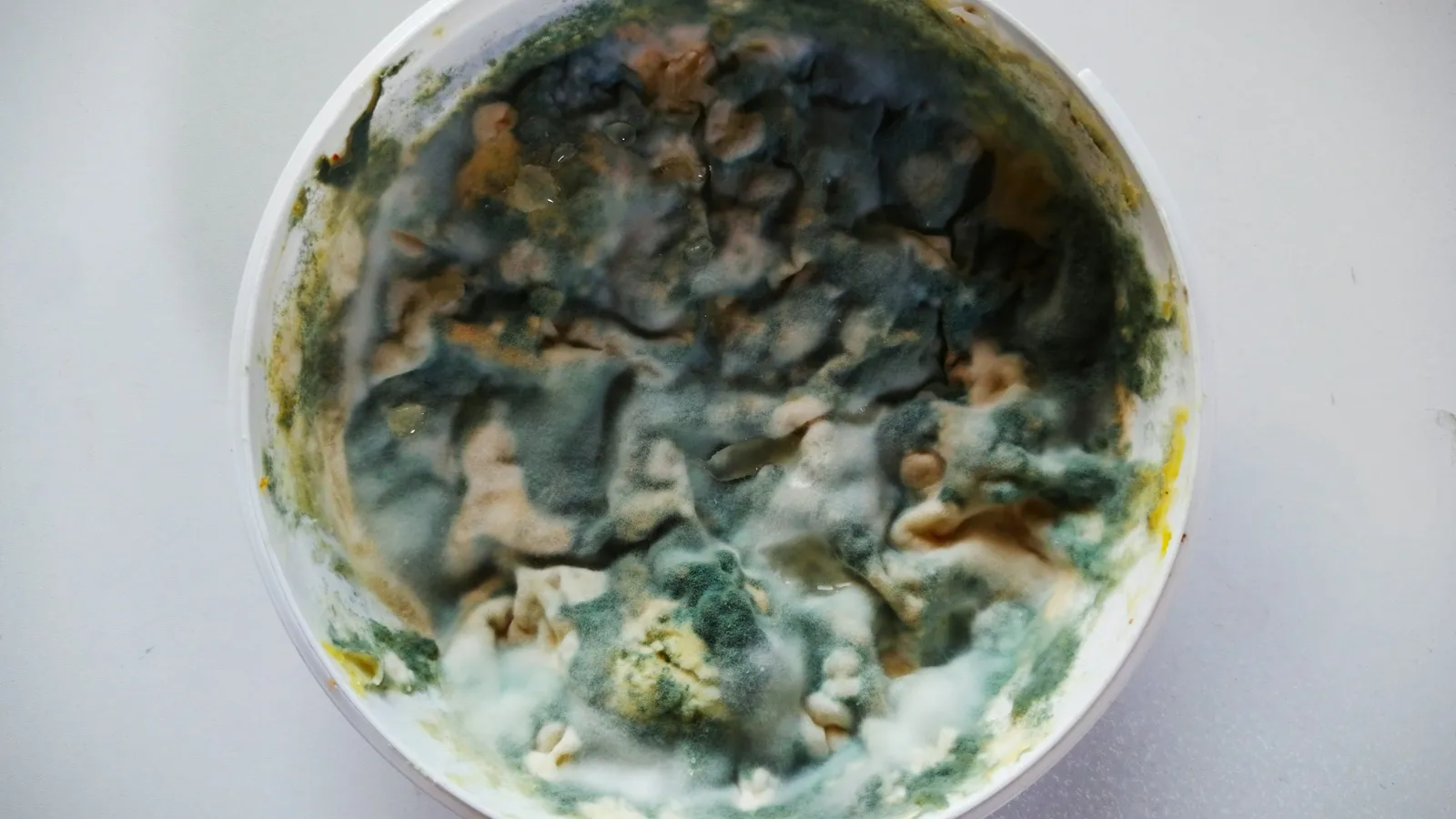
In 1928 Fleming noticed that a culture plate of staphylococci had been contaminated by a mould. In his Nobel lecture he described it: "for some distance around the mould colony the staphylococcal colonies had become translucent and evidently lysis was going on".
He then did the work that turned a curiosity into a finding:
He grew the mould in pure culture. It was identified as *Penicillium notatum*.
He streaked different bacteria across a plate towards the mould. Some grew right up to it; others were stopped several centimetres away. So the substance acted on some microbes and not others.
He grew the mould in liquid and showed the fluid itself had the effect. The Nobel biography adds that the culture still stopped staphylococci when diluted 800 times.
He found it was apparently not poisonous to animals or to human blood cells.
He named the substance penicillin, after the mould, and published in the British Journal of Experimental Pathology in 1929.
Why did penicillin take another decade?
Fleming could not concentrate or stabilise penicillin. In his lecture he listed this himself: it "was an unstable substance and... we failed to concentrate and stabilize it." The Science History Institute adds that for years he saw it mainly as a surface antiseptic and as a laboratory tool for isolating certain bacteria, and that his 1929 paper drew little notice in the 1930s.
At Oxford, Ernst Chain, Howard Florey and colleagues took up the problem. In August 1940 they reported in *The Lancet* on penicillin as a chemotherapeutic agent, and the Science History Institute credits Florey and Chain with demonstrating that year that penicillin could be used as a therapeutic agent against a large number of bacterial diseases. In 1945 the Nobel Prize in Physiology or Medicine went jointly to Fleming, Chain and Florey "for the discovery of penicillin and its curative effect in various infectious diseases" (NobelPrize.org). The molecule's structure was worked out in 1946 by Dorothy Hodgkin; read our post on Dorothy Hodgkin and X-ray crystallography.
What did Fleming warn about resistance?
His 1945 Nobel lecture ends with a warning. He explained that it is not difficult to make microbes resistant to penicillin in the laboratory by exposing them to doses too small to kill them. Then: "The time may come when penicillin can be bought by anyone in the shops. Then there is the danger that the ignorant man may easily underdose himself and by exposing his microbes to non-lethal quantities of the drug make them resistant." His moral was: "If you use penicillin, use enough."
The World Health Organization's fact sheet shows how far this has come. About one in six laboratory-confirmed bacterial infections worldwide in 2023 were resistant to antibiotics, and resistance was highest in WHO's South-East Asia and Eastern Mediterranean regions, where one in three reported infections were resistant. WHO names the misuse and overuse of antibiotics as a main driver. For NEET, antibiotics come under "Microbes in human welfare"; see our guide to microbes in human welfare.
What this means for you, as a non-medical point: take antibiotics only when a doctor prescribes them, and exactly as prescribed.
What can you learn from Fleming?
Notice the odd result. A spoiled plate is usually thrown away. He photographed it and asked why.
Turn one observation into several tests. Pure culture, streak plates, the liquid extract and toxicity checks each answered a different question.
Know what you could not do. He said plainly that he failed to purify penicillin, and others finished the job.
If the difference between bacteria, viruses and the drugs that act on them is still blurry, the Fermi Concept Library covers every concept in physics, chemistry, biology, mathematics and computing, so you can revise microbes one idea at a time.
Your next step: read the last two pages of Fleming's Nobel lecture, linked above, and write three sentences on why underdosing breeds resistance.