

On this page
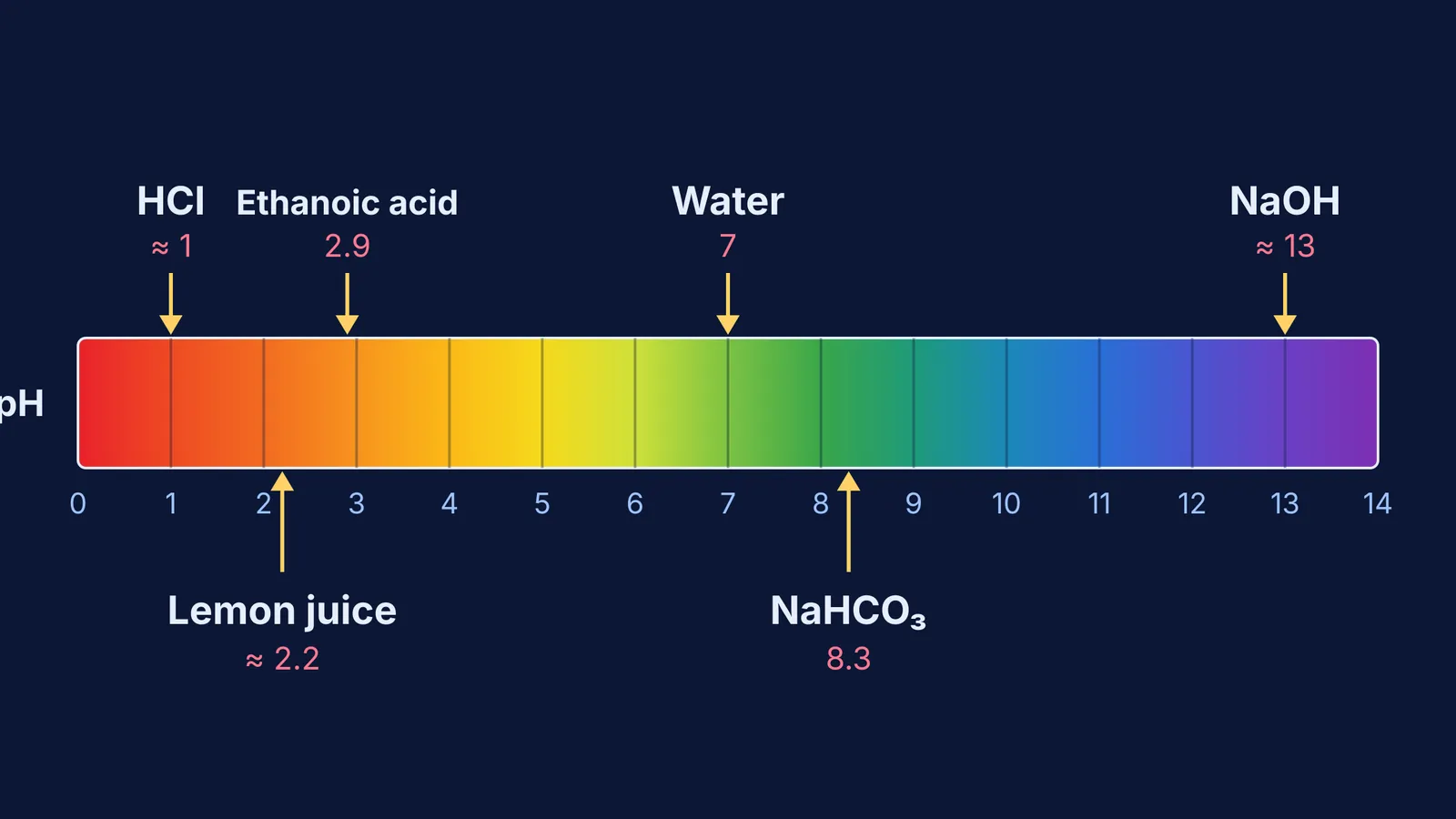
Finding the pH of six samples with pH paper or universal indicator is experiment 1A in the CBSE Class X science curriculum for 2025-26: dilute hydrochloric acid, dilute NaOH solution, dilute ethanoic acid, lemon juice, water and dilute hydrogen carbonate solution. The method below works for all six, from strip to practical file.
What does a universal indicator actually tell you?
NCERT's Class 10 textbook defines a universal indicator as a mixture of several indicators that shows different colours at different concentrations of hydrogen ions in a solution (NCERT Science, Chapter 2).
The same chapter says the pH scale runs from 0 (very acidic) to 14 (very alkaline), a neutral solution has pH 7, and values below 7 are acidic. Higher hydronium ion concentration means lower pH.
The scale is not evenly spaced in acidity: each pH unit is a tenfold change, so water at pH 5 is ten times more acidic than water at pH 6 (USGS Water Science School).
How do you find pH using universal indicator and pH paper?
Label six clean, dry test tubes in a stand. Then:
Pour about 2 mL of each sample into its own labelled tube.
For pH paper, place small strips on a clean white tile. Dip a clean glass rod into the first sample and touch it to a strip.
Compare the colour with the chart printed with your paper straight away, in daylight if you can.
For liquid indicator, add two or three drops to the tube, shake gently and hold the tube against white paper to compare.
Rinse the rod with distilled water and wipe it before the next sample.
NCERT warns that alkalis are corrosive and should never be tasted or touched, so handle the NaOH and HCl tubes with care (NCERT Science, Chapter 2).
What colour should each sample show on the chart?
NCERT's pH colour figure is labelled "colours are only a rough guide", so always use the chart that came with your own paper (NCERT Science, Chapter 2). Roughly what you should see:
Dilute HCl: red, pH about 1 to 2 depending on how dilute it is. HCl is a strong acid: NCERT explains that hydrochloric and acetic acid of the same concentration produce different amounts of H⁺ ions, and strong acids give more.
Dilute ethanoic acid: orange, a step higher than HCl. A 0.1 molar acetic acid solution has a pH of 2.9 (PubChem, acetic acid).
Lemon juice: orange. NCERT places lemon juice at about pH 2.2.
Water: green, pH 7 if it is pure. Distilled water left open can read a shade lower because it absorbs carbon dioxide from the air, the same gas that makes normal rainfall about pH 5.6 (USGS).
Dilute NaHCO₃: blue-green. A freshly prepared 0.1 molar sodium bicarbonate solution has a pH of 8.3 at 25 °C (PubChem, sodium bicarbonate).
Dilute NaOH: dark blue to violet, pH 12 to 14. NCERT marks sodium hydroxide solution at about 14.
To see why diluting an acid moves the colour one step at a time, read what a pH simulation shows about diluting strong and weak acids.
How do you record the result in your practical file?
Draw it as a table with four columns in your file: sample, colour, pH and nature.
Dilute HCl: red; pH 1; strongly acidic
Lemon juice: orange; pH 2; acidic
Dilute ethanoic acid: orange; pH 3; weakly acidic
Water: green; pH 7; neutral
Dilute NaHCO₃: blue-green; pH 8; weakly basic
Dilute NaOH: violet; pH 13; strongly basic
Result line: "The pH of dilute HCl, ethanoic acid and lemon juice is less than 7, so they are acidic; water has pH 7 and is neutral; NaHCO₃ and NaOH have pH more than 7, so they are basic."
Precautions to list:
Do not dip the pH paper roll into the sample bottle.
Compare colours in good light against a white background.
The NaHCO₃ reading explains why baking soda fizzes with acids; the reaction itself is covered in how acids react with metal carbonates and hydrogen carbonates. For the next practical on the same bench, see the NaOH and HCl neutralisation activity with phenolphthalein.
Why might your reading not match the chart?
Most odd readings come from one of four things:
A rod carried over a drop from the previous tube.
The strip was read after it dried or faded.
Yellow tube light shifted green towards yellow.
Your lab's "dilute" acid or base is a different strength. For a strong acid such as HCl, a tenfold dilution raises the pH by about one unit (USGS).
If the link between hydrogen ion concentration and colour still feels shaky before your viva, the Fermi Concept Library has every concept in chemistry, each with its own lesson and its place in the map, so you can see where pH sits next to acids, bases and neutralisation.
Before the practical, say the expected colours aloud in order from red to violet. If you can, you are ready for the bench.


