

On this page
Chapter 2 of NCERT's Class 8 civics book, Social and Political Life III (2024-25 print), asks a question the chapter itself calls "quite confusing": how can the Indian State stay away from religion and also step into it? The answer is one idea, principled distance.
What does secularism mean in Class 8?
The textbook gives a one-line definition: "Secularism refers to this separation of religion from the State" (NCERT, Understanding Secularism).
The Constitution calls India a "SOVEREIGN SOCIALIST SECULAR DEMOCRATIC REPUBLIC"; the words "SOCIALIST SECULAR" were added by the Constitution (Forty-second Amendment) Act, 1976, with effect from 3 January 1977 (Constitution of India, Preamble and footnote).
The chapter lists three aims a secular State must secure:
One religious community does not dominate another.
Some members do not dominate other members of the same religious community.
The State does not enforce any particular religion, nor take away the religious freedom of individuals.
Learn these by heart: the table in the chapter's exercises is built on them. For how secularism sits beside the other features of the Constitution, see our guide to the key features of the Indian Constitution for Class 8.
Why is it important to separate religion from the State?
The NCERT chapter gives two reasons. First, the tyranny of the majority: a majority religious group holding State power could use it to discriminate against, or even persecute, minorities. Second, individual freedom: a person must be free to leave their religion, take up another, or interpret its teachings differently. The book's example is a Hindu who wants to reform untouchability; if those who supported it held State power, that reformer would struggle.
How does the Indian State keep its distance, and how does it intervene?
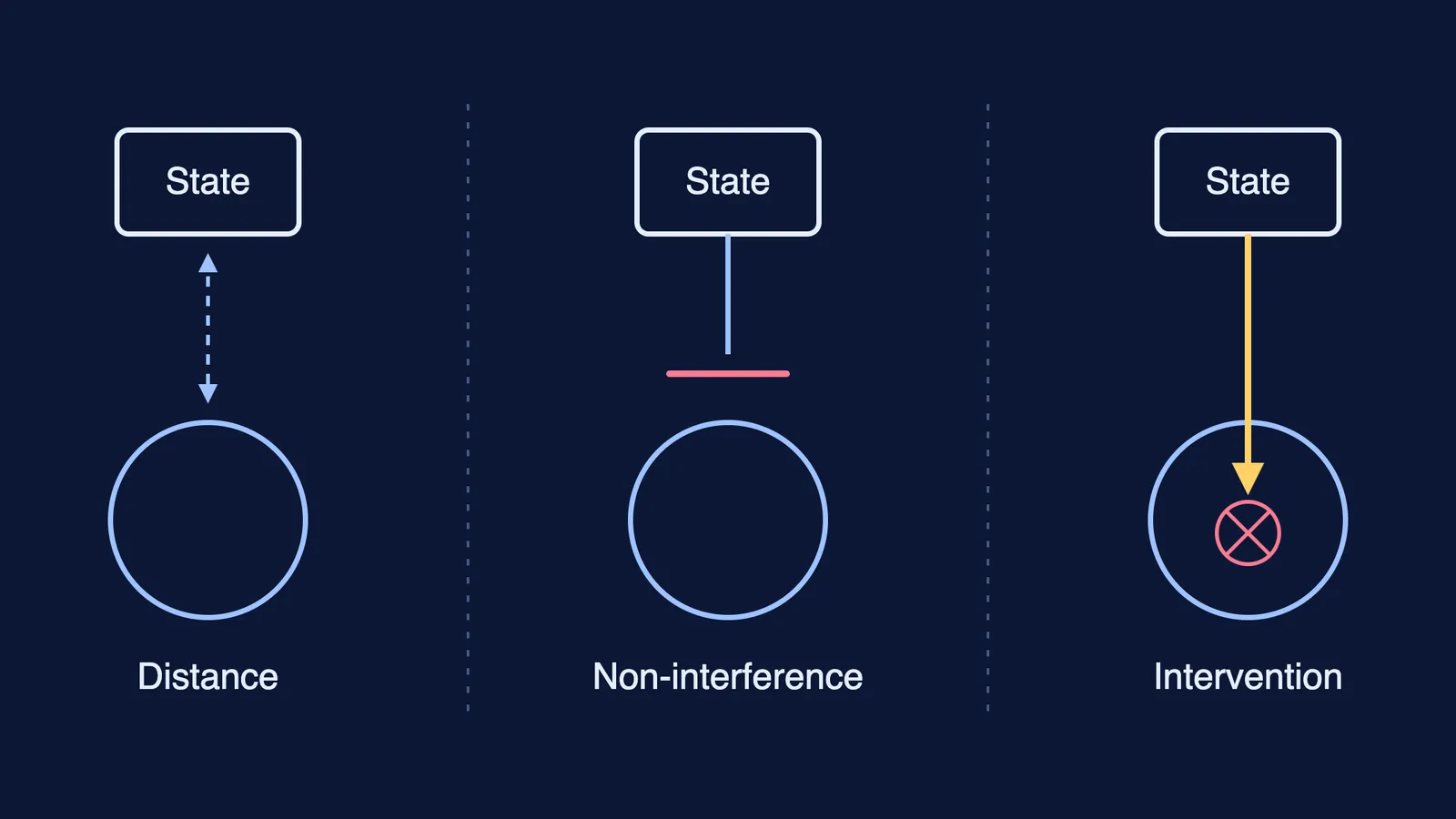
The chapter names three strategies. Here is each one with the constitutional line behind it, all from the official text of the Constitution.
Distance. The State is not ruled by a religious group and supports no single religion. Government spaces such as courts, police stations, government schools and offices should not display or promote one religion. Article 28(1): "No religious instruction shall be provided in any educational institution wholly maintained out of State funds."
Non-interference. To respect religious practice, the State makes exceptions. NCERT's example: a Sikh rider in Delhi is not made to wear a helmet, because wearing a pugri (turban) is central to Sikh religious practice. A related line in the Constitution is Article 25, Explanation I: "The wearing and carrying of kirpans shall be deemed to be included in the profession of the Sikh religion."
Intervention. The State steps in to end a practice that discriminates. Article 17: "Untouchability" is abolished and its practice in any form is forbidden. NCERT adds that the State may intervene in religion-based personal laws to protect equal inheritance rights. Intervention can also be support: Article 30 lets religious and linguistic minorities run their own schools and colleges, and under Article 30(2) the State may not discriminate against them in granting aid because a minority manages them.
How is Indian secularism different from American secularism?
As the NCERT chapter explains, the First Amendment of the US Constitution stops the legislature from making laws "respecting an establishment of religion" or banning the free exercise of religion. In the US, neither the State nor religion interferes in the other's affairs. In India, the State can intervene in religious affairs, as it did to abolish untouchability. NCERT calls this the one significant way the two differ, so put it in your exam answer.
Practice: distance, non-interference or intervention?
Cover the answers and sort each case, all taken from the chapter and the articles above.
A government school refuses to hold a religious festival on its premises. Answer: distance.
A Sikh scooter rider in Delhi is not fined for riding without a helmet. Answer: non-interference.
A law makes enforcing untouchability punishable. Answer: intervention.
A group says its religion allows infanticide. Answer: intervention, because the practice violates Fundamental Rights (this is exercise 2 in the chapter).
A minority community runs a college and gets government aid on the same terms as others. Answer: intervention as support.
A private school begins the day with one religion's prayer. Answer: the government-school rule does not apply, but under Article 28(3) a recognised or aided school cannot make a student attend religious worship without consent (a guardian's, for a minor).
For a three-mark answer, use four moves: define secularism, name the strategy, give the example, and cite the article. If an AI chatbot hands you an article number, check it first with our guide to catching wrong Article numbers. To see how freedom of religion fits among the other rights, read the six Fundamental Rights with examples.
If revising a whole term feels like too much, Fermi's AI tutor can work out what you already know and build a plan for the session, so you start with a clear next step.
Tomorrow, redo the drill from memory and check it against the chapter.


