On this page
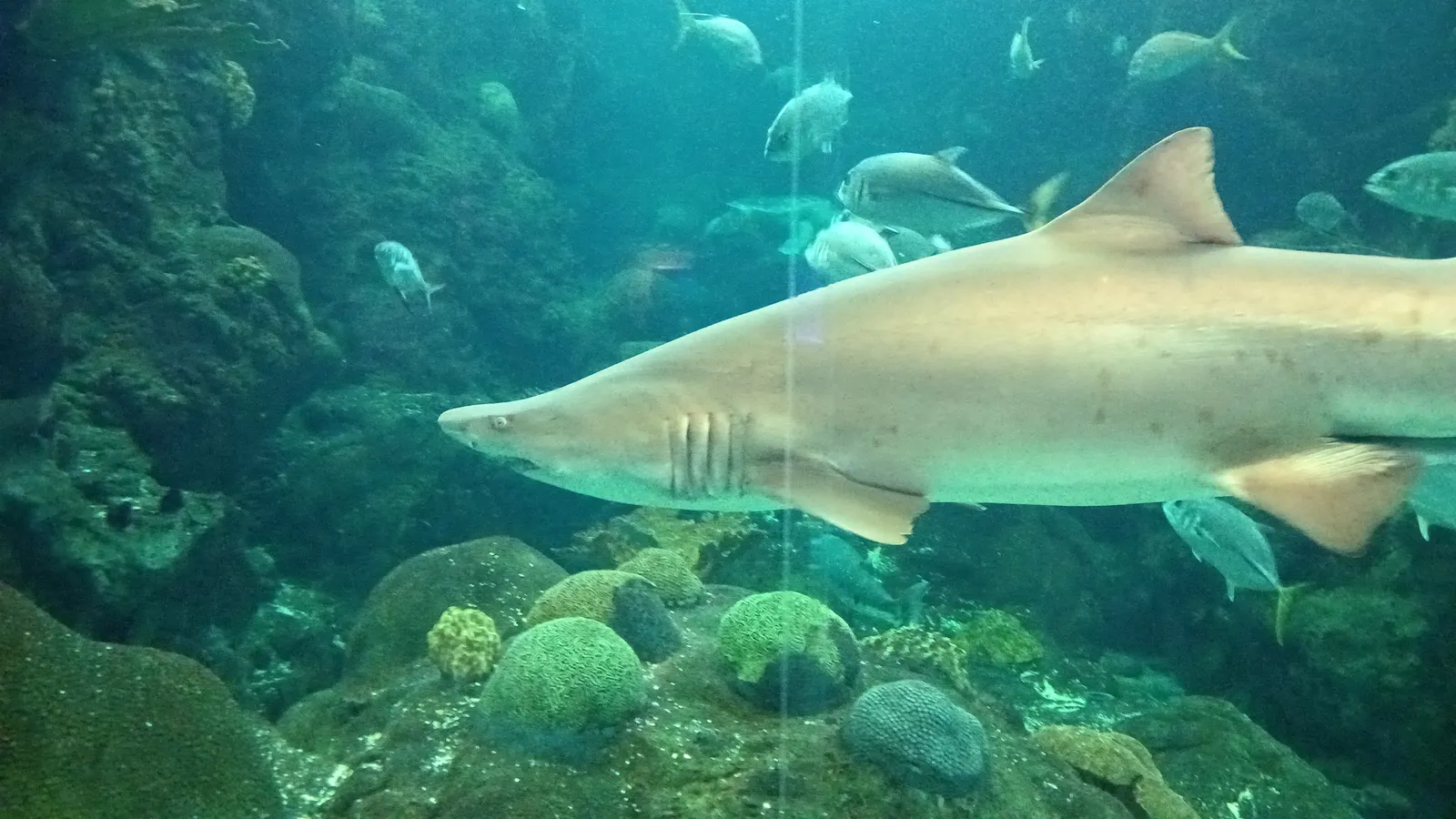
If you are revising Animal Kingdom for CBSE or NEET-UG, sharks are the standard example of class Chondrichthyes, the cartilaginous fishes. The four headline features in the textbook are linked. Once you see how, you stop memorising a loose list and start reasoning.
What are the main features of sharks in NCERT?
The NCERT Class 11 Biology chapter on the Animal Kingdom (2026-27 reprint) describes Chondrichthyes in one tight paragraph:
Marine animals with a streamlined body and a cartilaginous endoskeleton.
Mouth on the underside (ventral), and a notochord that persists throughout life.
Gill slits that are separate and have no operculum (gill cover).
Tough skin with minute placoid scales; the teeth are modified placoid scales that point backwards.
No air bladder, so "they have to swim constantly to avoid sinking".
A two-chambered heart, cold-blooded, separate sexes, claspers on the pelvic fins of males, internal fertilisation; many are viviparous.
The same chapter gives the examples to know by genus: Scoliodon (dogfish), Pristis (sawfish), Carcharodon (great white shark) and Trygon (stingray).
What is a shark's skeleton made of?
A shark's skeleton is very similar to that of other fishes, except that it is made of cartilage rather than bone, according to the Hawaii Department of Land and Natural Resources shark guide. It is not floppy: the same guide notes that parts of it, including the vertebrae and skull, are strengthened by extra calcification.
The useful point for an answer is weight. Cartilage is lighter than bone, and the Hawaii guide says the light skeleton and an oil-filled liver "work together to increase swimming efficiency and buoyancy". That idea returns in the section on sinking.
What are placoid scales, and how are shark teeth related to them?
Placoid scales, also called dermal denticles, are tiny tooth-like scales covering a shark's skin. The Hawaii guide's anatomy page says shark scales have a structure similar to teeth, and NCERT says a shark's teeth are modified placoid scales.
The denticles also change how water flows past the body. In a 2012 study in the Journal of Experimental Biology, Johannes Oeffner and George Lauder attached real shark skin to a robotic flapping foil. Flexible shark-skin foils swam on average 12.3% faster than the same skin with its denticles removed.
How are shark gill slits different from a bony fish's gills?
Sharks can have up to seven external gill openings, but most species have five, says the Hawaii guide's gills page. Each slit opens straight to the outside. Bony fishes (Osteichthyes) instead have four pairs of gills covered by a bony flap, the operculum, on each side, as the NCERT chapter describes.
The open design has a cost. The Hawaii anatomy page notes that without a protective bony covering, a shark's gills are more vulnerable to injury.
Do sharks really have to keep swimming?
The textbook answer is yes: a shark has no air bladder, the organ that NCERT says regulates buoyancy in bony fishes such as rohu and katla. The fuller picture is more interesting. All sharks are slightly negatively buoyant, meaning they sink, according to the Hawaii skeleton and buoyancy page. Their livers hold oil that is less dense than seawater, and in some sharks the liver makes up to 30% of body weight, the Hawaii anatomy page says.
Breathing is the second reason. The Hawaii gills page explains that some sharks must hold a certain swimming speed to push water in through the mouth and over the gills. Others use throat muscles to pump water over their gills while still, and many sharks, especially bottom-dwellers, draw water in through spiracles, paired openings between the eye and the gill slits.
How do you remember shark features for the exam?
Learn them as a chain, not a list:
Cartilage skeleton: a lighter body.
No air bladder: still slightly heavier than water, so an oily liver plus swimming keep the shark up.
Placoid scales on the skin: the teeth are modified versions of the same scales.
Open gill slits, no operculum: water must be driven across the gills, by swimming or by pumping.
Then test yourself on statements that mix up the two fish classes. Decide true or false before reading the reason.
"Cartilaginous fish swim continuously because they have an air bladder." False: they swim because they lack one.
"Sharks have four pairs of gills covered by an operculum." False: that describes bony fishes.
"Shark teeth are modified placoid scales." True, straight from NCERT.
"The notochord of Chondrichthyes is replaced in adults." False: NCERT says it persists throughout life.
If a word here is shaky (operculum, notochord, viviparous), look it up in the Fermi Concept Library, which gives every biology concept its own lesson and its place in the map. For practice beyond true or false, the Fermi Problem Library has worked problems with a step-by-step solver that explains the reasoning rather than printing an answer.
Tonight, write the four-step chain from memory, then check it against the NCERT paragraph.