

On this page
Rural development is the Class 12 economics chapter about villages: who lends a farmer money, where the crop gets sold, and what else a family can earn from. It feels like common sense, which is exactly why answers lose marks. Examiners want the textbook's terms, its examples and a clear structure. Here is the chapter in four parts, with a model answer you can reuse.
What does rural development cover in Class 12?
In the CBSE Economics syllabus for 2025-26, rural development sits in Part B, Unit 7, Current challenges facing Indian Economy. Its listed topics are credit and marketing, the role of cooperatives, agricultural diversification and organic farming. The whole of Unit 7, which also covers human capital, employment and sustainable development, carries 20 marks. Check the latest syllabus for your own exam year on the CBSE academic site before you plan around these numbers.
The prescribed textbook is NCERT's Indian Economic Development, Chapter 5, Rural Development. Its recap defines rural development as a plan of action for developing rural areas that lag behind in socio-economic development. Open any definition answer with that sentence.
How does rural credit work, and who lends to farmers?
Farmers borrow because of the long gap between sowing a crop and selling it. The NCERT chapter says that at independence moneylenders and traders kept small farmers in a debt trap, and that a major change came after 1969, when India adopted social banking and a multi-agency approach. Learn these three facts:
NABARD, the National Bank for Agriculture and Rural Development, was set up in 1982 as the apex body coordinating rural finance.
Rural banking is multi-agency: commercial banks, regional rural banks, cooperatives and land development banks.
Self-help groups pool small savings and lend to members; this micro-credit has helped empower women.
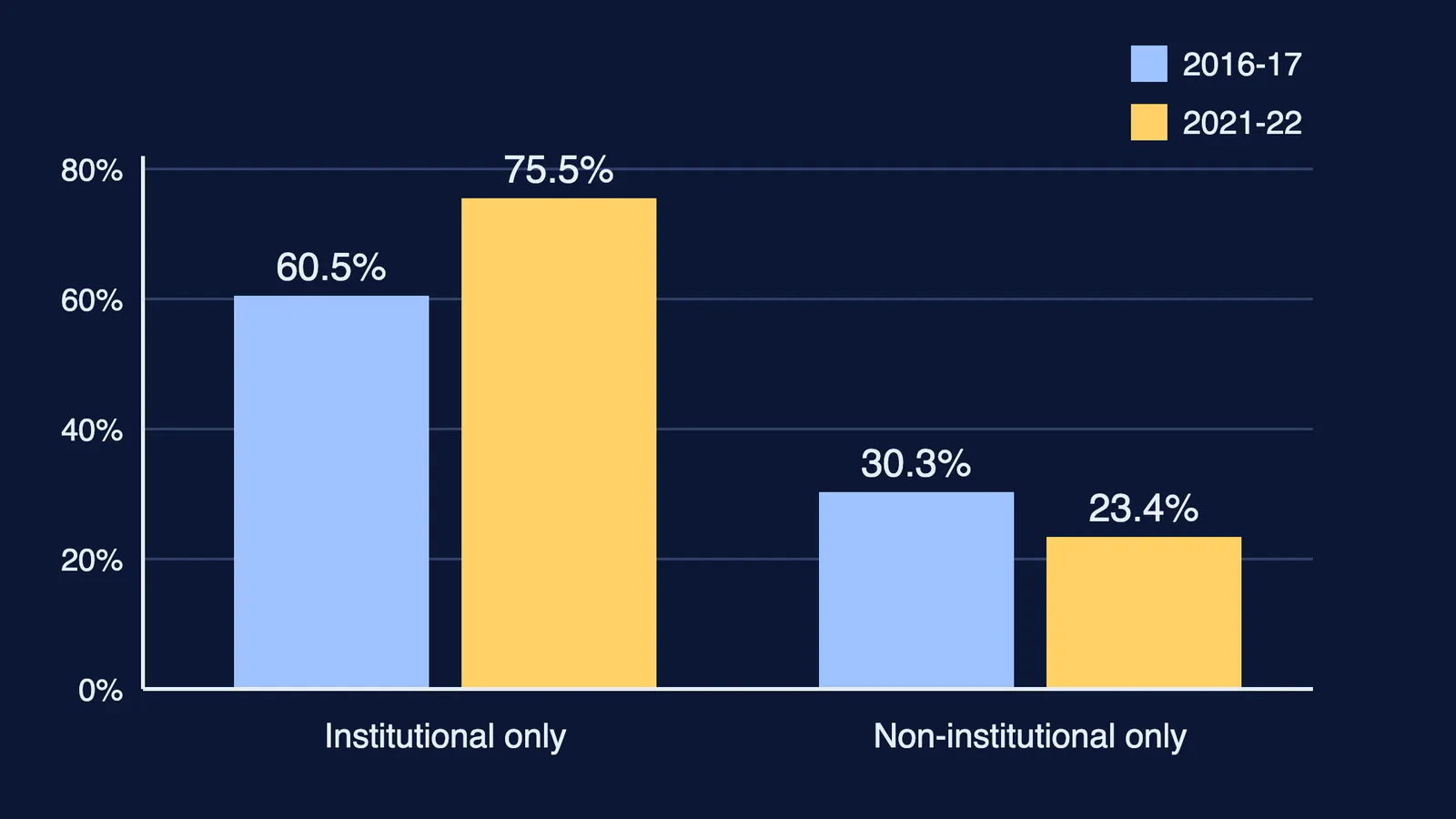
Then add a current number. In NABARD's All India Rural Financial Inclusion Survey 2021-22, the share of agricultural households borrowing only from institutional sources rose from 60.5% in 2016-17 to 75.5% in 2021-22. The same survey found that 52.0% of rural households had outstanding debt, up from 47.4% in 2016-17. Formal credit is reaching more families, yet debt is also more common, and a strong answer mentions both. Our explainer on money and credit from Class 10 revisits the formal and informal split.
How does agricultural marketing work in India?
The NCERT chapter defines agricultural marketing as the assembling, storage, processing, transport, packaging, grading and distribution of farm produce. Before independence, farmers faced faulty weighing and fiddled accounts. The government answered with four measures, the core of most marketing questions:
Regulated markets, for orderly and transparent selling.
Physical infrastructure: roads, railways, warehouses, cold storage and processing units.
Cooperative marketing, with Gujarat's milk cooperatives as the textbook example.
Policy instruments: minimum support prices, buffer stocks held by the Food Corporation of India, and the public distribution system.
The chapter also names alternative channels where farmers sell directly to consumers: Apni Mandi, Hadaspar Mandi, Rythu Bazars and Uzhavar Sandies. It mentions the e-NAM online portal, launched in 2016.
What is agricultural diversification, and why organic farming?
The NCERT chapter gives diversification two aspects: changing the cropping pattern, and shifting workers from farming into allied activities and the non-farm sector. Allied activities include animal husbandry, fisheries and horticulture. The reason is risk: much farm work is concentrated in the kharif season, and families need income all year.
Organic farming is the chapter's example of an eco-friendly technology. Its benefits: cheaper local inputs, export income and healthier food. Its limits: lower yields in the first years, shorter shelf life, fewer off-season crops, and weak marketing and infrastructure. Write both sides. For the soil science behind it, read our post on organic versus chemical fertiliser.
How should you revise this chapter in one week?
Day 1: Read the chapter once and list every bold term.
Day 2: Credit. Write NABARD's year, the four kinds of institutions and how an SHG lends, from memory.
Day 3: Marketing. Practise the four-measure frame above until you can write it in eight minutes.
Day 4: Diversification and organic farming. Make a two-column list of benefits and limits.
Day 5: Answer the chapter's exercises, timed.
Day 6: Try case-based questions; our guide to case-based questions in board exams shows how to read the passage first.
Day 7: Re-test only what you got wrong.
If economics shares your week with physics or maths, Fermi's AI tutor can work out what you already know in those subjects and build a plan for the session, so more of your week is left for this chapter.


