

On this page
Outcomes of Democracy is Chapter 5 of NCERT's Class 10 Democratic Politics textbook (NCERT chapter PDF). It is where the book stops describing democracy and starts grading it. Your answers should do the same: what we expect, what the record shows, what you conclude.
What are the outcomes of democracy in Class 10?
The NCERT chapter judges democracy against five expectations. Its starting point deserves a line in any long answer: democracy is just a form of government, and "It can only create conditions for achieving something."
Accountable, responsive and legitimate government. We expect free and fair elections, open public debate and the right to information. The record is mixed, but democratic government is legitimate: it is people's own government.
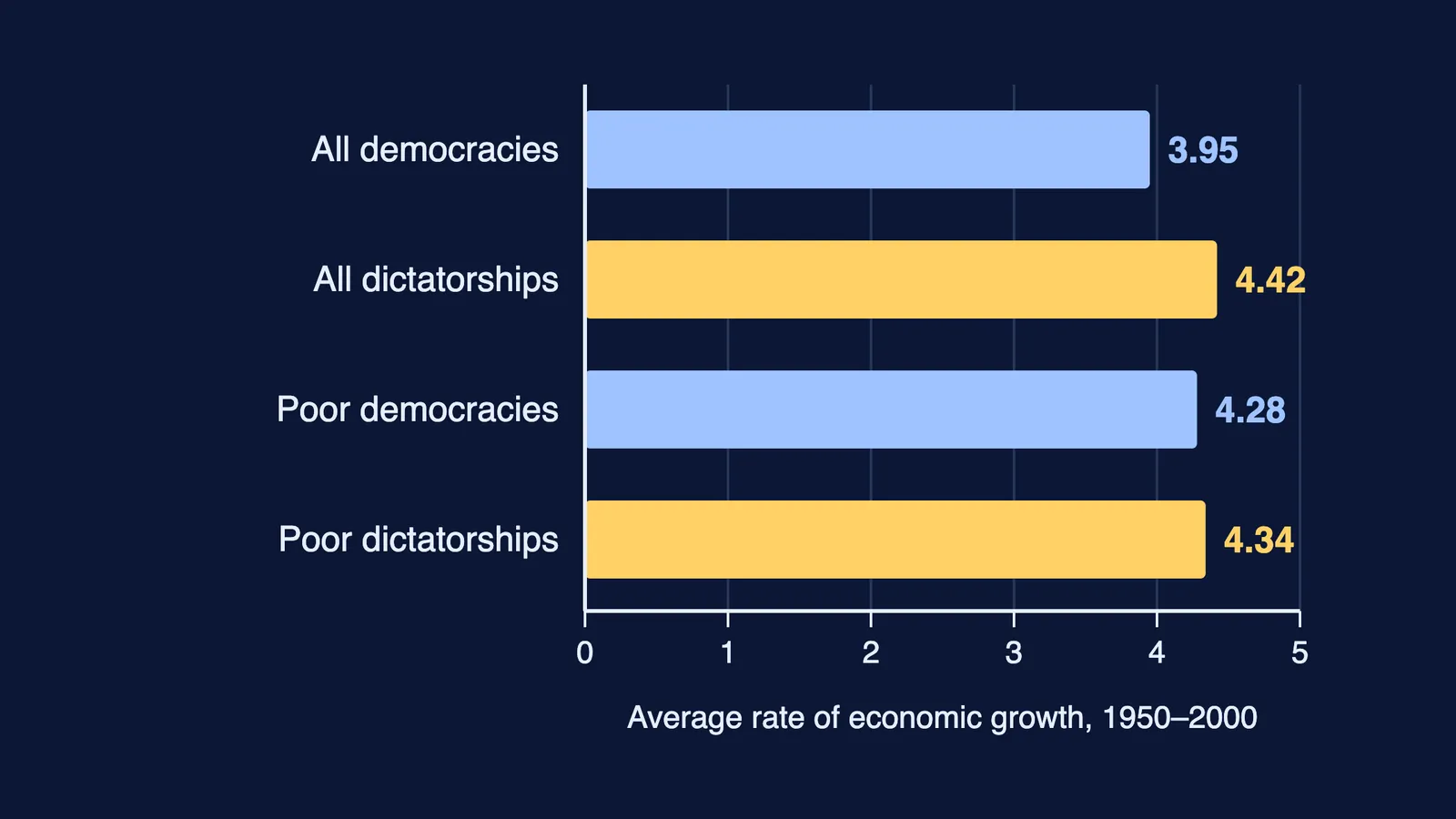
Economic growth and development. Dictatorships grew slightly faster on average; among poor countries there is virtually no difference.
Reduction of inequality and poverty. Democracies do not appear to be very successful here. In NCERT's Table 2, South Africa's top 20 per cent take 64.8% of national income and the bottom 20 per cent get 2.9%; in Denmark the figures are 34.5% and 9.6%.
Accommodation of social diversity. This works if two conditions hold: the majority works with the minority, and rule by majority does not become rule by a majority community of religion, race or language.
Dignity and freedom of the citizens. Here NCERT says democracy "stands much superior" to any other form of government, citing women's and disadvantaged castes' struggles for equal status.
The chapter also charts findings from the SDSA Team's State of Democracy in South Asia (2007): 70% of people in India said democracy is preferable, and 67% said their vote makes a difference (NCERT chapter PDF, pages 66 and 72).
Is democracy better than dictatorship for economic growth?
Students get this wrong most often, so learn the four rates from NCERT's Table 1, covering 1950 to 2000 (NCERT chapter PDF, page 68):
All democratic regimes: 3.95
All dictatorial regimes: 4.42
Poor countries under dictatorship: 4.34
Poor countries under democracy: 4.28
The textbook's verdict is careful: "we cannot say that democracy is a guarantee of economic development. But we can expect democracy not to lag behind dictatorships in this respect." Growth also depends on population size, the global situation, cooperation from other countries and economic priorities.
How do you write a long answer on outcomes of democracy?
Use the same four steps for every outcome. We call it ERSV:
Expectation: what a democracy should deliver.
Record: one NCERT fact, number or example.
Shortfall: where democracies fall short. Balance earns marks.
Verdict: a one-line conclusion.
Worked example. Question (NCERT exercise 1): How does democracy produce an accountable, responsive and legitimate government?
Expectation: People choose their rulers in regular, free and fair elections and keep control over them.
Record: Decisions follow norms and procedures, so citizens can check how a decision was taken. This is transparency. In NCERT's exercise 8, Nannu is told within a week of filing a Right to Information application that his duplicate ration card is ready.
Shortfall: Democracies often ignore people's needs, are not free of corruption, and decide slowly because they deliberate.
Verdict: Democracy may be slow, but decisions that follow procedure are more acceptable, and it is the people's own government. Legitimacy is its clearest advantage.
For an assertion like "Democracy can't reduce inequality of incomes between different citizens", run ERSV for both sides: agree using the South Africa and Brazil figures, then disagree using political equality and the voting power of the poor. If your board practice has been mostly MCQs, try our 20-minute drill for board answer writing; for passage-style questions, see how to answer case-based questions in CBSE boards.
Which mistakes cost marks in this chapter?
Saying democracy guarantees growth. NCERT says only that it need not lag behind.
Confusing political equality (one person, one vote) with economic equality.
Leaving out legitimacy, where NCERT calls democratic government "certainly better" than its alternatives.
A verdict with no evidence. One number or example per point is enough.
Forgetting the last idea: complaints about democracy show its success, because people have become citizens rather than subjects.
Fermi is built for STEM rather than civics, but if the same week holds a maths or science chapter you keep postponing, Fermi's AI tutor can work out what you already know and build a plan for the session.
Revising history too? Our Nationalism in India notes comparing the two movements use the same compare-and-conclude approach.


