

On this page
Marketing management is Unit 11 of the Class 12 Business Studies syllabus, and "Marketing Mix: concept and elements" is one of its listed topics, according to the 2026-27 syllabus for Business Studies (code 054) published by the Directorate of Education, Delhi. The same unit then takes each P in turn: branding, labelling and packaging; factors determining price; physical distribution and channels; and the elements of promotion.
This guide follows the NCERT chapter, uses the Indian brands it names, and ends with a method for case-based questions.
What is the marketing mix in Class 12 business studies?
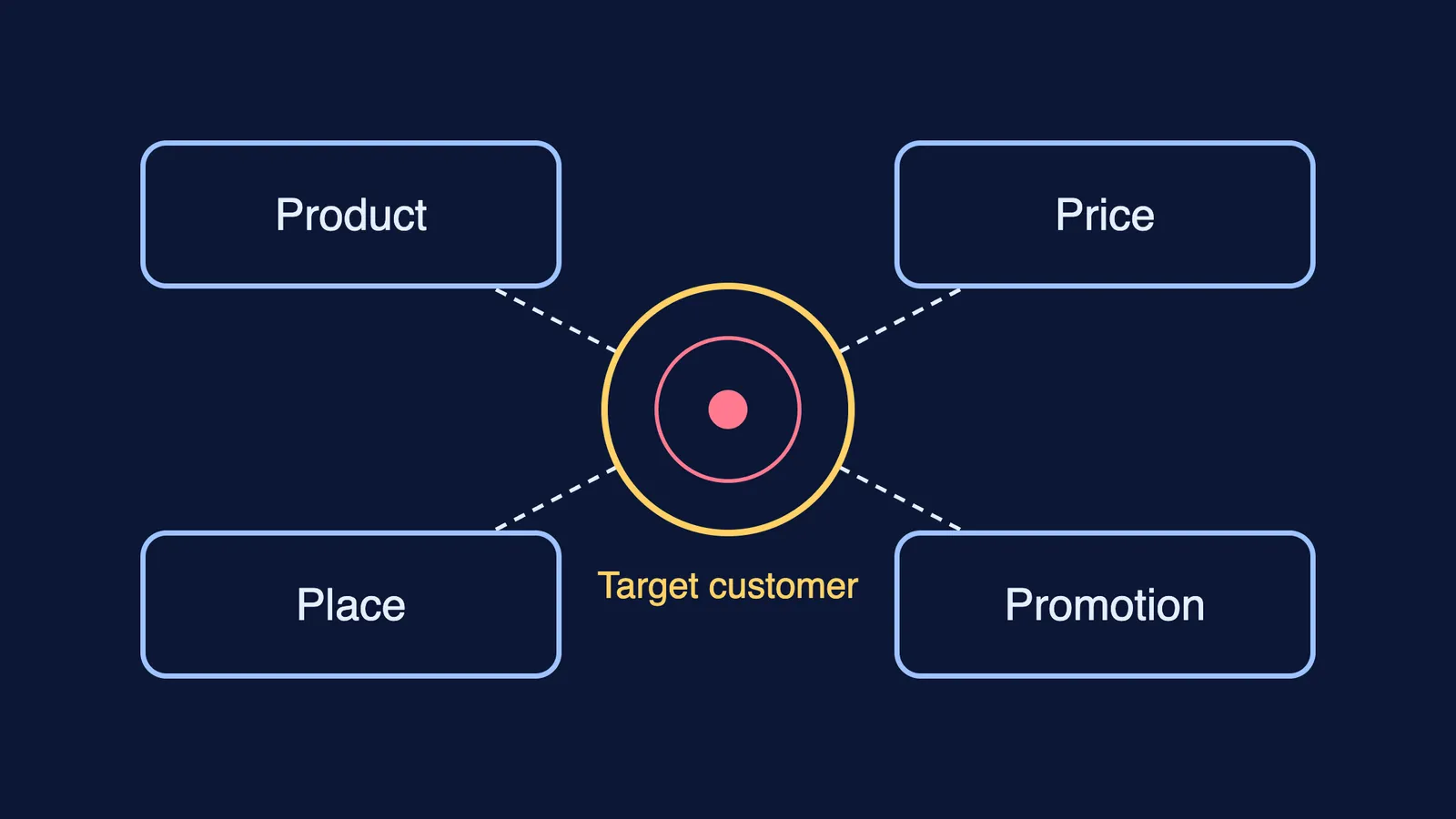
In the words of the NCERT Class 12 Business Studies chapter on marketing, the marketing mix consists of various elements that are broadly classified into four categories, popularly known as the four Ps of marketing: product, price, place and promotion.
The chapter adds that the success of a market offer depends on how well these ingredients are mixed to create superior value for customers while achieving the firm's sale and profit objectives. That is the point to carry into an answer: the four Ps are not separate topics but one set of choices made together for one target customer.
What are the four Ps, with Indian examples?
All the definitions below come from the same NCERT marketing chapter.
Product. Product means goods or services, or "anything of value", offered to the market for sale. NCERT's examples are Indian: Amul offers milk, ghee, butter, cheese and chocolates; Tata offers steel, trucks and salt; Hindustan Lever (now Hindustan Unilever) sells Close-Up toothpaste, Lifebuoy soap and Surf and Wheel detergents. Product decisions cover features, quality, packaging, labelling and branding. The chapter also stresses benefits: toothpaste is bought for whitening teeth and strengthening gums, that is, for what it does.
Price. Price is the amount of money customers have to pay to obtain the product. The textbook lists the factors that determine it: product cost (the floor), utility and demand (the upper limit), the extent of competition, government and legal regulation, pricing objectives, and the marketing methods used. Price decisions also include discounts and credit terms.
Place. Place, or physical distribution, covers the activities that make the product available to target customers. NCERT's diagram of a channel for a consumer product runs from producer to wholesaler to retailer to consumer, and the chapter lists the other decisions: inventory, storage and warehousing, and transportation. Its transport example is tea grown in Assam that must reach buyers in Tamil Nadu, Punjab, Rajasthan and beyond.
Promotion. Promotion includes the activities that tell target customers about a product's availability, features and merits and persuade them to buy. The syllabus names the elements you must know: advertising, personal selling, sales promotion and public relations.
How do you identify the P in a case-based question?
Case questions describe a business and ask which element of the marketing mix is involved. Read the case once, underline the action the firm takes, then match it to these clue words, based on the NCERT decision lists:
Product: new variant, quality, design, brand name, pack size, label, after-sales service.
Price: cost, discount, credit period, competitor's price, price cap, "value for money".
Place: dealers, wholesalers, retailers, warehouse, transport, stock levels, reaching a new town.
Promotion: advertisement, salesperson, free sample, "buy one get one", press release, sponsorship.
Here is a made-up worked example. A Pune dairy co-operative launches a smaller curd cup for school tiffins, sells it through school canteens, keeps it cheaper than the large tub, and gives free samples at parents' meetings. The answer: the smaller cup is product, the canteens are place, the lower price is price, and the free samples are promotion (sales promotion, specifically). Quote the line from the case for each P, name the P, then write a one-line NCERT definition. For more practice, see our guide to answering case-based questions in CBSE board exams, and learn to check which management principle a case shows the same way.
How should you revise the marketing mix?
Draw the four Ps around one customer, then write the NCERT sub-points under each from memory. A chapter mind map for revision works well here.
Pick one brand from your kitchen and write one decision for each P in a single line.
Learn the price factors and promotion elements as numbered lists, since the syllabus names both.
Do two case questions a week, using the clue-word method above, and mark which P you got wrong.
If maths or science is squeezing your Business Studies time, Fermi's AI tutor works out what you already know and builds a plan for the session, so you start each sitting with a clear next step.


