

On this page
Settlement, transport and communication was Chapter 7 of NCERT's Class 7 geography book, Our Environment. It asks one question: how do people change the place they live in? They build homes, roads and ways to send messages. Every definition below comes from the original NCERT chapter, archived in its 2020-21 edition, so you can check each line against the book.
Is this chapter still in the Class 7 syllabus?
Probably not for marks, so ask your teacher first. NCERT's list of rationalised content for Class 7, published in May 2022, drops Chapter 7 of Our Environment in full (pages 47 to 54), and the booklet says dropped content is not to be assessed. In the current reprint of Our Environment, Chapter 6 is now Human Environment Interactions. In 2025 NCERT brought in a new Class 7 book, Exploring Society: India and Beyond, which replaces the separate history, geography, and social and political life books.
Use these notes if your school still uses the older edition or your state board book covers the same ideas. They also come back later: transport returns in Class 10 as the lifelines of the national economy, and where people settle links to population density in Class 9.
What are the types of settlement?
A settlement is a place where people build their homes, according to the NCERT chapter. The place where a building or settlement develops is called its site. The book lists four natural conditions for an ideal site: favourable climate, water, suitable land and fertile soil.
The chapter sorts settlements in three ways:
Permanent or temporary. Temporary settlements are occupied for a short time. People in deep forests, hot and cold deserts and mountains often live in them and practise hunting, gathering, shifting cultivation and transhumance.
Rural or urban. In villages, people work in agriculture, fishing, forestry, crafts and trade. In towns and cities, they work in manufacturing, trading and services.
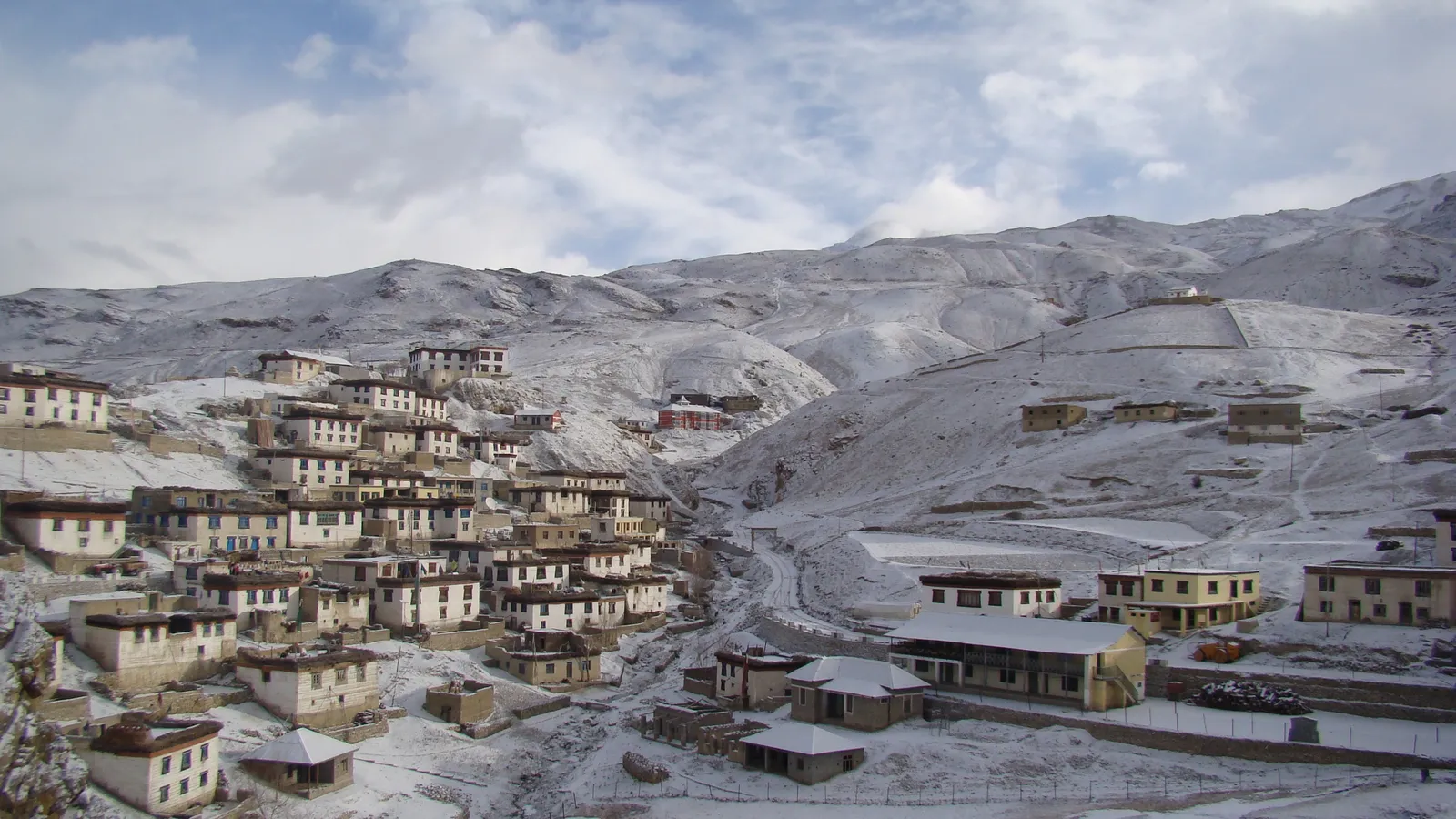
Compact or scattered. A compact settlement is a closely built area of dwellings where flat land is available. In a scattered settlement, dwellings are spread over a wide area, mostly in hilly tracts, thick forests and regions of extreme climate.
Houses also fit their surroundings: slanting roofs where rain is heavy, houses on stilts where water collects in the rainy season, and thick mud walls with thatched roofs in hot areas.
What are the four means of transport?
Transport is the means by which people and goods move. The four major means of transport are roadways, railways, waterways and airways (NCERT, Chapter 7).
Roadways: the most commonly used, especially for short distances. Roads are metalled (pucca) or unmetalled (kutcha). Roads built underground are subways; flyovers are built over raised structures.
Railways: carry heavy goods and people over long distances quickly and cheaply. The network is well developed on the plains; lines in mountains are much fewer.
Waterways: the cheapest way to carry heavy, bulky goods over long distances. There are two types: inland waterways (navigable rivers and lakes, such as the Ganga-Brahmaputra system) and sea routes, which connect ports.
Airways: the fastest and the most expensive, and affected by fog and storms. They are the only way to reach some remote areas, and helicopters carry food and medicines during calamities.
What is mass communication in Class 7?
Communication is the process of conveying messages to others. Through newspapers, radio and television we can communicate with a large number of people, so the chapter calls them mass media (NCERT, Chapter 7). Satellites made communication faster and help with weather forecasts and disaster warnings. The Internet lets people send e-mails and book tickets from home, which is why the book says we are a large global society.
How do you answer the chapter's questions?
For questions like which transport suits an island, run four checks in order:
Is there water in the way? An island or another country means a ship or a plane.
How heavy is the load? Heavy, bulky goods go by water, or by rail over land.
How far, and how urgent? A short trip goes by road; a long, urgent one by air.
Is there a road or railway at all? If not, or after a disaster, use air, often a helicopter.
For the island, check 1 decides it: a ship. Now a short answer, "Mention any two merits of railways": (1) railways carry heavy goods over long distances; (2) they carry people quickly and cheaply. Stop at two.
Before a test, see if you can do these without looking:
Define settlement, site, compact settlement and scattered settlement.
Name the four means of transport and one merit of each.
Name the two types of waterways, with an example of each.
Define communication and mass media.
If you ask a chatbot for help with map work, read why AI often gets map locations wrong first. And when you turn to Class 7 science, the Fermi Concept Library covers every concept in physics, chemistry, biology, mathematics and computing, and Fermi's AI tutor can work out what you already know and build a plan for the session.


