On this page
Atoms usually get bigger down a group, because each step adds a shell. Group 13 breaks that rule once: gallium is smaller than aluminium, the element above it. The NCERT Exemplar for Class 11 Chemistry asks for the reason in Question 16, and its answer key marks two options: poor screening effect of d and f orbitals, and increase in nuclear charge.
What are the atomic radii of aluminium and gallium in NCERT?
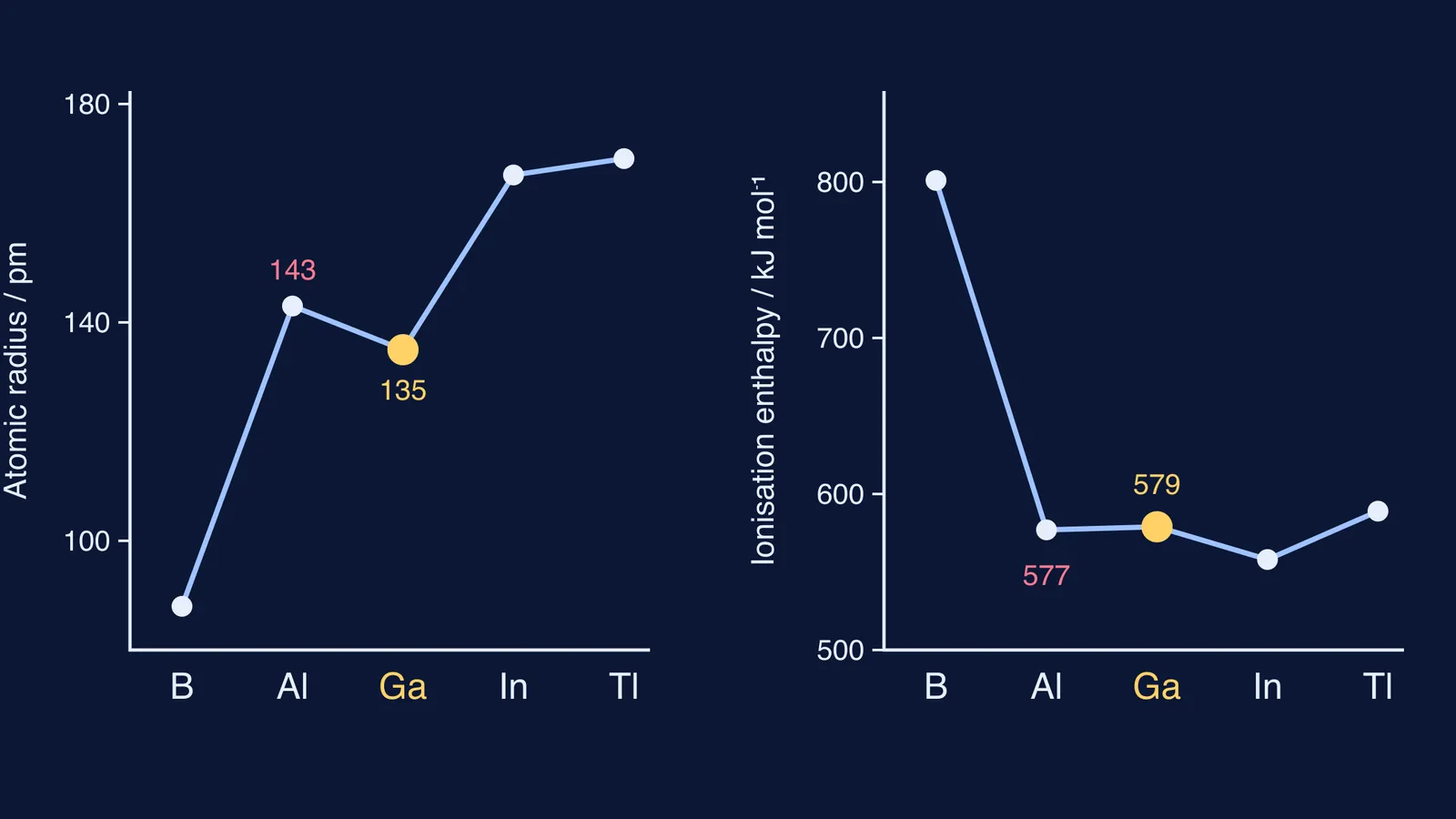
Table 11.2 of NCERT Class 11 Chemistry, Unit 11 (2019-20 print) gives these metallic radii for group 13:
Boron: 88 pm (shown in brackets in the table)
Aluminium: 143 pm
Gallium: 135 pm
Indium: 167 pm
Thallium: 170 pm
The current NCERT Class 11 Chemistry Unit 3 also lists aluminium at 143 pm and defines the metallic radius as half the distance between the metal cores in the crystal. Gallium is 8 pm smaller than aluminium; then indium is 32 pm larger than gallium.
Why is the atomic radius of gallium less than aluminium?
From the same NCERT table, aluminium is [Ne]3s²3p¹ and gallium is [Ar]3d¹⁰4s²4p¹. From aluminium to gallium, the nucleus gains 18 protons and the atom gains 18 electrons, ten of them in the 3d subshell.
NCERT's explanation is one sentence: the additional 10 d-electrons "offer only poor screening effect" for the outer electrons "from the increased nuclear charge in gallium."
Screening (shielding) means inner electrons partly cancel the nucleus's pull. NCERT Unit 3 says the valence electron experiences a net positive charge less than the actual nuclear charge; that net charge is the effective nuclear charge. Because the 3d electrons screen poorly, gallium's 4s and 4p electrons feel a higher effective nuclear charge than aluminium's 3s and 3p electrons. The stronger pull draws the outer shell in, enough to outweigh the extra shell.
How much stronger is the pull? A Slater's rules check
You can put rough numbers on this with Slater's rules, first published by J. C. Slater in Physical Review in 1930. For an s or p electron, as set out on Wikipedia's Slater's rules page, each other electron in the same (ns, np) group shields 0.35, each electron with principal quantum number one lower shields 0.85, and each electron deeper than that shields 1.00. The n − 1 count includes 3d electrons, as in Slater's own iron example.
Aluminium's 3p electron: shielding = (2 × 0.35) + (8 × 0.85) + (2 × 1.00) = 9.50, so effective nuclear charge = 13 − 9.50 = 3.50.
Gallium's 4p electron: the n = 3 shell now holds 18 electrons (3s², 3p⁶, 3d¹⁰), so shielding = (2 × 0.35) + (18 × 0.85) + (10 × 1.00) = 26.00, and effective nuclear charge = 31 − 26.00 = 5.00.
Now a thought experiment. If the ten 3d electrons shielded perfectly, 1.00 each, gallium's shielding would be 0.70 + 6.80 + 10.00 + 10.00 = 27.50, giving an effective nuclear charge of 3.50, exactly aluminium's. In this model, the whole jump to 5.00 comes from the 3d electrons shielding less than one full unit each. Slater's rules are a rough model, not a measurement, but they show the direction of the effect. Our guide to effective nuclear charge with Slater's rules has more examples.
Why is gallium's ionisation enthalpy higher than aluminium's?
The same NCERT Table 11.2 gives first ionisation enthalpies of 801 (B), 577 (Al), 579 (Ga), 558 (In) and 589 (Tl) kJ/mol. You would expect the bigger gallium atom to lose its outer electron more easily. Instead its value is slightly higher.
NCERT gives one cause for both breaks, between Al and Ga and between In and Tl: d- and f-electrons, which have low screening effect, cannot compensate for the increase in nuclear charge. The Exemplar tests this too: Question 9's answer is B > Al < Ga > In < Tl, and Question 33(i) asks you to explain why gallium has a higher ionisation enthalpy than aluminium. For the full curve, see our guide to the first ionisation enthalpy vs atomic number graph.
How should you write this in a CBSE or JEE answer?
Use three steps: data, configuration, cause.
State the data: Ga 135 pm, Al 143 pm (NCERT Table 11.2).
Write the configurations: Al [Ne]3s²3p¹, Ga [Ar]3d¹⁰4s²4p¹.
Give the cause: the ten 3d electrons shield poorly, so the effective nuclear charge on the valence electrons is higher in Ga, and they are held closer.
Mistakes to avoid:
Calling it lanthanoid contraction. Gallium has no 4f electrons; the cause is the 3d subshell.
Saying d electrons shield strongly. The point is that they shield weakly.
If effective nuclear charge still feels shaky, the Fermi Concept Library gives each chemistry concept its own lesson and its place in the map. For "give reasons" practice, the Fermi Problem Library has worked problems with a step-by-step solver that explains the reasoning rather than printing an answer.
Then test yourself: explain why thallium's ionisation enthalpy beats indium's, and read our post on the inert pair effect.