

On this page
A bonsai on a windowsill can look decades old and still fit in your two hands. The obvious guess is that it is a special miniature species. It is not. A bonsai is an ordinary tree kept small, year after year, by a grower who is using plant physiology you will meet in Class 11 Biology.
Is a bonsai a dwarf variety of tree?
No. Robert Sablowski, head of the Cell and Developmental Biology Department at the John Innes Centre, answered this question for the EU's research news service CORDIS. "The reason why a bonsai tree is small is because it is under constant pressure, and constant constraint," he said. As the article explains, meristem cells in bonsai trees are the same as in their larger counterparts, with similar genetic instructions.
This works because plants keep making new leaves, roots and flowers all their lives, from meristems at the shoot and root tips. An animal's basic body plan is laid down early; a tree keeps adding new parts and adjusting as it goes. NCERT calls the ability of plants to follow different pathways in response to the environment or phases of life plasticity (NCERT Class 11 Biology, Plant Growth and Development).
The constraint can last for centuries. The "Yamaki" Japanese white pine at the US National Bonsai & Penjing Museum has been in training since 1625, according to the National Bonsai Foundation. It survived the Hiroshima bomb of 1945, which exploded about three kilometres from the Yamaki family compound, and was given to the United States as part of Japan's 1976 Bicentennial gift.
How does pinching the shoot tip keep a bonsai small?
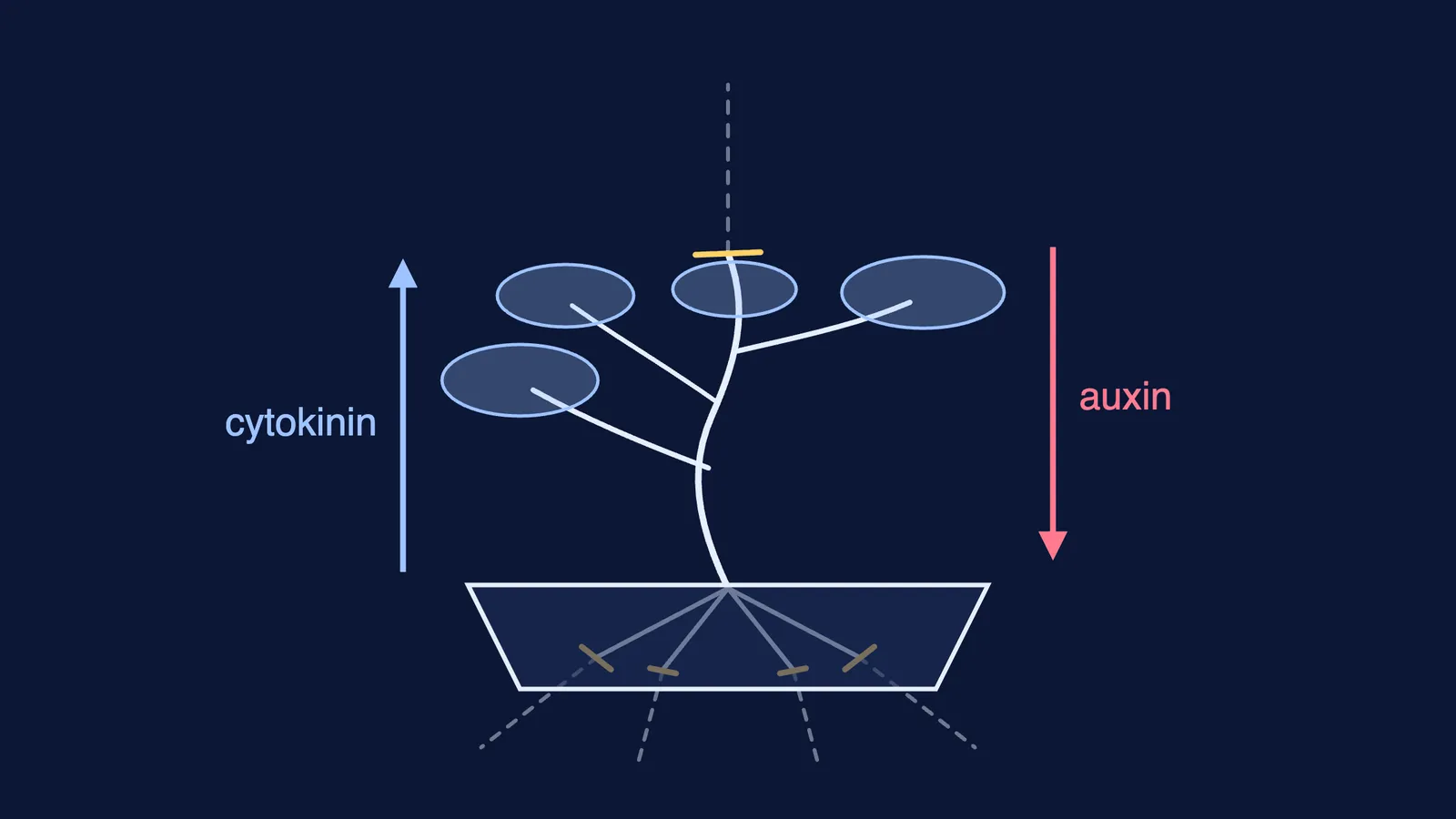
In most higher plants, the growing apical bud inhibits the growth of the lateral buds below it, a phenomenon called apical dominance (NCERT). Removing the shoot tip usually lets those side buds grow, which is why NCERT says the idea is applied in tea plantations and hedge-making.
A bonsai grower pinches new tips again and again. The tree never gets one tall leader; it gets many short, fine twigs, which is what makes a small tree look old. Our explainer on auxin and apical dominance walks through the textbook experiment.
NCERT explains apical dominance in its section on auxins, hormones made at the growing tips of stems and roots. Research has added a twist. A 2014 PNAS study led by Michael Mason of the University of Queensland reported that apical dominance is predominantly controlled by the shoot tip's intense demand for sugars, which limits the sugar available to the buds (Mason et al., 2014). For your exam, write the NCERT answer; the fuller story involves sugar as well as hormones.
Why does root pruning slow the whole tree?
From time to time a bonsai grower lifts the tree, trims its roots and puts it back in a shallow pot. Roots and shoots trade constantly: roots send up water, minerals and chemical signals, and leaves send down sugar. NCERT notes that natural cytokinins are made where cells divide fast, including root apices, and that they promote lateral shoot growth and help overcome apical dominance (NCERT). It is tempting to conclude that trimming root tips simply cuts that hormone supply.
Experiments paint a messier picture. In a 1991 HortScience study of container-grown apple and green ash seedlings, root pruning at transplanting tended to reduce shoot extension in apple, yet the growth changes were not related to cytokinin-like activity measured in the apple xylem sap (HortScience, 1991). Whatever the exact signals, the shallow pot limits how much root the tree can hold.
What happens if you plant a bonsai in the ground?
It would try to become a normal tree. "Given access to enough nutrients, light and water, they'll try to do what they're genetically programmed to do, which is to produce a normal tree," Sablowski told CORDIS. He added one catch: "You may see the remnants of a tiny bonsai trunk at the bottom of the tree."
How a tree is handled changing how it grows is a familiar idea in Indian orchards too; see why grafted mango trees fruit years before seedlings.
Try it: a four-week tip-pinching experiment
You can test apical dominance on a balcony, no bonsai needed.
Take two pots of the same young plant, such as tulsi or another leafy herb, of similar height.
Write your prediction first: which plant will be taller after four weeks, and which will have more side shoots?
Pinch off the top bud of one plant. Label it. Leave the other alone.
Water both the same and keep them in the same light.
Every Sunday, measure the height and count the side shoots on each. Our guide to how plant growth is measured shows how to record it.
After four weeks, compare your results with your prediction and write two lines explaining them.
If plant growth regulators still blur together, the Fermi Concept Library gives every biology concept its own lesson and its place in the map. And if you are not sure where to start revising this chapter, Fermi's AI tutor can work out what you already know and build a plan for the session.


