

On this page
A bat flies, so it is easy to file it next to the crow and the pigeon. Biology files it next to you, and Class 11 biology expects you to explain why. The answer depends on a few features you can check one by one, and flight is not one of them.
Why is a bat a mammal and not a bird?
The NCERT Class 11 Biology chapter on the animal kingdom sums it up in one line: "The unique features of mammals are the presence of mammary glands and hairs on the skin". Bats have both. A bat's body is covered in fur, and a mother bat feeds her young on milk.
The same NCERT chapter lists *Pteropus*, the flying fox, among its examples of viviparous mammals, alongside the kangaroo, the dog and the blue whale. It also notes that mammals have external ears (pinnae) and limbs adapted for jobs from walking to flying.
Now compare the bird column in that chapter. NCERT describes Aves by feathers, a beak, forelimbs modified into wings, dry skin with no glands except an oil gland at the base of the tail, hollow (pneumatic) long bones, and eggs: birds are oviparous. A bat has no feathers, no beak and no oil gland, and it does not lay eggs.
Bats do not raise big broods either. The Animal Diversity Web account of bats at the University of Michigan says females generally have one or two pups per litter, and the young can usually fly within 2 to 4 weeks of birth.
What is a bat's wing made of?
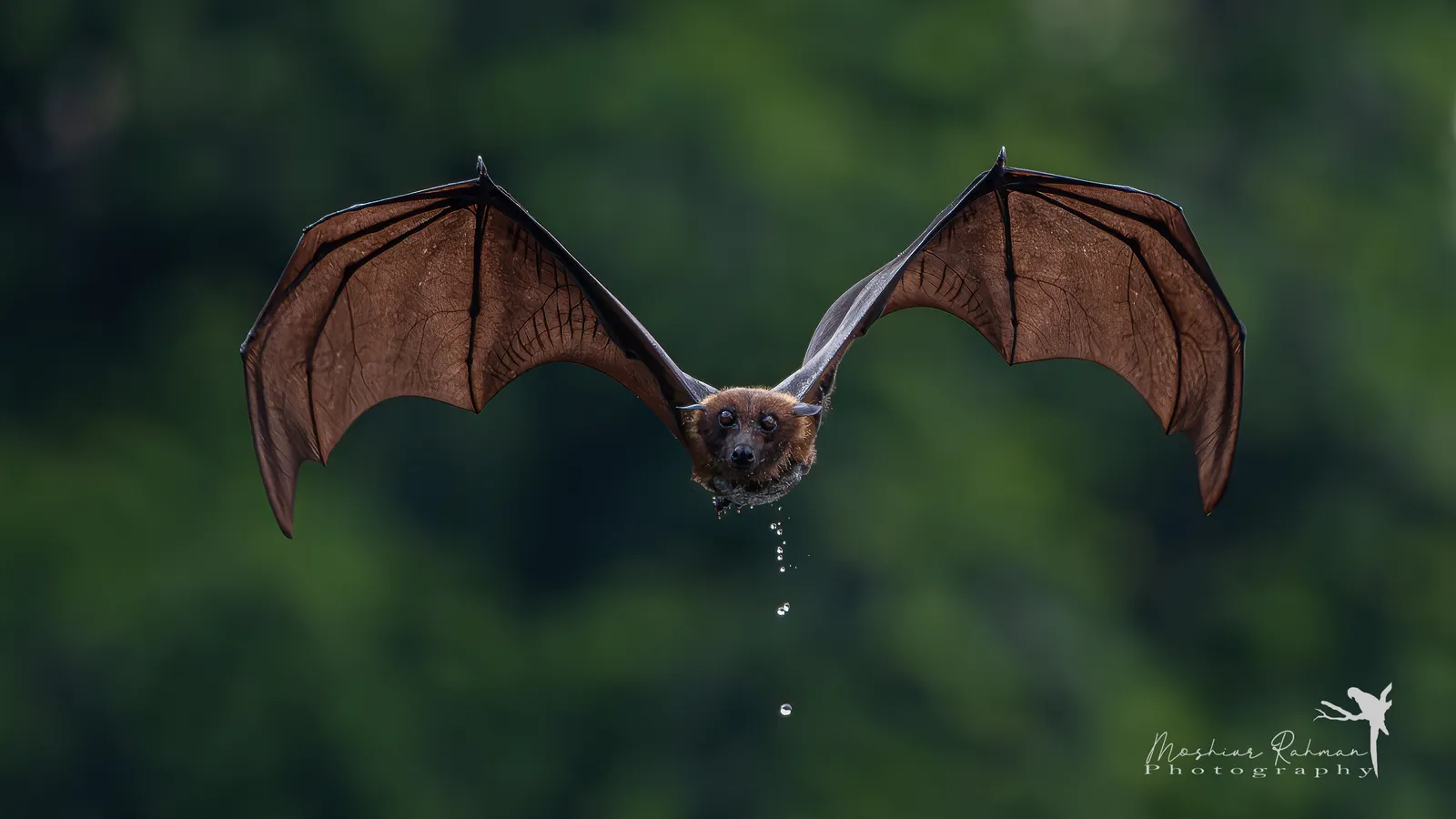
A bird flies on feathers. A bat flies on its hand. The Animal Diversity Web describes bat wings as modified forelimbs in which "the flight surface is covered with skin and supported by four fingers". This thin skin, the wing membrane, usually also stretches down the sides of the body to the hind legs.
The finger bones are what make it work. A 2006 study in PNAS by Karen Sears and colleagues reports that the third, fourth and fifth digits, the main supports of the wing, have stayed about the same length relative to body size over the last 50 million years. In bat embryos, the fingers start out about the size of a mouse's and only later grow much longer.
So a bat's wing has the same basic bones as your arm and hand, which makes it a homologous organ. What differs is the flight surface: feathers in a bird, skin in a bat. The Animal Diversity Web counts bats as only the third group of vertebrates to evolve flight, and the only mammals with true wings. Our post on homologous vs analogous organs shows how examiners test this.
Bats are not a small side group. The Field Museum in Chicago says more than 1,200 bat species have been identified, about 20 percent of all mammal species.
How do bats hunt in the dark?
Many bats find their food at night by echolocation. The Field Museum explains that a bat sends out a call and then picks up the sound waves that bounce back off objects; some species call through the mouth, others through the nose.
In a review in Proceedings of the Royal Society B, Gareth Jones and Marc Holderied report that bat calls have dominant frequencies from about 11 kHz to 212 kHz, and that most insect-eating bats call at 20 to 60 kHz.
Not every bat does this. The Field Museum points out that the golden-crowned flying fox, a fruit bat, does not echolocate at all and relies on good vision. Echolocation is not limited to bats among mammals, either: see how the Ganges River dolphin uses echolocation in muddy water.
How do you answer "Why is a bat a mammal?" in an exam?
Use a four-clue test. Check each clue against the animal, and say which way it points.
Body covering: hair means mammal; feathers mean bird. A bat has fur.
Glands: mammary glands mean mammal. Bats feed their young on milk.
Young: most mammals are viviparous, while all birds lay eggs. Bats give birth to live young.
Wing: in a bat, skin is stretched over long finger bones; in a bird, feathers grow on the forelimb.
A model short answer: "A bat is a mammal because its skin bears hair and it has mammary glands that feed the young with milk, the two unique mammalian features. It is viviparous and has external ears. Its wing is a forelimb with a skin membrane stretched over elongated fingers, not a feathered wing as in birds."
Then test the rule on harder cases. The platypus lays eggs, yet it has hair and milk, so NCERT counts it as a mammal. The ostrich cannot fly, yet it has feathers, so NCERT counts it as a bird. The same habit of looking past the name works for why a starfish is not a fish.
If the chordate classes still blur together, the Fermi Concept Library covers every concept in biology, each with its own lesson and its place in the map. Pick one animal tonight, run the four clues, and write the answer in three lines.


