On this page
The story is the first chapter of Footprints Without Feet, the NCERT book prescribed for Class 10 English alongside First Flight, and the full text is in the official NCERT chapter PDF. It is told in the first person by James Herriot, a vet, so the “I” in the story is Mr Herriot himself.
What happens in A Triumph of Surgery?
The plot, checked line by line against the NCERT text.
Mr Herriot sees Mrs Pumphrey and her little dog Tricki in the street and is shocked. Tricki is as round as a sausage on four short legs, with bloodshot eyes and his tongue lolling out.
Mrs Pumphrey thinks he is suffering from malnutrition, so she gives him extras between meals: malt, cod-liver oil and a bowl of Horlicks at night. She has also given in on cream cakes and chocolates. Ring-throwing has stopped because Hodgkin, the gardener, has lumbago.
Herriot tells her to cut his food right down and give him more exercise. Within a few days Tricki refuses food, vomits and lies panting on a rug.
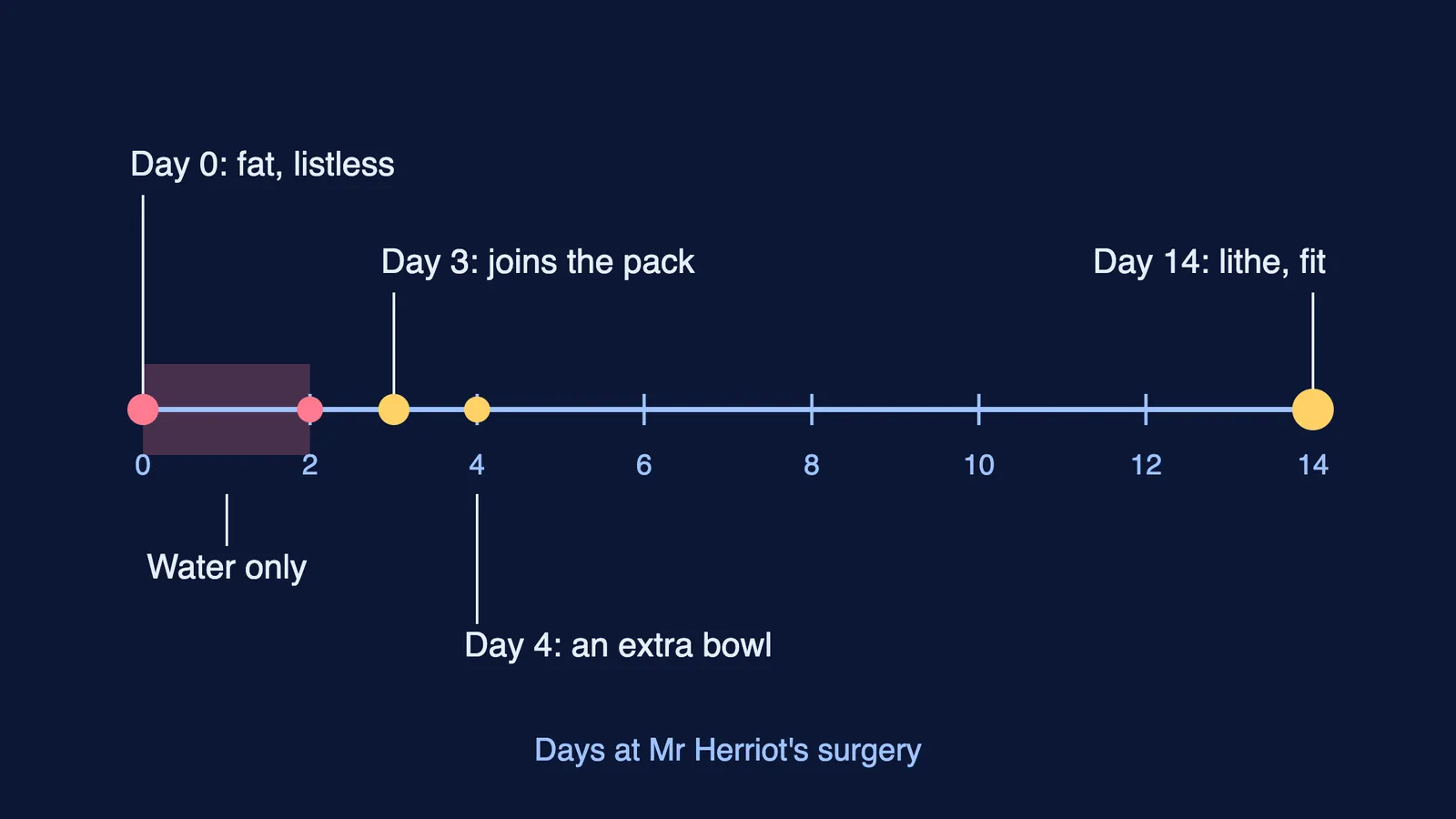
Herriot takes Tricki to his surgery, suggesting about a fortnight there, while Mrs Pumphrey wails.
For two days Tricki gets no food, only plenty of water. On the third day he whimpers at the sound of the other dogs, runs out with them, and soon fights for his share at mealtimes.
Mrs Pumphrey sends fresh eggs to build up his strength, then wine and brandy. Herriot and his partners enjoy them.
After a fortnight Tricki is “a lithe, hard-muscled animal”. He leaps into his mistress’s lap, and she cries, “This is a triumph of surgery!”
What does the title A Triumph of Surgery mean?
The title is ironic. Mrs Pumphrey calls the cure a triumph of surgery, as if an operation had saved Tricki, but the text says plainly, that he was given no medicine at all. The cure was a strict diet, exercise and the company of other dogs. The NCERT glossary defines a surgery as the place where a doctor, dentist or vet sees patients.
What are the themes of the story?
Love is not the same as care. Mrs Pumphrey adores Tricki, but her indulgence makes him seriously ill.
Common sense beats fuss. Herriot cures Tricki with less food, more exercise and company, with no medicine at all.
Humour and irony. A dog with a wardrobe of coats, three bowls a day and brandy sent for him is played for gentle laughter.
A lesson for parents. The chapter itself asks, “Do you think there are also parents like Mrs Pumphrey?”, so expect questions that link a pampered pet to a pampered child.
Character sketches: Tricki, Mrs Pumphrey and Mr Herriot
All quotes here are from the NCERT chapter.
Tricki is a small, pampered dog whose “only fault was greed”. At the surgery he learns to be a dog again, and his quick change shows the problem was his life, not his body.
Mrs Pumphrey is rich, kind and foolishly indulgent. She cannot refuse Tricki anything, and panics easily (she nearly faints). The chapter’s own discussion question calls her foolishly indulgent, “perhaps because she is lonely”.
Mr Herriot is tactful, firm and practical. He takes “a firm line” to save Tricki but never insults Mrs Pumphrey; he dodges her questions about cushions and coats.
Which questions can come in the board exam?
In the CBSE English Language and Literature syllabus for 2026-27, Footprints Without Feet carries two short answers out of three, each in 40-50 words for 3 marks. It also carries one long answer out of two, in about 100-120 words for 6 marks, on theme, plot or a character sketch.
Practise these, mostly from the chapter’s own questions:
Why was Mrs Pumphrey worried about Tricki, and was she wise in what she did?
Why does Mrs Pumphrey think Tricki’s recovery is “a triumph of surgery”?
Is Mr Herriot tactful as well as full of common sense? Give two examples.
Why was Herriot tempted to keep Tricki on as a permanent guest?
Long answer: can foolish indulgence harm others? Answer with reference to Mrs Pumphrey, and say whether there are parents like her.
Worked example for question 2: “Mrs Pumphrey thinks the vet’s medical skill saved Tricki, so she calls his cure a triumph of surgery. In fact, he had no medicine or operation. Two days without food, then exercise and play with other dogs, cured him. So the title is ironic.”
If you used an AI summary, check each claim against the page before you learn it; our guide to matching an AI chapter summary to the pages shows how. The same point-proof-meaning habit helps with the Class 10 analytical paragraph in the writing section.
How should you revise this chapter in three days?
Day 1: read the chapter, then write the seven-step summary from memory.
Day 2: write one short answer and one character sketch, timed.
Day 3: check both against the text, mark claims without evidence, rewrite.
If science is where you get stuck, Fermi’s AI tutor works out what you already know and builds a plan for the session, so you start with a clear next step.