

On this page
When a student struggles to read the textbook, the problem is often with decoding the words, not with understanding the ideas. But because most studying relies on reading, a slow reading speed can make a smart student feel like they are falling behind.
Reading difficulties—whether diagnosed as dyslexia or just a general slowness in processing text—do not mean a student cannot master complex topics. The challenge is that school treats reading as the primary doorway to every other subject. When a student struggles to decode the words in a chemistry textbook, their mental energy runs out before they can actually think about the chemistry itself.
If you or your child finds reading hard, the right study supports can remove the friction. The goal is to separate *learning the subject* from *practicing reading*. Here is how to use tools and ask the school for help to keep up with grade-level science and maths.
What are the best study tips for students who find reading hard?
When you study physics or biology, you want your brain working on the concepts, not fighting the text.
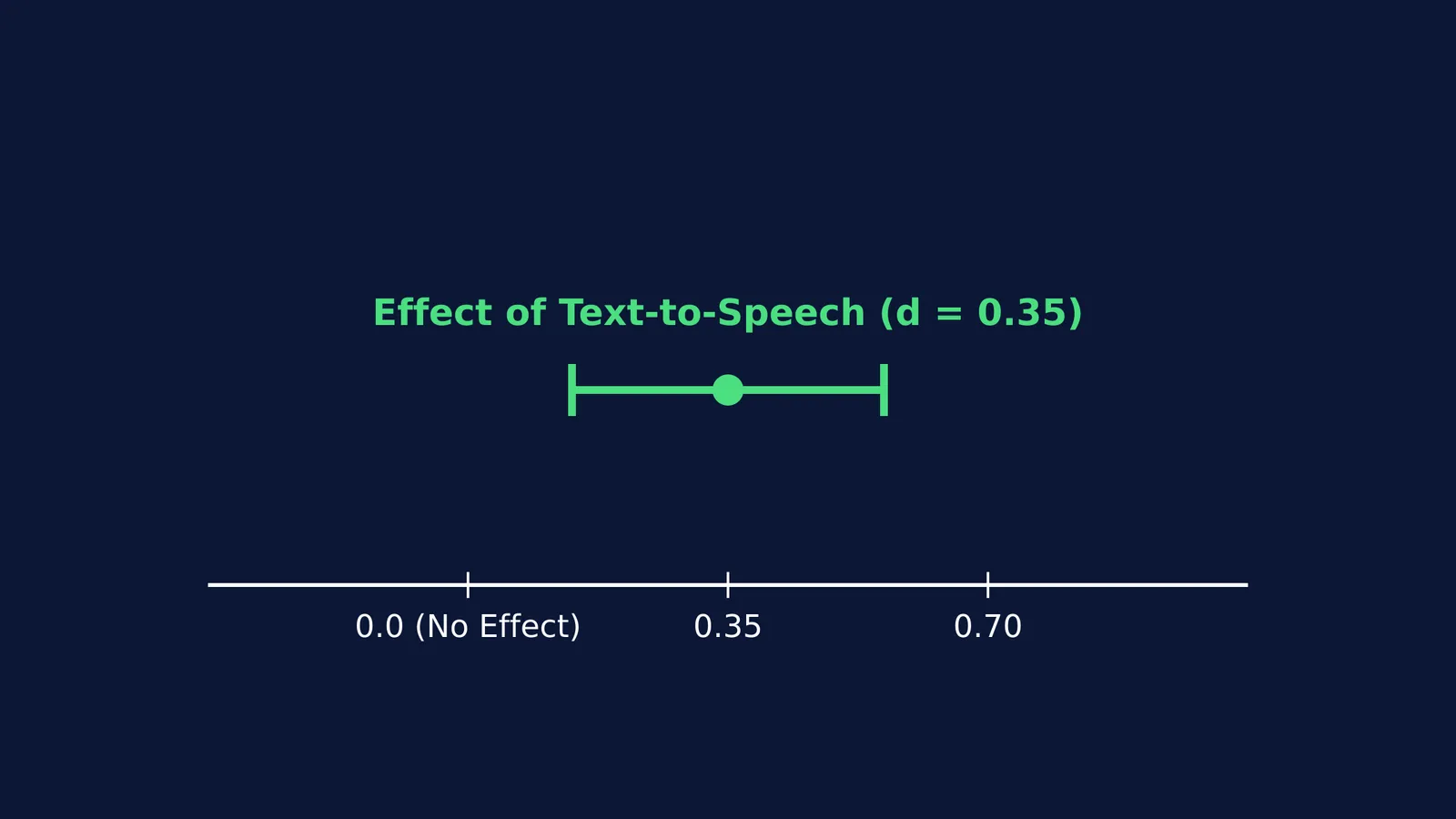
Use text-to-speech (TTS) and audiobooks. Listening while reading along is a proven way to bypass decoding struggles. A meta-analysis of 22 studies found that text-to-speech tools improve reading comprehension for students with reading difficulties by an effect size of *d* = 0.35 (Wood et al., 2018).
Lean on visual learning. Look for diagrams, mind maps and interactive models before reading long paragraphs. For example, if you are stuck on a physics topic, the Fermi Concept Library shows every concept and its place in the map, and the Fermi Simulation Lab offers interactive simulations for the ideas that are easier to see than to read.
Adjust the pace. When using audio tools, set the speed to match your thinking. The Universal Design for Learning guidelines recommend giving students control over audio speed and highlighting to help track the words (CAST UDL Guidelines).
How should you use audiobooks for active learning?
Simply pressing play on an audiobook is passive. To retain the information for a test, you need to turn listening into active learning.
Listen and look at the same time. Following the written text while the audio plays (often called bimodal reading) reinforces word recognition and stops your mind from wandering. Many text-to-speech tools will highlight the word currently being spoken, which keeps your eyes anchored to the page.
Pause and summarise. Do not let the audio run for long periods straight. Stop at the end of every section or difficult paragraph. Take a moment to explain what you just heard out loud, as if you were teaching it to someone else. If you cannot explain it, rewind and listen again.
Sketch your notes. Since reading and writing are tiring, skip the traditional bullet points. Use graphic organizers, flowcharts or rough sketches to map out the ideas you are hearing. Drawing a quick timeline of a biology process is often faster and more memorable than writing it out.
Should we ask for extra time in exams?
Yes. Extended time reduces the panic of a ticking clock, ensuring a test measures what you know, not how fast you read.
It is the most common school accommodation. Research indicates that extended time appears on approximately 88% of IEP (Individualized Education Program) and 504 plans for students with learning differences like ADHD and reading disabilities (Hustus et al., 2020). For many students, extended time is enough to level the playing field without causing fatigue.
If you are noticing Dyslexia and dyscalculia: signs to notice and how assessment works or facing other reading challenges, ask the school to formalize this extra time so it becomes a standard part of your exam routine.
How do you ask the school for a 504 plan or IEP?
Schools provide accommodations through formalized plans. A 504 plan removes barriers in the general classroom, while an IEP provides specialized instruction. Here is a practical plan for parents to request a meeting:
Get it in writing. Email the principal or 504 coordinator so you have a paper trail.
Name the challenge and the goal. "Because of my child's reading difficulty, they struggle to finish tests on time. I am requesting a meeting to evaluate them for a 504 plan."
Be specific about the tools. Do not just ask for "help." Request concrete supports: "We would like to formalize access to text-to-speech tools for reading and extended time on written assessments."
Attach documentation. Include any formal diagnoses or reports from specialists to speed up the process.
Even when you use digital tools, staring at standard text can be draining (for more on this, see our summary of Reading on screens vs paper: what the meta-analyses found). By combining audio tools, visual supports and extra time, students can tackle advanced subjects confidently, proving that a reading difficulty has nothing to do with intelligence.


