

On this page
If a disability makes writing, reading or finishing on time hard, CBSE lets you take Class 10 and 12 board exams with a scribe, a reader or extra time. The catch is timing: your school applies online months before the exam, and late or offline requests are refused.
Who can get a scribe or extra time in CBSE board exams?
CBSE's consolidated circular of 12 April 2019 (No. CBSE/COORD/112233/2019) covers candidates with disabilities as defined in the Rights of Persons with Disabilities Act 2016 and lets them use a scribe, compensatory time, or both.
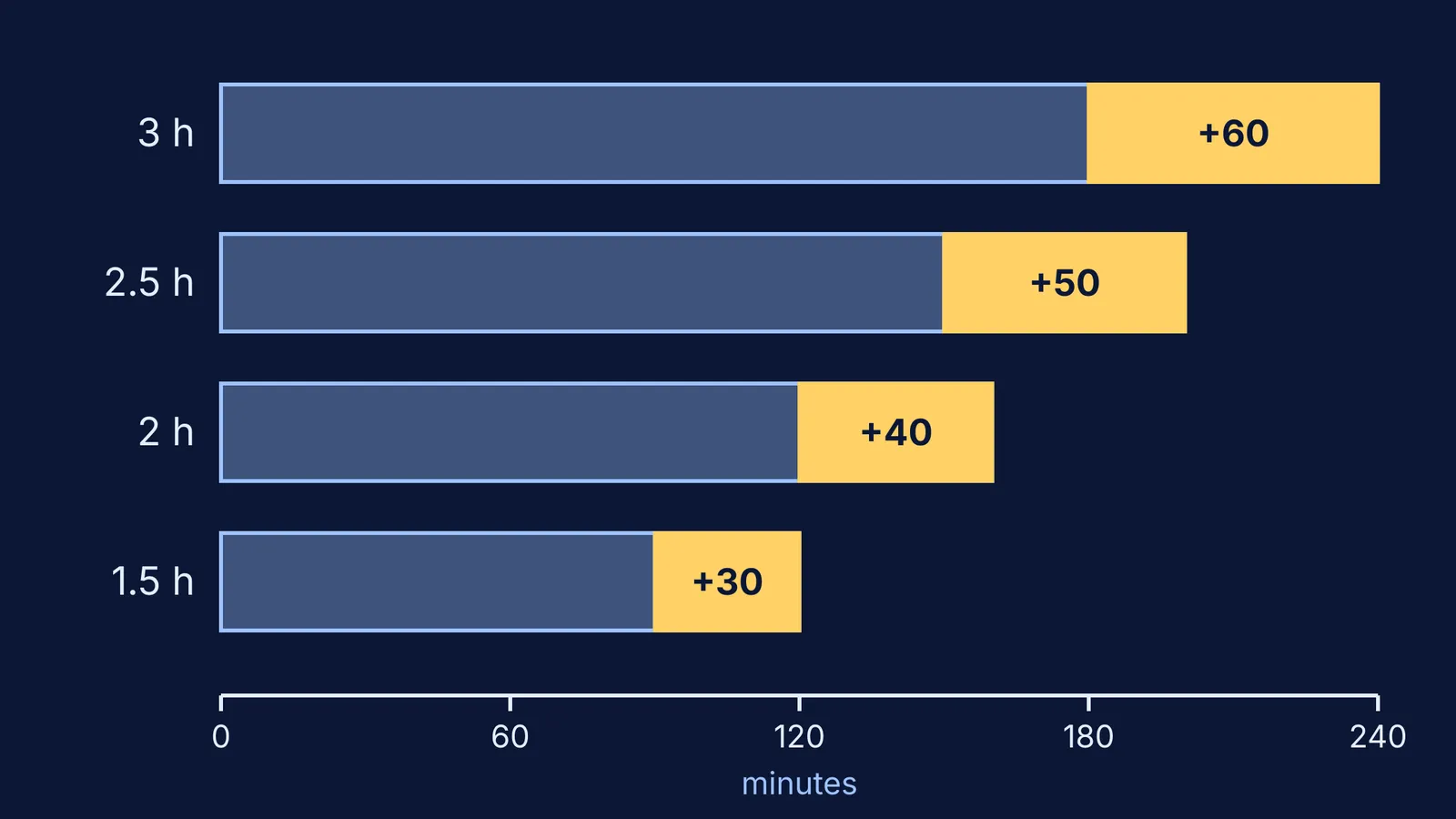
Under that circular, compensatory time is 60 minutes for a 3-hour paper, 50 for 2½ hours, 40 for 2 hours and 30 for 1½ hours: 20 minutes for every hour of the paper.
Its annexure marks a scribe or reader plus compensatory time for blindness and low vision, speech and language disability, specific learning disabilities such as dyslexia, autism spectrum disorder, and locomotor conditions like cerebral palsy when the hands are affected, among others. Deaf and hard-of-hearing candidates get compensatory time. If you only need the paper read aloud, you can ask for a reader instead, but then you cannot also use a scribe.
CBSE's portal user manual also lists a laptop without internet and a basic calculator.
What documents do you need?
The 2019 circular asks for:
A disability certificate from a competent authority, such as a government hospital or a practitioner registered with the Rehabilitation Council of India.
For a scribe, a certificate that the disability limits your ability to write, signed by the Chief Medical Officer, Civil Surgeon or Medical Superintendent of a government health institution (CBSE's Annexure A format).
For your own scribe, an undertaking with the scribe's name and qualification (Annexure B).
For a computer, a recommendation from a registered medical practitioner or qualified psychological consultant explaining why.
When is the deadline to apply for a scribe?
The 2019 circular asks students to apply through the head of their school "preferably while in Class IX and/or XI", with the certificate attached.
The request now goes through CBSE's CWSN (children with special needs) portal, which opens alongside the List of Candidates (LOC) schools submit for board exams. For the 2026 exams, a CBSE circular dated 3 September 2025 kept the portal open from 9 to 22 September 2025, with no offline requests and no extension. What the school selects appears automatically on the admit card.
For the 2027 exams, the LOC circular dated 17 September 2026 says CWSN data is due before the LOC, and no CWSN concessions are considered after LOC submission. CBSE's examination circulars page marked 21 October 2026 as the LOC last date (late fee allowed to 30 October), so for most schools the 2027 window has closed.
In Class 10 or 12 and unsure? Ask the school what the portal shows: Approved, Rejected or Under process. If you were missed, ask the school to contact the CBSE Regional Office at once, though the circulars say late requests will not be accepted.
What should a parent write to the school?
Put it in writing:
"Respected Principal, my child [name], Class [10/12], Section [ ], has [disability] as per the attached certificate. Under CBSE circular CBSE/COORD/112233/2019, we request [a scribe / a reader / compensatory time / a laptop] for the [year] board exams. Please mark the CWSN category in the LOC, select these facilities on the CWSN portal before the deadline, and give us a written acknowledgement."
Then check three things:
The school's acknowledgement, with a date on it.
The portal status once the Regional Office decides.
The admit card, which should list the facility.
What happens on exam day with a scribe?
The 2019 circular sets the rules. You can bring your own scribe or ask the exam centre for one. Your own scribe's qualification must be one step below yours; a centre scribe will have at least passed matriculation. You may meet the scribe two days before the exam, change scribes in an emergency, and use different scribes for different papers, but only one per subject. The centre arranges a suitable room for you with a separate invigilator, and the scribe costs you nothing.
Carry your admit card and certificates; our guide to exam-day emergencies covers problems at the gate.
Practise dictating: do one full paper at home with the extra time on the clock. In maths and physics, say every step, sign and unit, and ask the scribe to read each line back. The Fermi Problem Library has worked problems with a step-by-step solver that explains the reasoning, a model for the order to say steps aloud. If reading is the hard part, see how AI reading support helps with dyslexia in science and maths, and plan how you will use the board exam reading time with your reader.
State boards, CISCE, JEE Main and NEET-UG run their own processes, so read that exam's latest circular or bulletin. And if the paperwork is weighing on your child, talk it through with the class teacher or school counsellor.


