On this page
It is 7 pm, the chemistry module is on the desk, and somehow you are reorganising your pen stand. If you have asked yourself why you procrastinate studying, the answer from psychology is that you are probably not lazy. You are trying to feel better right now.
Why do I procrastinate studying?
Psychologists Fuschia Sirois and Timothy Pychyl argue that procrastination has a great deal to do with short-term mood repair: it often happens when a task feels unpleasant, and putting it off brings quick relief. Their paper also names who pays the bill: the consequences of procrastination are typically borne by your future self.
A large review points the same way. In a 2007 meta-analysis in Psychological Bulletin, Piers Steel pooled 691 correlations and found that task aversiveness, task delay, low self-efficacy and impulsiveness were strong and consistent predictors of procrastination.
In plain words, you are more likely to delay a task when it feels unpleasant, when its deadline is far away, when you doubt you can do it, and when you tend to act on impulse with something easier within reach. A hard chapter for an exam months away, with your phone on the desk, ticks all four.
Does putting off study actually hurt?
In the short run it feels like it helps. Dianne Tice and Roy Baumeister ran two studies following students through a term and reported in Psychological Science that procrastinators had lower stress and less illness than non-procrastinators early in the semester, but higher stress and more illness late in the term. Procrastinators also received lower grades on all assignments.
How do I start studying when I don't feel like it?
If the problem is the feeling at the doorway, make the doorway smaller.
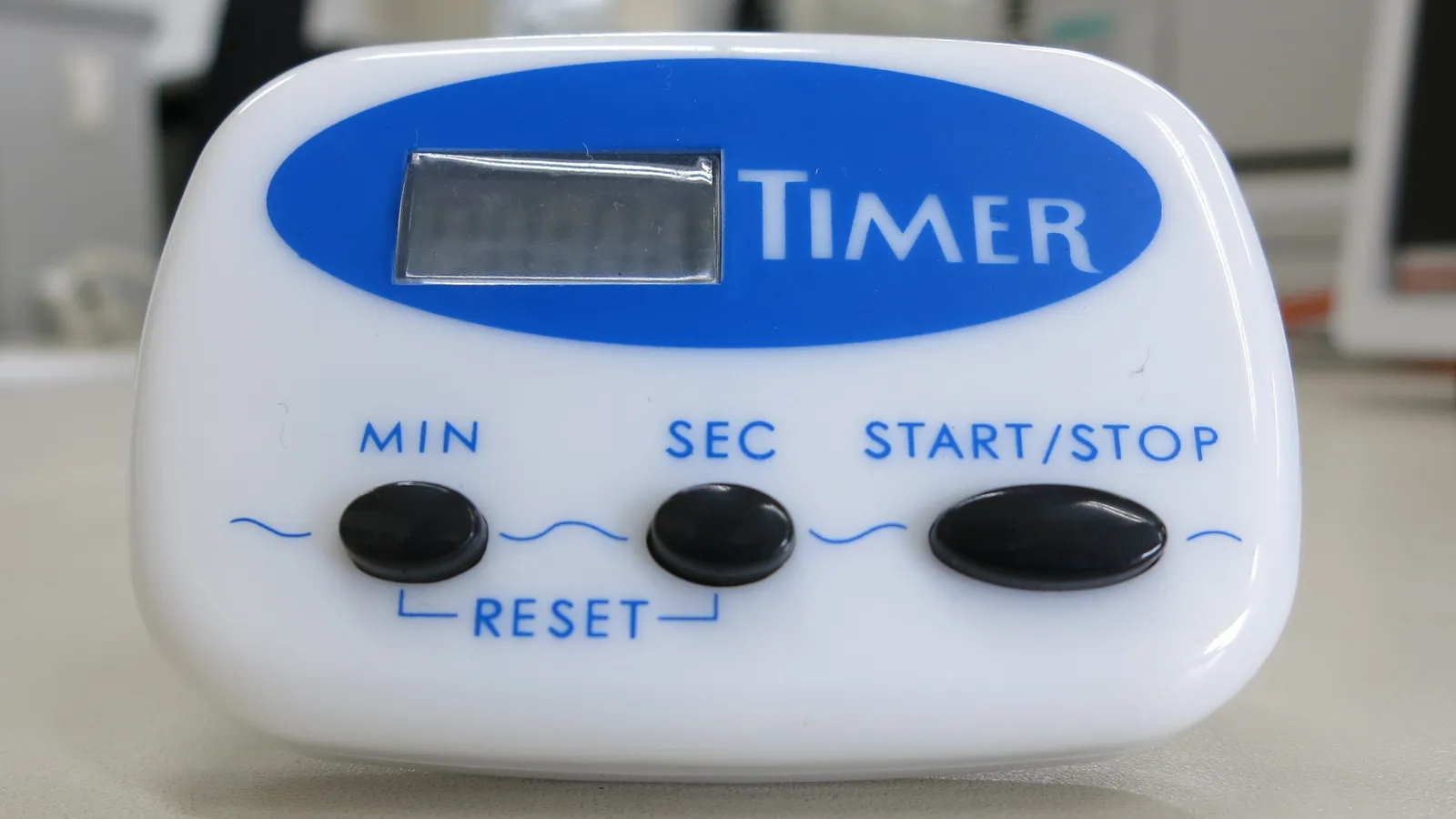
The five-minute start. Promise yourself only five minutes on one named task, with a timer. Write "read the first two pages of aldehydes and ketones", not "study chemistry". When the timer rings you are allowed to stop. The point is not the five minutes; it is making the start so small that the bad feeling has little to push against. Parents can use the same rule without a lecture: our guide to a five-minute start rule for a child who keeps delaying study has the words to use.
If-then plans. The second tool decides the start before the moment arrives. An implementation intention is a plan of the form "If situation Y happens, then I will do X", spelling out when, where and how you will act. Peter Gollwitzer and Paschal Sheeran reviewed 94 independent tests of implementation intentions38002-1) and found a positive effect of medium-to-large size on reaching goals (d = 0.65), including on getting started. We have a fuller guide to writing if-then study plans that stick.
A good if-then plan names a cue you cannot miss:
If I finish dinner, then I sit at my desk and open the physics module at the bookmarked page.
If I reach for my phone during study time, then I put it in another room and do one more question.
If I feel the urge to put it off, then I set a five-minute timer and start.
What does this look like on a real evening?
For example, take a Class 12 student who has avoided electrochemistry for a week.
Name the feeling in one line: "I'm avoiding this because I got the Nernst equation questions wrong in the last test."
Shrink the task: not "finish electrochemistry" but "redo two Nernst equation questions from that test".
Set the if-then: "If the clock says 7 pm, then I sit at the desk with the test paper open."
Run five minutes, timer on, phone in another room.
Decide at the bell: carry on for a longer block, or stop and write tomorrow's if-then.
If step 2 is where you get stuck because you cannot tell which small task comes first, Fermi's AI tutor can work out what you already know and build a plan for the session, so you sit down to a clear next step instead of a blank page. And when the dread comes from a method you keep getting wrong, the Fermi Problem Library has a step-by-step solver that explains the reasoning.
What if I procrastinate all the time?
Everyone delays sometimes. Go easy on yourself when it happens: scolding yourself can make the next start feel worse, and a bad feeling is exactly what procrastination tries to escape. If you notice you swap study for things that only feel useful, our piece on watching motivational videos instead of studying has a practical swap.
But if the avoidance comes with feeling low most days, poor sleep, or dread that does not lift, talk to a parent, a school counsellor or a doctor. In India you can call Tele MANAS, the government's toll-free 24x7 mental health helpline, on 14416, and choose your language.
Tonight, pick one task, write one if-then line, set a five-minute timer, and start.