On this page
If the polymers chapter in Class 12 chemistry made sense to you, and you like knowing how everyday things are made, polymer engineering sits where those two interests meet. It is the engineering of long-chain molecules: how they are made, how they behave, and how they are shaped into products by the thousand.
What does a polymer engineering course teach?
A polymer is a very large molecule built from many repeating small units called monomers. If that still feels shaky, this guide to addition and condensation polymers covers the school-level base the course builds on.
A degree or diploma then adds three layers:
Making the chains: polymerisation chemistry, catalysts, and how chain length and branching change a material.
How the chains behave: strength, stretch, heat and cold. Working out why plastic buckets crack more easily in winter is a small lesson in how chain movement depends on temperature.
Shaping and testing: extrusion, injection moulding, blow moulding, mould design, and lab tests for strength and quality.
CIPET's three-year Diploma in Plastics Technology lists applied mathematics, applied chemistry, applied physics, applied mechanics, engineering drawing, design of dies and moulds, and plastics process technology among its subjects. A B.E. or B.Tech usually takes these areas further.
Where do polymer engineers work?
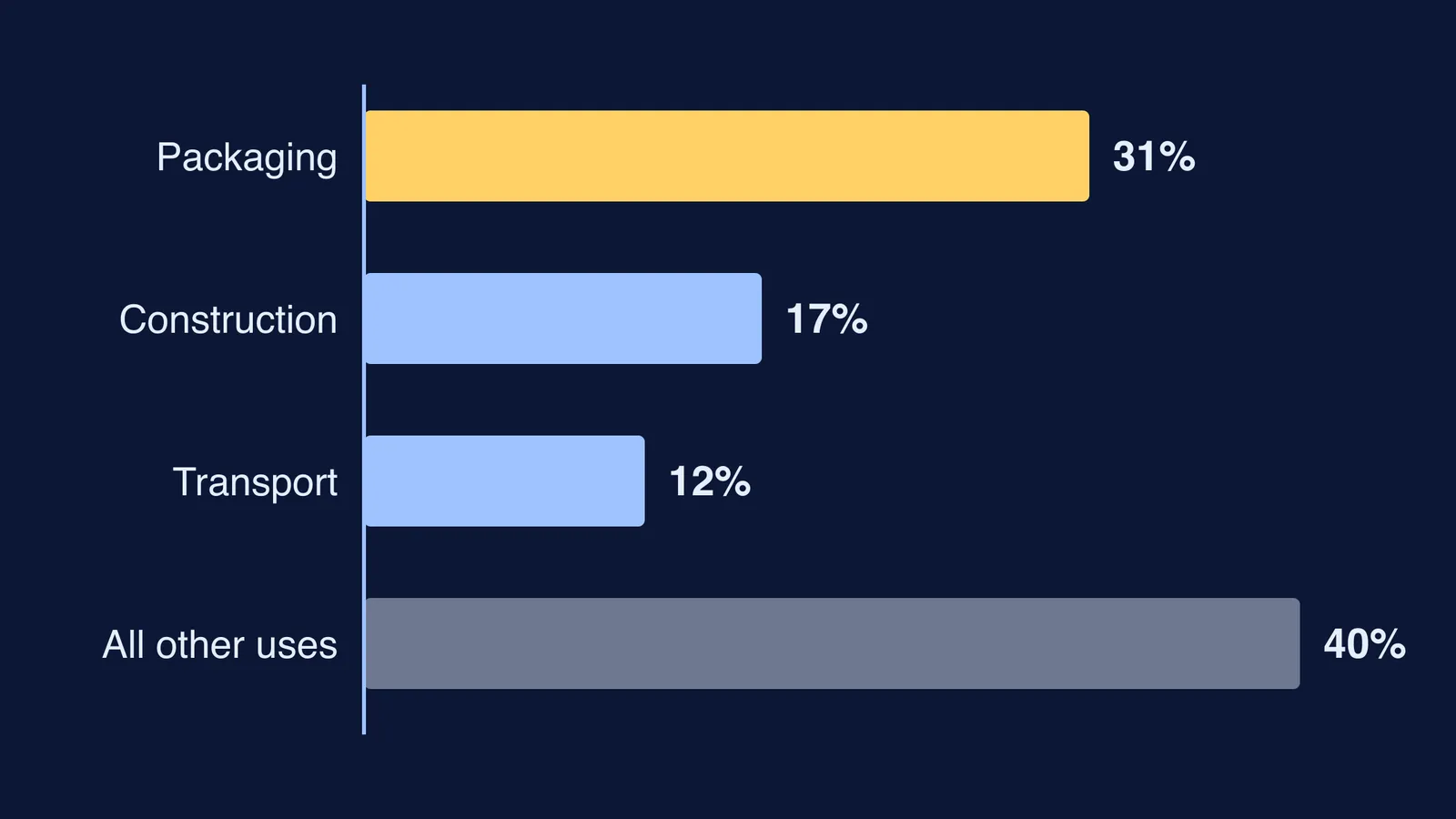
The OECD's Global Plastics Outlook policy highlights report that global plastics production doubled from 234 million tonnes in 2000 to 460 million tonnes in 2019. The same report names packaging (31%), construction (17%) and transportation (12%) as the main consumers of plastics. Here is what the work looks like in four areas:
Packaging: films, bottles, pouches and multilayer laminates. The Central Pollution Control Board's EPR FAQ says Extended Producer Responsibility guidelines were notified on 16 February 2022, covering rigid, flexible, multilayered and compostable plastic packaging. EPR makes producers responsible for managing their packaging until the end of its life, so what happens to a pack after use is now part of the design question.
Automotive parts: bumpers, dashboards and under-bonnet parts. The OECD report notes that plastics help increase the fuel efficiency of vehicles. Roles include mould and tool design, running moulding lines, and quality testing.
Textiles: polyester, nylon and other synthetic fibres. The OECD found that textiles make up 11% of plastic waste, and it lists the washing of synthetic textile fibres among the sources of microplastics, so fibre work includes recycling and pollution problems too. If fabrics interest you more than parts, compare the textile engineering branch.
Materials research: recycling chemistry, bio-based plastics, coatings and composites. The OECD estimates that only 9% of plastic waste was recycled in 2019, which leaves many open problems. Research jobs often ask for an M.Tech or PhD.
How do you get into polymer engineering in India?
CIPET, the Central Institute of Petrochemicals Engineering & Technology, works under the Department of Chemicals & Petrochemicals in the Ministry of Chemicals & Fertilizers, according to the CIPET website. It has two common entry points:
After Class 10: the three-year Diploma in Plastics Technology, which you apply for through CIPET JEE, the institute's entrance test.
After Class 12: a B.E. or B.Tech in Plastics Engineering or Technology. CIPET's admissions page says candidates are selected through the admission policies of affiliating universities, such as Anna University for the Chennai centre and Gujarat Technological University for Ahmedabad.
Other universities also run polymer or plastics degrees. Check each college's current admission route on its own official page, because dates and cut-offs change every year.
Is polymer engineering right for you? A five-day test
Before you put the branch on a counselling list, spend five short sessions finding out whether the work holds your interest:
Day 1: Reread the polymers chapter and write, without notes, how nylon-6,6 forms. If a step is unclear, the Fermi Concept Library has a lesson for each chemistry concept, so you can fill the gap first.
Day 2: Collect five plastic items at home and sort them by feel: stiff, bendy, stretchy, brittle. Guess why each differs.
Day 3: Study a moulded bucket or chair. Find the thin seam (the parting line) and the small round mark where molten plastic entered the mould.
Day 4: Read the packaging of three products and note which use one plastic and which use layers of plastic, foil or paper.
Day 5: Ask yourself honestly: did you enjoy asking "why does it behave like that?" and "how would I make ten thousand of these?"
To compare branches next, read what you study in chemical engineering, then bring your questions to Fermi's AI tutor, which works out what you already know and builds a plan for the session.